The City of Newcastle has become the latest council to call on the federal government to make fossil fuel companies contribute to the growing costs of climate disasters.
It’s passed a motion urging Canberra to establish a National Climate Compensation Fund, arguing it needs help responding to worsening extreme weather “caused by the burning of fossil fuels”.
“Newcastle is on the frontline of climate damage, and the bill keeps growing,” said Deputy Lord Mayor Charlotte McCabe.
“Australia’s largest residential landslip, triggered by an extreme weather event that dumped 198 millimetres of rain overnight, left 16 properties uninhabitable and will cost more than $130 million to remediate.”
More than a year later, the Newcastle Herald reports the council is working with the NSW Reconstruction Authority (RA) to finalise a funding package to demolish damaged homes and compensate residents for the loss of their land.
“Sadly, these works won’t permit future development on the site,” City of Newcastle chief executive Jeremy Bath told residents at a meeting in May.
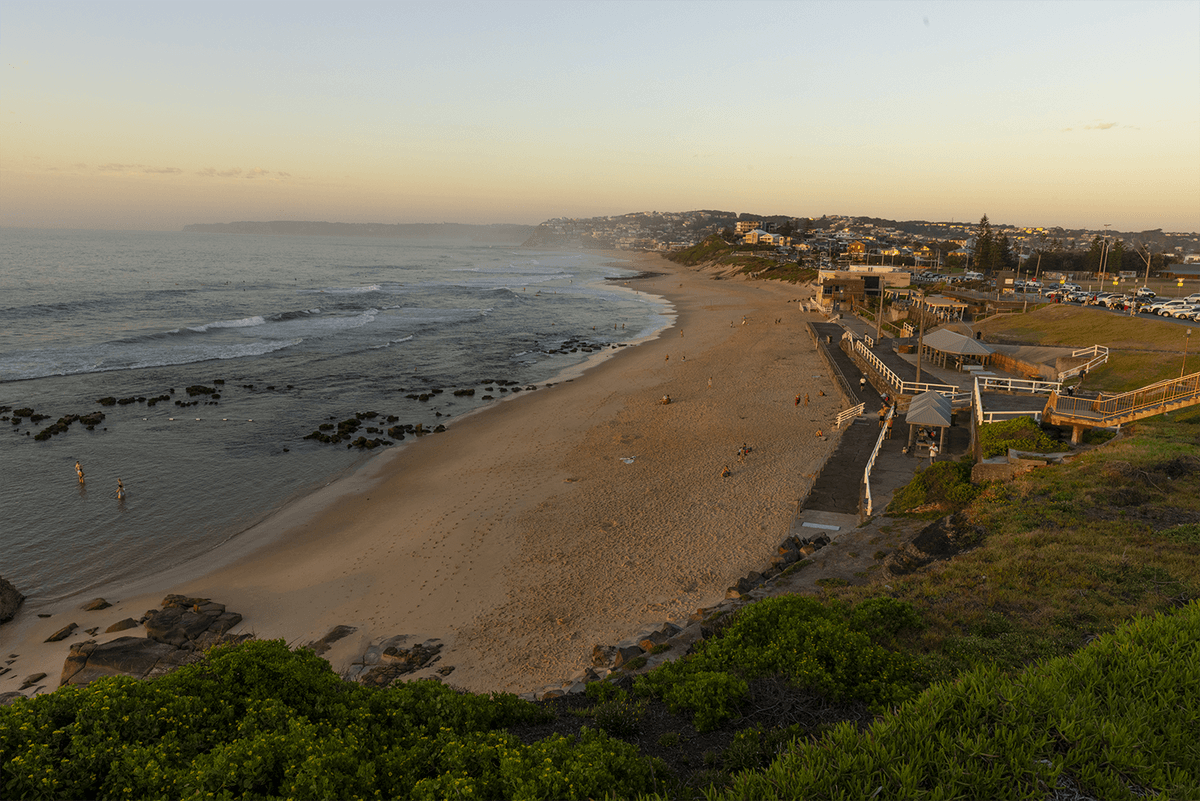
Merewether resident and ecologist Anna Garnock said the city was also experiencing the impacts of more frequent coastal erosion and rising sea levels.
“I can see the impacts of climate change here in Newcastle, along our stunning coastline daily,” she said.
“Frequent and heavy storms and floods have depleted many of our beaches which never really get a chance to recover after each storm.”
The worsening conditions have forced the council to make difficult and costly decisions about how they manage the coastline.
“Our Council has had to ask our community to make confronting choices to either manage retreat and lose footpaths, roads and assets, or building sea wall protections which will drown our much-loved beaches,” said Deputy Lord Mayor McCabe.
“These are not hypothetical future costs. They are landing on council budgets and ratepayers right now.”
In June, delegates at the Australian Local Government Association’s National General Assembly unanimously backed a City of Sydney proposal calling for a national compensation fund.
Sunshine Coast councillor David Law told AAP the proposal would help relieve pressure on ratepayers after the council allocated $1.7 million for disaster management and resilience in its latest budget and flagged a 9.7 per cent rate increase.
“By requiring major coal and gas corporations to contribute to the costs of climate damage, it would give councils access to a dedicated funding stream for recovery and resilience, and reduce the need for ongoing rate increases,” Councillor Law said.
The City of Newcastle will become the tenth council to write to Climate Change and Energy Minister Chris Bowen urging the government to implement the fund.
National disasters are costing the Australian economy $38 billion a year, impacting 434 of Australia’s 537 councils between 2019 and 2023.
The Australia Institute has found insured losses from natural catastrophes are now 12 times higher than 20 years ago, while local government revenue has only grown three times.
The Canberra think tank has long championed a climate disaster levy that would see fossil fuel companies pay a proposed charge of $1 per tonne of climate pollution from coal, oil, and gas exports.
Applied to current export levels, the levy could raise up to $100 billion per year for communities affected by climate damage.
“Whether we realise it or not, everyday Australians are already paying for the damage fossil fuel companies are causing to our climate through more frequent and extreme fires, floods, heatwaves and other disasters,” said Mark Ogge, principal advisor at the Australia Institute.
“These costs include damage to our properties, higher insurance premiums, higher taxes to pay for emergency response, relief and reconstruction and higher food prices because of the impact on agriculture.”
While councils receive some financial support from state and federal governments after disasters, the Australia Institute argues it falls well short of what is needed.
Australia Institute research also shows:
- Climate change is making insurance more expensive in Australia. Since 1989, insurance costs have increased nearly three times as much as overall inflation.
- Insured catastrophe losses reached a record $8 billion in 2022.
- 1.25 million people suffer home insurance affordability stress and pay more than four weeks’ gross income on home insurance premiums.
- Some Australian households spend eight weeks of income on insurance per year, effectively working almost all of January and February, simply to pay their home insurance.
Mr Ogge said a climate disaster levy would ensure households won’t forever be footing the bills for recovery and rebuilding.
“The companies profiting from causing these disasters should make a larger contribution towards cleaning up the mess they are creating,” he said.
“If Australia does not raise significant funds from the fossil fuel industry it will be much less prepared for a more dangerous future.”