Santos boss Kevin Gallagher has claimed it’s a 'myth' that Australia gets less from its oil and gas resources than countries such as Norway and Qatar, despite figures showing the two nations reap substantially more public revenue from comparable LNG exports.
By Tegan George
Fri 11 Sep 2026 09.30 AEST
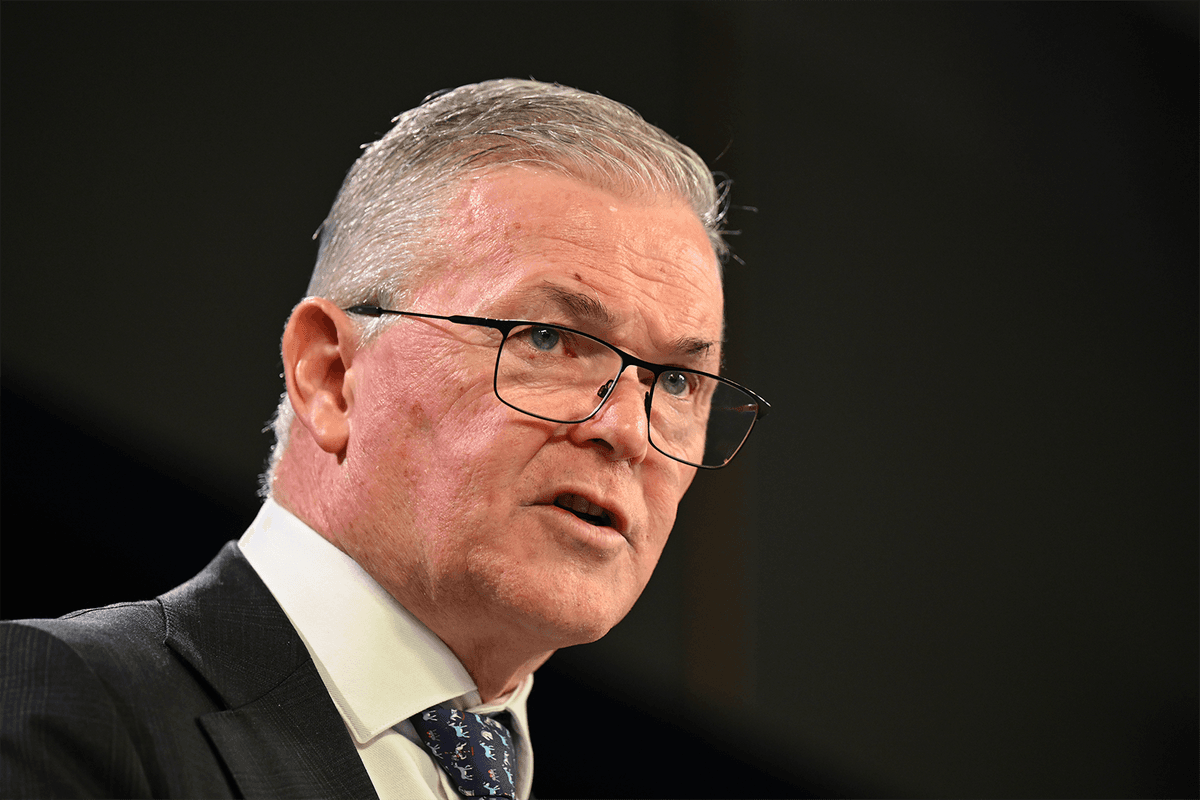
Santos Managing Director and CEO Kevin Gallagher addresses the National Press Club in Canberra. Photo: AAP Image/Lukas Coch


Santos boss Kevin Gallagher has claimed it’s a ‘myth’ that Australia gets less from its oil and gas resources than countries such as Norway and Qatar, despite figures showing the two nations reap substantially more public revenue from comparable LNG exports:
Mr Gallagher dismissed the figures during an address to the National Press Club in Canberra, when he was asked whether Australia should follow Norway’s lead and include some public investment in oil and gas projects.
“Norway taxes net income from oil and gas at 78 per cent, but it is also a co-investor and participant in the industry,” he said, pointing to the 67 per cent stake in Equinor, which operates much of the country’s oil and gas production.
He said Qatar’s approach was also different.
The Australia Institute’s chief economist Greg Jericho agreed but argued the key distinction was how much Qatar collected.
“The gas industry is always quick to suggest there are “reasons” why other nations get more tax from gas than Australia, but there is no getting around the fact that Qatar gets 5 times more revenue from its LNG exports than Australia,” Mr Jericho said.
“The real reason is big gas is taking the piss.”
Mr Gallagher argued that the Norwegian government only invested in Equinor because it didn’t want companies taking huge financial risks when the industry was starting out.
In contrast, he said Australians “don’t need that” while simultaneously arguing the government and community expected the private sector to bear the risks.
“After 50 years of developing the resources, private industry has demonstrated they will take that risk, invest that capital.”
Quality research, analysis, explainers and factchecks from experts you can trust.
He told the audience that Canberra need only provide stable policy settings and “industry will come”.
“Australia has a fantastic reputation as a reliable provider of energy into the Asian region. Now is not the time to change that,” he said.
“I would suggest that industry, private industry, is more than willing to invest the capital if the policy settings are seen to be stable.”
However, Mr Jericho said industry wanted to maintain the status quo because 56 per cent of Australia’s LNG exports are royalty-free.
“The gas companies are laughing at Australians right now – if the gas comes from offshore, they get the gas royalty free and pay almost no tax on LNG exports,” he said.
“If it is onshore, they pay some royalties but don’t have to pay any petroleum resources rent tax.”
Gas giants have been cashing in on the global energy crisis, with the Sydney Morning Herald reporting Australia’s biggest LNG producers are expected to reap an $18 billion windfall over the next year due to the Iran war.
It’s strengthened calls for the Australian government to introduce a 25 per cent tax on gas exports.
The Australia Institute has estimated it would raise $17 billion in government revenue each year, which it says could be spent on health, aged care or free childcare.
Polling by the Canberra think-tank found more than three in five Australians supported a 25 per cent tax on gas exports, with support particularly strong among One Nation and Greens voters.