

While the cameras chased a garland snub, Tuvalu told the world what COP31 must deliver
If you only followed mainstream coverage of the Pre-COP Leaders' visit to Tuvalu, you could be forgiven for thinking the big issue was headwear.
It isn’t always easy to keep up with what’s happening in the US. “Shorter America” is a series where Dr Emma Shortis loops you in on what’s going on in America and shares news and analysis that you can trust.
Fri 25 Sep 2026 09.45 AEST
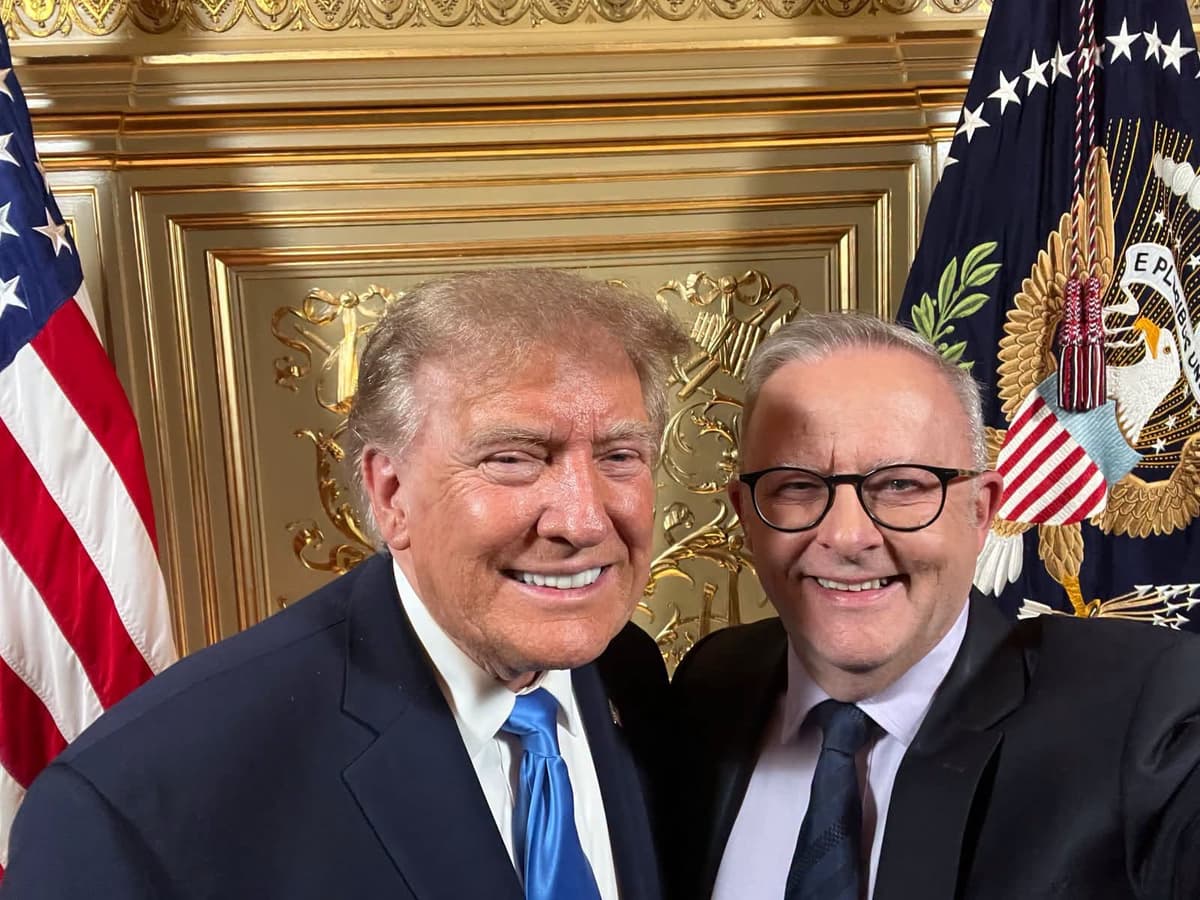
Photo: Instagram (@albomp)
If you only followed mainstream coverage of the Pre-COP Leaders' visit to Tuvalu, you could be forgiven for thinking the big issue was headwear.
There’s tension in the air at this pre-COP. Tension between Pacific Island states and Australia. Tension over the world leaders who have not turned up. Tension over Australia’s continued expansion of coal and gas, even as it asks to be applauded for its climate leadership. And tension over how to call out a powerful partner whose aid and cooperation you still need.
The Prime Minister is in New York for the United Nations General Assembly this week, talking up Australia’s “middle power” potential (urgh). But what does that mean? How is it possible to advocate for the international rules-based order while getting another selfie with a man who threatens genocide?
This week:
The main feature of the visitor’s lobby in the General Assembly building at the UN Headquarters in New York is a life-size replica of Sputnik, the first satellite ever launched into space…by the Soviet Union, in a move that shattered American notions of superiority during the early Cold War. The replica was “gifted” to the UN by the Soviets in 1959. An exquisite piece of trolling if ever there was one.
My point is: disrespect is not new to the United Nations. This week, Trump was much louder and more aggressive about it – as he always is. But his speech at the General Assembly was also more than that. To have the President of the United States threaten to commit genocide at the United Nations is something else entirely.
The President bragged about his full-scale assault on the laws and the principles built by the UN – trashing the idea that the very thing Trump was threatening should never happen again. It was an insult. As is much of the coverage, which normalises and sanitises this extraordinary threat from the most powerful country in the world. The BBC, for example, described the threats as “coercive diplomacy“. Please.
As this statement from the Union of Concerned Scientists points out, that threat is not just a threat to commit genocide. It “clearly constitutes an implied threat to use overwhelming nuclear force.”
Quality research, analysis, explainers and factchecks from experts you can trust.
And what did one of the United States’ staunchest allies have to say about all this? Well, the Prime Minister said some words. Speaking to international journalists before Trump’s speech – as Australia officially launched its bid for a seat on the UN Security Council – the PM said that “we do need to stand up for the international rule of law.” Yes! We do!
And what did he do next? He went and got another selfie with the President. As Tom McIlroy asks in Guardian Australia: “What was he thinking?”
The Prime Minister’s words matter. And he is right about the need to stand up for international law. He’s right that “the international rule of law” shouldn’t “be regarded as something that’s, if you like, optional.”
These are good words. But they’re not backed up by action. In fact, they’re directly undermined, not just by the selfie but by the decisions of the government he leads.
Last week, the government joined with the Coalition to block a Senate inquiry into the Red Lines package – a suite of proposed legislation that would strengthen Australia’s ability to meet our obligations under international law.
The package – supported by The Australia Institute – would make sure that Australia doesn’t fund, arm, or invest in illegal settlements, war crimes, or genocide — anywhere in the world. Deepcut has a great write-up on the initiative here, and we covered it on After America this week.
But for the government, it seems that the “spectacle of shame“, as French President Emmanuel Macron put it in his speech, still doesn’t override the desperate need for a selfie.
By way of contrast, and a reminder that decency remains, I’ll leave you with this Rolling Stone piece on Ms. Rachel. Someone who – unlike so many of the leaders at the UN – reflects back to us the foundational principle of international law: our shared humanity.


