Two United Nations human rights experts have formally challenged the Albanese government over its continued approval of coal and gas projects, raising serious allegations about Australia’s failure to protect young people from worsening climate change.
By Tegan George
Wed 28 Oct 2026 11.01 AEDT
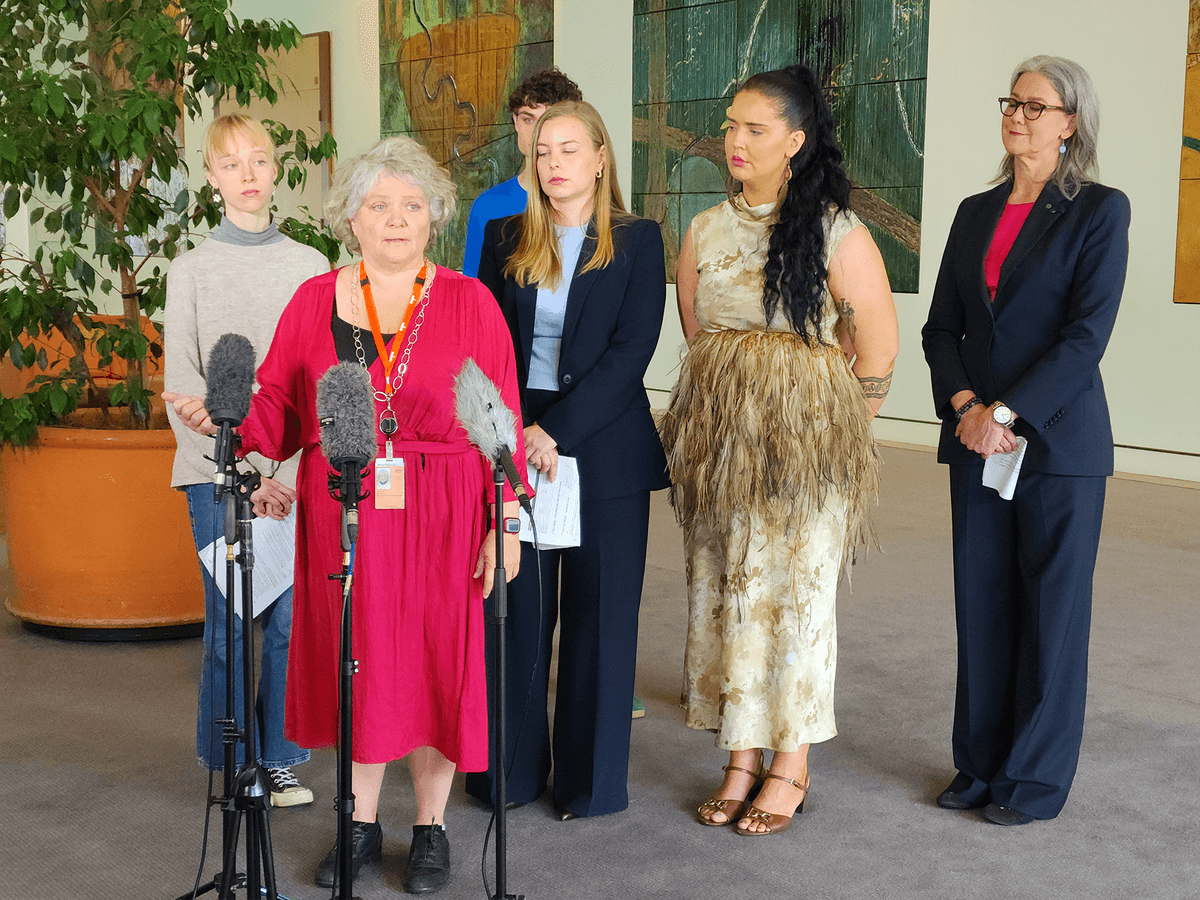
Photo: Peter Butz


Two United Nations human rights experts have formally challenged the Albanese government over its continued approval of coal and gas projects, raising serious allegations about Australia’s failure to protect young people from worsening climate change.
The international intervention follows an official human rights complaint lodged by nine young Australians last year, accusing the government of putting their lives, health and futures at risk through continued fossil fuel expansion and subsidies.
Environmental Justice Australia (EJA) senior lawyer Hannah White said it marked a significant development in their fight for climate action.
“Young people will spend their whole lives dealing with the consequences of decisions they had no say in,” she said.
“They should be able to trust that the adults making those decisions are looking out for them – and following the law.”
She said the government had responded by outlining its existing climate policies but did not explain how continuing to approve new coal and gas projects was consistent with protecting young people from worsening climate harm.
Among the complainants was Zhanāe Dodd, an Aboriginal woman from Gungalu Country near Rockhampton, who said digging started on her Country at the Gemini coal mine last week.
“When I found out, I felt like I’d failed. It’s hard to explain that feeling,” she said.
“As a First Nations person, Country is part of who I am. I’ve grown up with a deep responsibility to look after it.
“There’s a real sense of grief that comes with watching your Country being destroyed.”
Ms Dodd said First Nations people felt enormous pressure to defend their land from mining developments.
“How are we supposed to protect Country when our governments keep approving projects that destroy it, and we have so little power to stop them?” she asked.
Fellow complainant Maya Farmer grew up in Sawtell on the NSW north coast, who recalled a devastating storm that badly damaged homes and businesses and caused the roof at the shopping centre where she worked to collapse.
“Growing up, climate change was always talked about as a future problem,” she said.
“But young people like me are living through disaster after disaster, now.
“We’re sick with worry about what comes next.”
Quality research, analysis, explainers and factchecks from experts you can trust.
She said seeing two UN Special Rapporteurs respond to their complaint had given her back a sense that their voices mattered.
Australian Youth Climate Coalition national director Grace Vegesana said their experiences reflected a much wider problem.
In 2024, UNICEF Australia reported that more than 1.4 million Australian children were exposed to disasters in an average year.
Parents for Climate revealed last year that ex-Tropical Cyclone Alfred alone cost children at least 2.3 million days of learning in 2025.
“Your house is on fire and you ask the government to stop pouring fuel on the fire, and they respond by telling you how much they’ve invested in buckets of water,” said Ms Vegesana.
“Buckets might help, that is true. But what we really need is to stop adding fuel to the fire.
She said the problem with the Albanese government’s response was that it simply listed its climate policies but didn’t explain why it continued to approve new and expanded coal and gas projects.
Australia Institute co-CEO Leanne Minshull said young Australians were forcing politicians to confront an issue that successive governments had avoided.
“Phasing out fossil fuels in Australia has always been a political fight successive governments have chosen to avoid. Today a bunch of young Australians have made avoiding that fight harder,” she said.
“Imagine being a minister in a government that was so bad at tackling the fossil fuel industry, its young people went to an international body for help?”
Generation Justice, a youth-led climate justice campaign involving the nine young Australians, called on the Albanese government to stop new approvals immediately and prepare a national roadmap for a rapid and fair phase-out of climate pollution.
It’s also pushing for the end of fossil fuel subsidies.
Research by the Australia Institute found fossil fuel subsidies cost Australian governments $16.3 billion in 2025–26, an increase of 9.4 per cent on the previous year.
That equates to $31,020 every minute of every day in 2025–26, or $590 for every person in Australia.
“As countries around the world prepare a roadmap out of coal and gas, Australia has a map for expanding them. Even worse, the government continues to provide the industry with subsidies and refuses to adequately tax the export gas industry,” said Ms Minshull.
She urged the government to implement a 25 per cent tax on gas exports, which the Canberra think-tank estimates could generate around $17 billion every year in additional revenue.

