Australia has agreed to take responsibility for highly radioactive nuclear waste from its AUKUS submarines without publicly naming where it will be disposed of, an arrangement inquiry lead commissioner Peter Garrett has labelled “astonishing, reckless and cavalier”.
By Tegan George
Wed 4 Nov 2026 13.45 AEDT
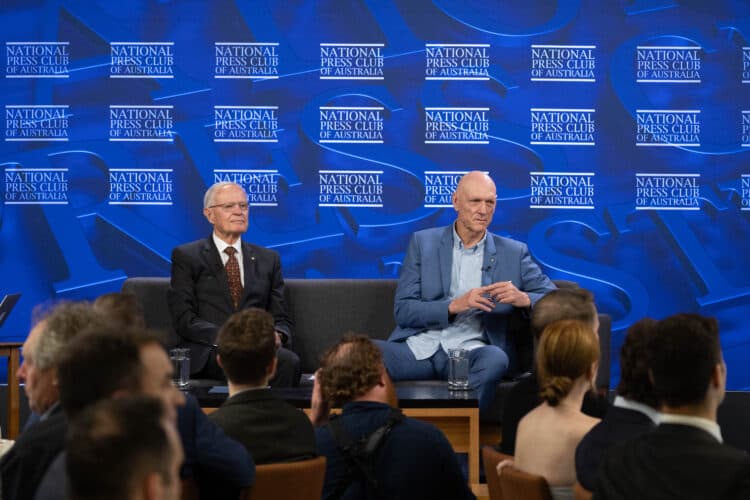
Photo: Mike Bowers


Australia has agreed to take responsibility for highly radioactive nuclear waste from its AUKUS submarines without publicly naming where it will be disposed of, an arrangement inquiry lead commissioner Peter Garrett has labelled “astonishing, reckless and cavalier”.
Speaking at the National Press Club (NPC), the former Labor minister raised concerns about Australia’s ability to deal with the waste as he outlined the findings of an independent five-month inquiry that has called for the submarine deal to be scrapped and a royal commission established.
Mr Garrett questioned why Australia was pressing ahead when “after 60 years, and with more money and nuclear expertise than Australia, neither the UK nor the US has managed to develop and construct a permanent below ground high level radioactive waste storage facility”.
“Yet somehow, that same massive infrastructure challenge, with its attendant risk management requirements, is expected to materialise here overnight,” he said.
In September, Defence Minister Richard Marles said Australia would need to establish a dedicated disposal facility, but the first spent submarine reactors would not require disposal until the early 2050s.
He said it would be located on existing or future Defence land that is geologically stable and away from populations.
“We’re starting the process of thinking about how we go to the determination of a site,” he said.
Mr Garrett argued the uncertainty was particularly concerning for First Nations communities, given Australia’s history of nuclear testing and proposals to store radioactive waste on Indigenous land.
Quality research, analysis, explainers and factchecks from experts you can trust.
“For First Peoples, with a history of suffering the impact of nuclear testing, and whose lands, often in remote locations, are constantly put forward as the most suitable place to bury toxic material that lasts thousands of years, this omission is galling.”
Former Australian Defence Force chief and fellow commissioner Chris Barrie warned that Australia’s obligations extended to highly enriched uranium in the submarine reactors, with no publicly identified permanent disposal site.
He pointed to a controversial proposal to establish an international nuclear waste repository in South Australia a decade ago, which was abandoned after failing to win community support.
“That is salutary. Any plan to dispose of highly enriched uranium waste in Australia will be unacceptable to many Australians,” he said.
The inquiry has called for the nuclear-powered submarine deal to be scrapped immediately, and a royal commission be established.
“I have fewer years ahead of me than those left behind. Younger Australians will live with these choices far longer than I will,” said Retired Admiral Barrie.
“We owe them more than assurances. We owe them an honest account of the dangers, the alternatives, and the decisions being made in their name.”

