Tue 3 Nov 2026 01.00 AEDT
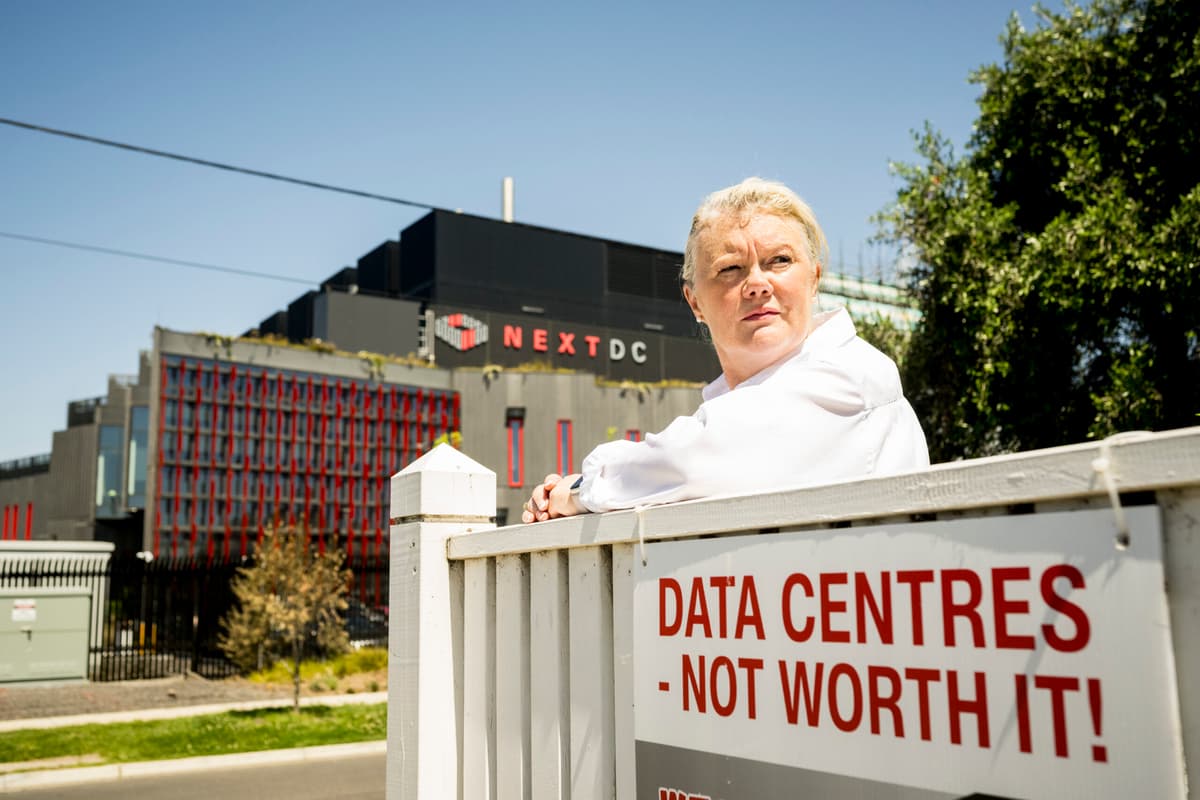
Photo: AAP Image/Christopher Hopkins


Earlier this year, the Victorian government amended planning legislation in Victoria with the approval of the Planning and Environment (Better Decisions Made Faster) Act 2026.
Ten objectives are listed for the Act, which include enhancing Victoria’s liveability, enhancing health and wellbeing through well-planned services and amenity, planning for population growth and increasing housing supply. It also incorporates procedural changes in Victorian land use planning that seek to speed up decision-making and create “clear pathways for planning permits” that reduce the scope for objections in many categories of development.
While the changes claim to position community input earlier in the strategic process, our concern is that the new Act has stripped opportunities for local communities in Victoria to participate and contribute to local planning decisions. In fact, the new act mentions community only twice in all 235 pages: once in the Act objectives, and once about notification of large-scale urban development. Public participation is essential for good planning, and an active citizenry should be encouraged for good planning outcomes that improve local liveability and resident health and wellbeing.
The new Act has been designed to speed up housing delivery and development by “cutting red tape”. The legislation changes mean that many types of new urban development applications now go directly to the Minister of Planning for approval instead of local councils and are separated into 3 different types of applications. The first two types of low and moderate impact proposals for new single dwellings, townhouses and low-rise apartment developments typically preclude the need for local notification, and VCAT appeal rights no longer apply.
If a large high density or commercial development was proposed, most people would assume that local residents surrounding the area would be informed. However, postal notice is now restricted to adjoining landowners. This means that potentially, a new twelve storey development or data centre can be built a street away and the only notification required is an online notice or physical sign on the land. Appealing a new large-scale development that has a huge impact on local amenity and wellbeing has also been restricted.
The new legislation also means that planning appeals are restricted to residents who received direct notice of the new planning application. This means that if you live just streets away from a new high-rise development that is likely to take your daylight, you won’t even have the right to appeal. The changes raise serious implications for democratic decision-making in urban planning and city design, ignoring broader community input on decisions that will affect the ongoing liveability of an area for decades to come.
Recently in Melbourne, the state government has over-ridden their own approved plans for the Arden urban renewal precinct that previously involved community input. Not only are Victorian residents being precluded from objecting to individual developments, but they are also being ignored when they participate early in the process of making strategic plans. It is clearly a race for new housing completions that ignores the value of local knowledge and good democratic process. Planning shouldn’t be a technocratic exercise in housing approval – it should be about engaging communities in the future of more liveable cities and neighbourhoods. These reasons inspired the development of the Australian Urban Observatory at RMIT University, to support the use of evidence in public policymaking and publicly track liveability and population changes in Australian cities since 2018.
Quality research, analysis, explainers and factchecks from experts you can trust.
Urban densification and infill development is occurring at pace across Australian cities, with fewer formal opportunities to engage and shape urban planning. In a project supported by the Victorian Health Promotion Foundation, we looked at what residents thought about densification and how it influenced their health. The aims were to understand community preferences in more densified local neighbourhoods, learn how different models of densification might influence health and wellbeing, and create models of future densified neighbourhoods according to health benefits and community preferences. We’ve completed this with local residents in two very different sites so far and have a third site planned for October.
What we’re finding is that a whole range of local residents are interested in talking about planning issues in their local area despite only 34% of Australians reporting knowledge of a local plan that covers their area, with wealthy and long-term residents most likely to be engaged. The people we’ve been speaking to clearly identify active and public transport, urban greening, public open space, social infrastructure and diverse housing as priorities for healthy and liveable communities.
Transparency through community awareness and involvement in planning decision-making are essential if urban development outcomes are well-designed, healthy and liveable places as opposed to political point-scoring or maximising commercial interests. Local residents hold insightful knowledge that must be combined with future design to enhance amenity and address future potential problems created by poor planning decision-making.
We argue that a lack of agreement and certainty in the outcomes of planning decisions is compounding planning objections and appeals in Victoria, and secrecy is not the answer. Risks of corruption are also increased if approvals only rely on ministerial approval without community contribution. Engaging early, informing communities of the cost and benefits and consequences of change, and ensuring that agreed outcomes aren’t watered down or ignored during or after building are vital to the integrity of planning and the social licence needed for the renewal of Australia’s cities. Similarly, we need clear and transparent policies for transport and social services like schools, parks, and doctors linked to housing and population growth. If this doesn’t occur, then existing communities are only confronted with the negative consequences of increased urban densities.
Urban policy decisions need to plan for an urban system of change that engages and builds on the knowledge of people who live there. Without an integrated approach to planning that involves the community, democracy is dampened, risks of corruption are increased, and we risk the future liveability of Australian neighbourhoods.
Professor Melanie Davern is a Professor of Public Health and Urban Planning within the Centre for Urban Research.
Professor Andrew Butt is a Professor in Sustainability and Urban Planning in the School of Global, Urban and Social Studies (GUSS) and the Centre for Urban Research (CUR) at RMIT.

