Australia’s global climate leadership has come under heavy scrutiny just days before COP31, with United Nations human rights experts calling for the country to match its international climate ambitions with stronger action at home.
By Tegan George
Fri 6 Nov 2026 15.29 AEDT
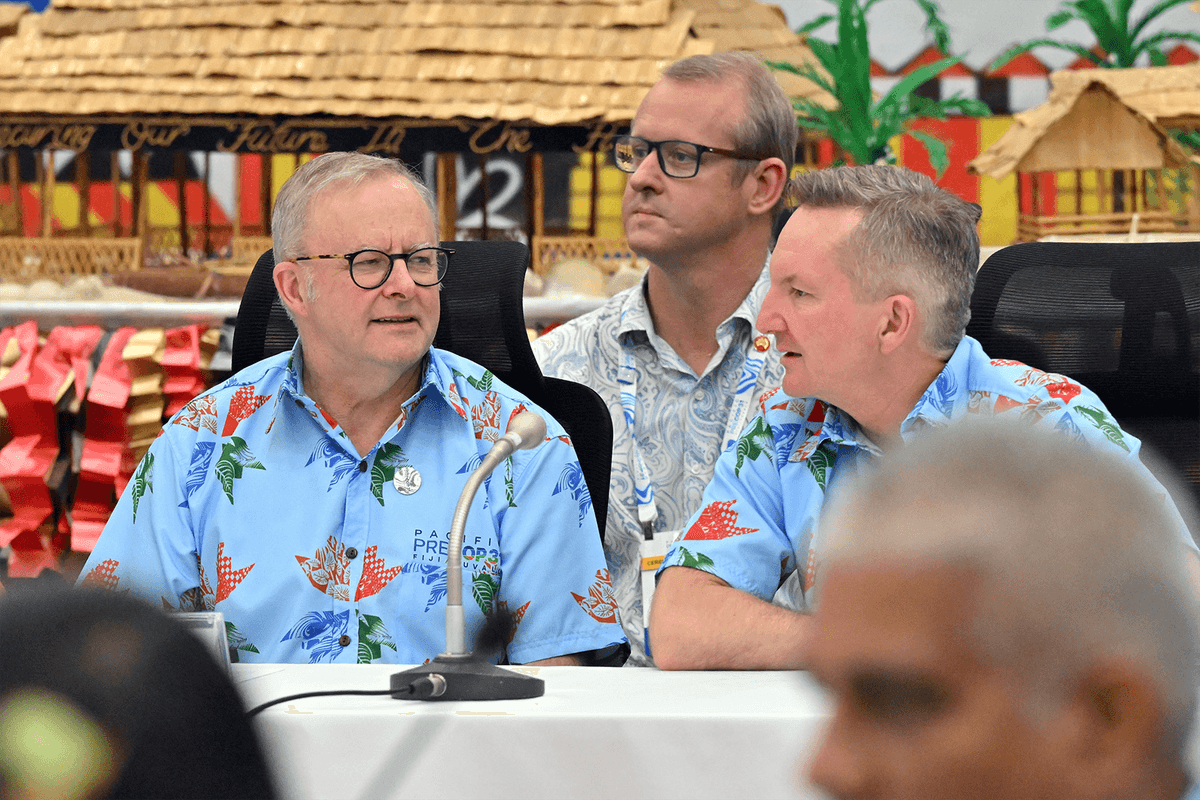
Photo: AAP Image/POOL/Mick Tsikas


Australia’s global climate leadership has come under heavy scrutiny just days before COP31, with United Nations human rights experts calling for the country to match its international climate ambitions with stronger action at home.
Put simply, they want Australia to walk the walk.
Three independent UN-appointed experts have questioned the country’s continued approval of coal and gas projects, arguing it’s inconsistent with its rhetoric on the world stage.
“Global leadership, particularly by an historically high-emitting country, should be backed up by the highest level of ambition … notably the phasing out of fossil fuels,” the experts said.
The experts also questioned Australia’s commitment to its Pacific neighbours, which they described as among the countries “most affected by climate change and least responsible for it”.
“Climate change is exposing children and young people in Australia to repeated traumatic climate events, severe disruptions of their education and family lives,” they said.
“The impacts on children in the Pacific region have been even more protracted, severe and widespread.”
Independent analysis cited by the UN experts suggests Australia would need to cut its emissions by around 81 per cent by 2035 to meet the Paris Agreement’s 1.5°C goal.
Last year, Australia pledged to reduce emissions by 62 to 70 per cent below 2005 levels by 2035 and reach net zero by 2050, with Prime Minister Anthony Albanese describing the 2035 target as “ambitious but achievable”.
In its response to the UN experts, the Albanese government defended its climate record, describing its 2035 target as among the most ambitious in the world.
It also made clear it wasn’t planning to revise the target.
“The Australian Government is not considering revising its 2035 NDC and remains focused on implementing the policies and measures required to achieve its robust emissions reduction commitments,” it wrote.
Quality research, analysis, explainers and factchecks from experts you can trust.
The government also defended its continued role as a fossil fuel exporter, arguing Australia had an important role in maintaining regional energy security as countries transitioned to cleaner alternatives.
“Australia is also working to transition away from fossil fuels in our domestic energy system,” it said.
Since coming to power in 2022, the Albanese government has approved 38 new, expanded or extended coal, oil and gas developments, according to the Climate Council.
The government also acknowledged the emissions generated by Australian fossil fuel exports, which are not counted towards the country’s national emissions total.
A recent Global Witness analysis of Australian government data found emissions from those exports exceeded the combined domestic emissions of the world’s 44 least developed countries in the decade following the Paris Agreement.
Earlier this week, more than 500 Australian-based academics and experts wrote to the Prime Minister calling for an end to future approvals, arguing Australia cannot demand climate action from other countries while continuing to green-light fossil fuel projects at home.
The UN human rights experts also questioned Australia’s reliance on carbon offsets, arguing the system allowed major polluters to buy credits rather than reduce their own emissions.
“The NGER Act permits an unlimited use of offsets under carbon credit schemes to address any excess, such that real emissions reductions do not need to be made,” they wrote.
“This despite evidence that at least 75 per cent Australian carbon credits do not result in real emissions reductions.”
However, in its response, the Albanese government defended the scheme, pointing to independent reviews that “consistently found the scheme is sound and delivering genuine emissions reductions”.
The government said it had committed more than $75 million since 2023 to reforms aimed at strengthening the integrity of the scheme.

