One of Australia’s foremost experts on politics in the United States says President Donald Trump is weaponising the murder of far-right activist Charlie Kirk.
Wed 17 Sep 2025 00.00 AEST
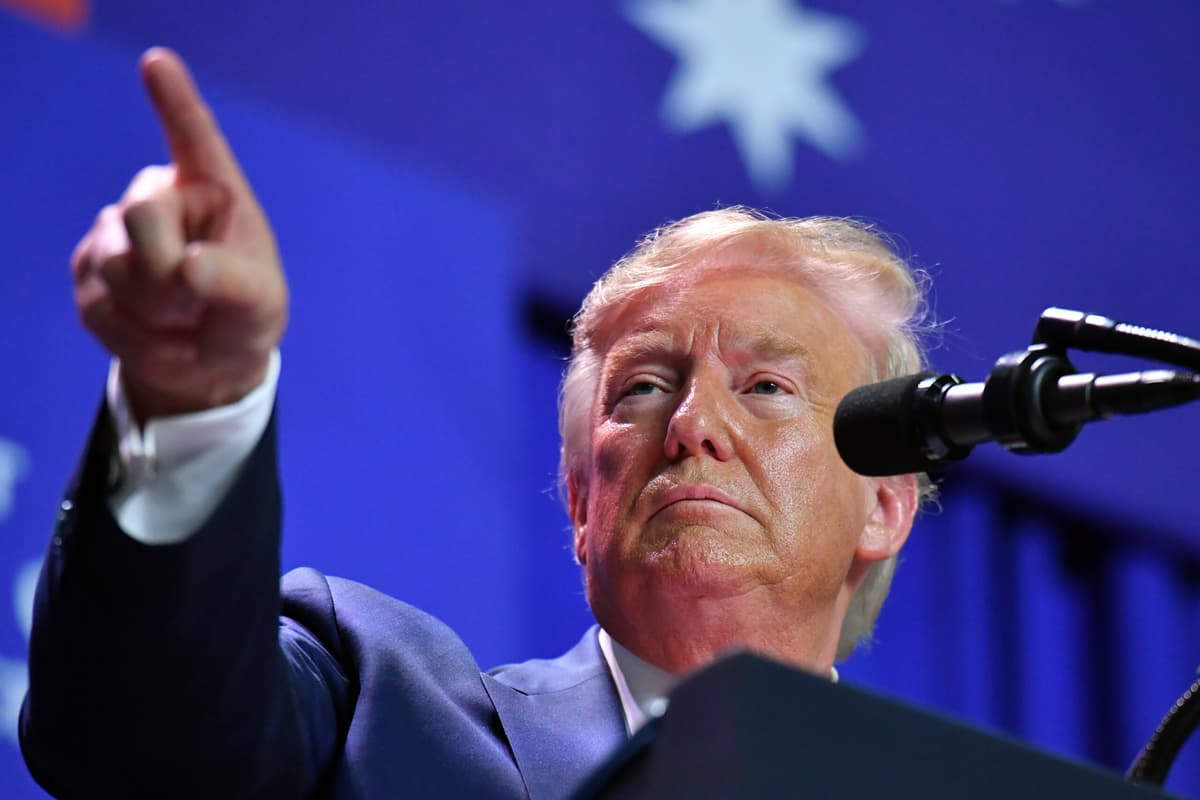
Photo: AAP Image/Mick Tsikas


Dr Emma Shortis, author of Our Exceptional Friend: Australia’s Fatal Alliance with the United States and After America: Australia and the new world order, says from the moment President Trump announced Kirk’s death, he and his team had stoked the outrage rather than tried to calm it.
“It was very clear that Trump and the people around him would weaponise this incident, this horrific incident of violence, to their own ends because that’s what they always do.” Dr Shortis said on the After America podcast.
Dr Shortis, who is the International & Security Affairs Program Director at The Australia Institute, told co-host Angus Blackman she was live on ABC television when the news broke and, in that moment, recognised that Trump saw the murder as an opportunity as much as he saw it as a tragedy.
“Trump is not the kind of leader who is going to try and cool things down,” she said.
Advertisement

“We know Trump’s not going to do that. He loves violence. He welcomes it. He has welcomed it for his whole political career. He and the people around him are already using it to that end. They’re calling for retribution.
“We know all the evidence suggests that events like this can be seismic. They can be a catalyst for further violence, and what is required to avoid that is for leaders to be leaders and call for calm and enact policies that help support that calm.”
Dr Shortis said Kirk was a polarising figure in life, and the behaviour of the President since his death continues and amplifies that legacy.
“He (Kirk) was a really aggressively right-wing figure who said some abhorrent things about people who didn’t look like him and, in that way, of course fit right into the Trump universe,” she said.
“I think it helps explain the reaction from that universe to his death.”
Dr Shortis says many people are comparing the murder of Kirk and escalating political violence to 1968, and particularly to the reaction to the assassination of civil rights activist Martin Luther King Jr in Memphis, Tennessee.
King was killed on April 4, 1968, while campaigning against the dismal pay and treatment of African American workers.
That night, Robert F Kennedy, who was campaigning for the Democratic Presidential nomination, gave an impromptu speech in Indianapolis, Indiana.
Despite the overwhelming anger in the crowd at the news of King’s assassination and obvious likelihood of rioting (which followed in many cities) Kennedy called for calm.
“What we need in the United States is not division. What we need in the United States is not hatred. What we need in the United States is not violence or lawlessness, but is love and wisdom, and compassion toward one another,” he told the crowd.
Kennedy, whose own brother, President John F Kennedy, had been assassinated five years earlier, went on, urging the audience to “replace that violence, that stain of bloodshed that has spread across our land, with an effort to understand with compassion and love.”
“Unsurprisingly, Trump is totally doing the opposite,” Dr Shortis said.
“In a video address from the Oval Office, he talked about going after the organisations that allowed this to happen or supported this to happen.
“Of course, there’s no evidence of organisational involvement, but they will use this event to enact further oppression to go after their enemies and integrate it into that broader project of suppression.
“He doesn’t even bother to mention other incidents of political violence perpetrated by the far right of the United States, including the murder of lawmakers in Minnesota fairly recently.”
Dr Shortis says political violence is “shockingly common” in the United States.
“(It) isn’t necessarily a product of the right or left, but what is clear is that Trump is intent on weaponizing that political violence.”
“So, I don’t see a way in which this de-escalates.”
Advertisement

