Advanced search
The Point - home
DonateSubscribe
HomeWhat's NewOpinionOff the ChartsExplainersFactcheckAbout Us
The Point — home
DonateSubscribe
The Point — home
Advanced search
  • Home
  • What's New
  • Opinion
  • Off the Charts
  • Explainers
  • Factcheck
  • About Us
DonateSubscribe
Subscribe
  • Home
  • What's New
  • Opinion
  • Off the Charts
  • Explainers
  • Factcheck
  • About Us
The Point - home
Privacy PolicySitemapComplaints & CorrectionsNewsletter

The Point recognises the ancestral connections and custodianship of Traditional Owners throughout Australia. We pay respect to Aboriginal and Torres Strait Islander cultures and to Elders past and present.

©2025–2026 The Point, an initiative of The Australia Institute

WHAT'S NEW

Reserve Bank decision to hold interest rate at 3.6% labelled “very cruel”

“The Reserve Bank has once again chosen to be content with rising unemployment", says economist

By staff writers

Wed 1 Oct 2025 09.57 AEST

Economy
Reserve Bank decision to hold interest rate at 3.6% labelled “very cruel”

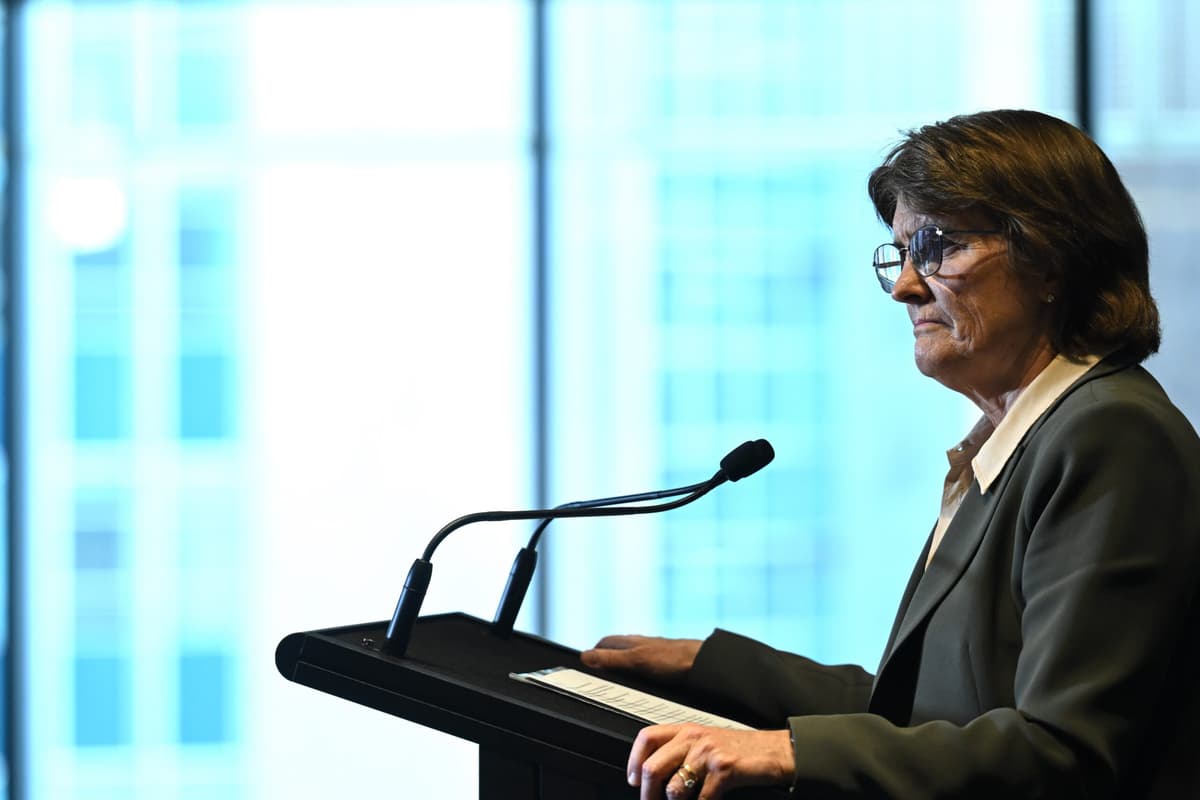
Photo: AAP Image/Dean Lewins

Republish this article

This article is licensed under Creative Commons — Attribution-NoDerivatives 4.0 International (CC BY-ND 4.0).

Republishing guidelines

  • You must credit the author(s) and The Point.
  • You must link back to the original article.
  • You may not edit or modify the article content.
  • Images may be subject to separate copyright and are not included in this licence.

The Reserve Bank of Australia has today decided to leave the interest rate unchanged at 3.6%.

In its reasoning, the RBA argued that the situation is uncertain, but all the uncertainty points to slower growth.

“Uncertainty in the global economy remains elevated,” it said.

“There is a little more clarity on the scope and scale of US tariffs and policy responses in other countries, suggesting that more extreme outcomes are likely to be avoided. Trade policy developments are nevertheless still expected to have an adverse effect on global economic growth over time.

“Beyond tariffs, a broader range of geopolitical risks remain a threat to the global economy. This could all weigh on growth in aggregate demand and lead to weaker labour market conditions in the domestic economy.”

However, some economists have pointed out that slower growth strengthens the case for a rate cut, as lower interest rates will increase consumer spending and help grow the economy.

The RBA’s decision has been labelled “very cruel” by Chief Economist at the Australia Institute, Greg Jericho.

Advertisement

Mr Jericho said the decision means more pain for those struggling with high mortgage repayments.

He also said more people who lose their jobs.

“The Reserve Bank has once again chosen to be content with rising unemployment,” he said.

“While there have been some signs of improved household spending, the major reason for the increase has been the recent interest rate cuts, rather than an underlying strength in the economy.”

Mr Jericho highlighted the last recent GDP figures, which showed the economy still growing at barely half the long-term average, while unemployment has been rising steadily for all of this year.

“The opportunity to lock in unemployment at 4% is fast disappearing due to the Reserve Bank believing there needs to be more people unemployed in order to keep inflation below 3%,” he said.

“For those Australians forced to live in poverty on Jobseeker, this is a very cruel decision.”

Advertisement

Related Articles

WHAT'S NEW

New research reveals Australians are putting in $300 worth of unpaid overtime every fortnight

By Tegan George

New research from the Centre for Future Work reveals the average employee is putting in almost three and a quarter hours of unpaid overtime each week, equivalent to 4.4 full-time working weeks a year. Across the country, its report estimates the value of unpaid overtime at $97.93 billion annually.

Economy
New research reveals Australians are putting in $300 worth of unpaid overtime every fortnight

OPINION

Australia’s gender pay gap falls below 20% for the first time

By Gemma Killen

Australia's gender pay gap has fallen to a record low. This year, the pay gap is 19.7%, which means that for every dollar men earn, women earn just over 80 cents. Over a year, this adds up to an average difference of $27,467.

Society & InequalityEconomy
Australia’s gender pay gap falls below 20% for the first time

OPINION

Productivity, New Technologies, Working Time

By Greg Jericho

This is an edited version of a speech delivered by Greg Jericho (Chief Economist at The Australia Institute) at the Academy for Social Science in Australia Annual Symposium. 

Economy
Productivity, New Technologies, Working Time

FACTCHECK

Factcheck: No, a gas export tax would not drive up gas prices for Australians

By Greg Jericho

This morning, Minister for Industry Senator Tim Ayres argued that a gas exports tax would mean higher prices for Australians. Except this is not true. A gas tax would actually lead to lower prices for Australians.

Economy
Not true
Factcheck: No, a gas export tax would not drive up gas prices for Australians