Gas export tax could raise up to $17bn a year, The Australia Institute tells Senate inquiry as gas bosses called to appear
The bosses of Australia’s biggest gas producers have been asked to front a Senate inquiry into a proposed 25 per cent export tax amid soaring profits driven by the global energy crisis. In a submission to the Senate Inquiry into the Taxation of Gas Resources, the Australia Institute estimated that such a tax could raise up to $17 billion per year.
Wed 15 Apr 2026 12.20
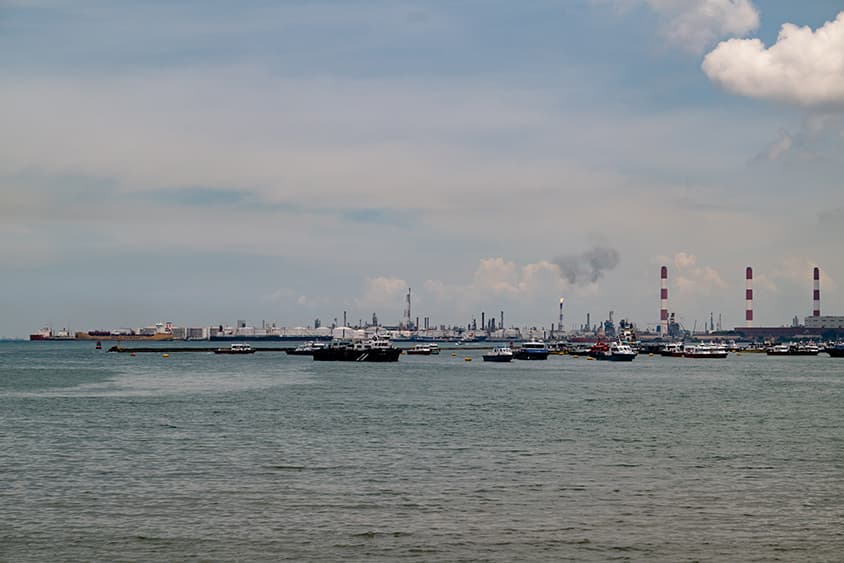
Photo: AAP Image/Tom White


The bosses of Australia’s biggest gas producers have been asked to front a Senate inquiry into a proposed 25 per cent export tax amid soaring profits driven by the global energy crisis.
CEOs from Santos, Woodside, INPEX, Chevron, Shell and ConocoPhillips have been asked to give evidence at the Greens-led inquiry next week.
“This is a serious inquiry, and I won’t be tolerating excuses,” said committee chair Greens Senator Steph Hodgins-May.
“I will be urging my colleagues to compel these CEOs to appear.”
The inquiry will hold two public hearings in Canberra and one in Perth.
Under Senate rules, the executives can be ordered to attend.
Support for the flat-rate tax has been gaining significant momentum as the US–Israel war on Iran continues to send shockwaves through global oil markets.
First proposed by the Australian Council of Trade Unions (ACTU), the levy now has the backing of Labor MP Ed Husic, the Australian Greens, several independent crossbenchers, the Australian Council of Social Services and more than a hundred prominent musicians, including Midnight Oil and Missy Higgins.
“These companies are set to rake in blood-soaked war time profits, while the rest of us are paying through the nose at the petrol station and supermarket checkout,” Senator Hodgins-May said.
“People are pissed off. They’re sick of the excuses, and they’re sick of the talking points, so we urge them [the CEOs] to appear.”
In a submission to the Senate Inquiry into the Taxation of Gas Resources, The Australia Institute estimated that such a tax could raise up to $17 billion per year.
“If Australia is to embrace progressive patriotism, as the Prime Minister calls it, or put Australia first, as Pauline Hanson says, then this is a once-in-a-generation opportunity to simultaneously repair the budget, improve the quality of public services and lower the cost of living,” said Dr Richard Denniss, co-CEO of the Australia Institute.
Australia does not charge royalties for gas extracted from its waters, instead applying a Petroleum Resource Rent Tax (PRRT) which the submission found to be “an abject failure”.
“If this parliament chooses to leave things largely unchanged, then it is choosing to put foreign-owned gas companies ahead of deficit repair and properly funding things like the NDIS, hospitals, schools and roads,” Dr Denniss said.
Despite LNG exports surging by $47.7 billion between 2014 and 2025, the amount of revenue collected from the PRRT was $450 million lower in 2024–25 than it was a decade ago.
The Australia Institute submission found Qatar exports similar volumes of gas to Australia each year but collects five times as much government revenue.
“I am not aware of any other country that gives away its valuable resources the way Australia does,” said Dr Denniss.
“I wonder if the gas industry executives who are currently running a scare campaign against fairly taxing gas exports could provide any other international examples of such generosity.”
The Greens said they had been buoyed by the government’s move to seek internal advice on the gas tax models, noting its “rhetoric and tone have shifted”.
Senator Hodgins-May said, “We remain hopeful that they will read the room and recognise that Australians are doing it tough.”
The Australia Institute estimates the public misses out on $2 million in revenue every hour, with its Gas Giveaway Tracker showing losses in real time as the government delays implementing the tax.
Dr Denniss said it would transform the Commonwealth budget, push down domestic gas and electricity prices, and show Australians that their politicians are willing to put them first.
“Parliament has a choice. It could choose the status quo,” he said.
“Or, this time, it could finally decide that Australians deserve a fair share for their gas.”
Related Articles
"Pivotal moment" for LNG tax reform as prices surge globally
A lead analyst at the Institute for Energy Economics and Financial Analysis (IEEFA) has argued that conditions are ripe for an overhaul of how Australia taxes liquefied natural gas (LNG) exports, with gas giants preparing to cash in on another global price surge.