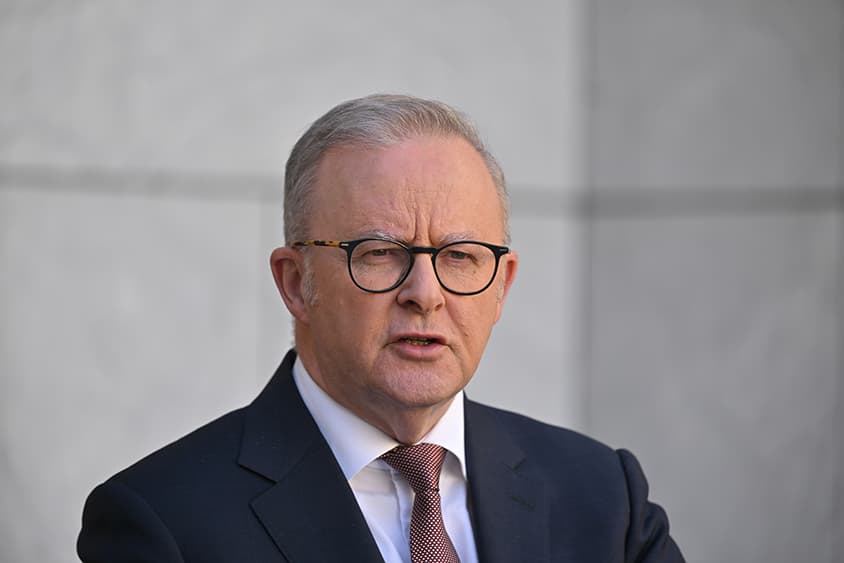
Japanese Prime Minister Sanae Takaichi will visit Australia next week as reports emerge that Anthony Albanese has abandoned plans for a gas export tax as to avoid upsetting key trading partners.
According to Japan’s Nikkei newspaper, the pair are expected to discuss rare-earth supply chains and the evolving situation in the Strait of Hormuz.
The visit comes two weeks after a Senate inquiry examined how Australia taxes gas exports.
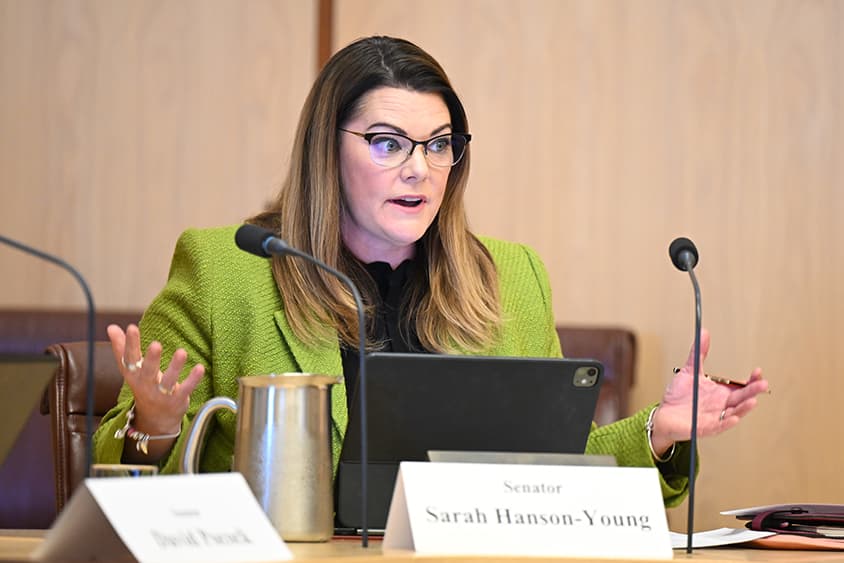
“This is the moment the Albanese government decides who it works for,” said committee chair and Greens Senator Steph Hodgins-May.
“Kill the tax, and Australians will see a government captured by corporations.”
According to the Australian Financial Review, the Prime Minister deemed it “not the time” to risk alienating major export markets, with the government prioritising the maintenance of fuel supplies it feared could be disrupted by any potential reaction to a tax.
“Every week that the PM delays introducing a 25 per cent gas export tax costs Australians around $350 million,” said the Australia Institute’s co-CEO, Dr Richard Denniss.
“If he delays fixing this problem for another year, then Australia will miss out on $17 billion dollars.”
Anthony Albanese has visited Singapore, Brunei and Malaysia earlier in April to secure extra diesel and fertiliser supplies, while Foreign Minister Penny Wong travels to Japan, China and South Korea this week.
She said the trip was to “ensure Australia is prioritised as a reliable energy partner”.
The Greens argued that the idea that a tax would threaten Australia’s trading relationships was “fundamentally rejected” by the inquiry last week.
“Treasury has been clear that the cost of a gas export tax will be borne by corporations, not our trading partners, yet the government keeps parroting industry spin,” said Senator Hodgins-May.
Last week, the Senate inquiry heard evidence across three public hearings, with environmental, community and advocacy groups appearing, alongside LNG heavyweights Woodside Energy, Shell, Chevron and INPEX.
Gas companies and industry groups consistently argued that higher taxes would risk undermining energy security and future supply, particularly amid global instability and rising demand.
In one of the fieriest hearings, Shell Australia executives warned a new tax would be “spectacularly ill-advised”, before revealing that the company had paid no Petroleum Resource Rent Tax (PRRT) for a decade until last year, despite selling gas from projects such as Gorgon.
The Centre for International Corporate Tax Accountability and Research (CICTAR) principal analyst Jason Ward said the PRRT was “completely unsuitable” for the offshore gas industry.
“The failure of the PRRT so far to collect even one cent from our newly developed offshore gas industry is truly a national disgrace and an international embarrassment,” Mr Ward said.
And Dr Deniss said the public is paying attention.
“Australians know that we only get to sell our gas once, and now that they know we are giving more than half of our gas exports away for free they expect their elected government to do something to fix it. They know that if Australia doesn’t stand up for itself no one else will,” he said.
In an interview with the ABC last Thursday, the Prime Minister insisted the industry still pays company taxes and royalties, on top of the Petroleum Resource Rent Tax (PRRT).
“They pay around about $22 billion [a year] and, importantly, … you do need to acknowledge the tens of billions of dollars of investment that occurs in order to have that gas extracted,” Mr Albanese said.
“And without that investment, that’s come from North America and Japan, in INPEX’s case, we wouldn’t be having a debate because there wouldn’t have been that extraction occur.”
The Greens accused him of “repeating gas industry talking points”, while former Treasury secretary Ken Henry urged the committee to “just do it” and implement a tax.
“I mean, honestly, we’re going to design our taxation system on the basis of the possibility that we’re going to upset somebody outside of Australia?” he asked.
“For heaven’s sake, there’s more than one means of a government dealing with foreign relations.”
The Prime Minister’s department requested modelling from Treasury last month to examine its options to impose a new levy.
A national poll by the Australia Institute in March found more than three in five voters support the tax, which could raise around $17 billion a year.
Independent MP Zali Steggall said the Albanese government must decide whose interests it serves: Australians or the gas lobby.
“This budget, it has a choice: make gas multinationals pay a fair return on Australian resources, or keep selling Australians short,” she said.
“A government willing to cut the NDIS but unwilling to properly tax gas giants has its priorities all wrong.”
Support for a 25% tax on gas exports is surging across Australia and has secured crossbench and cross-party support.
The Greens have urged Anthony Albanese not to “capitulate” to global gas giants and put Australia’s interests first.
“This is a last call to the Prime Minister that Australians have made it clear, tax gas or face a revolt,” said Senator Hodgins-May.