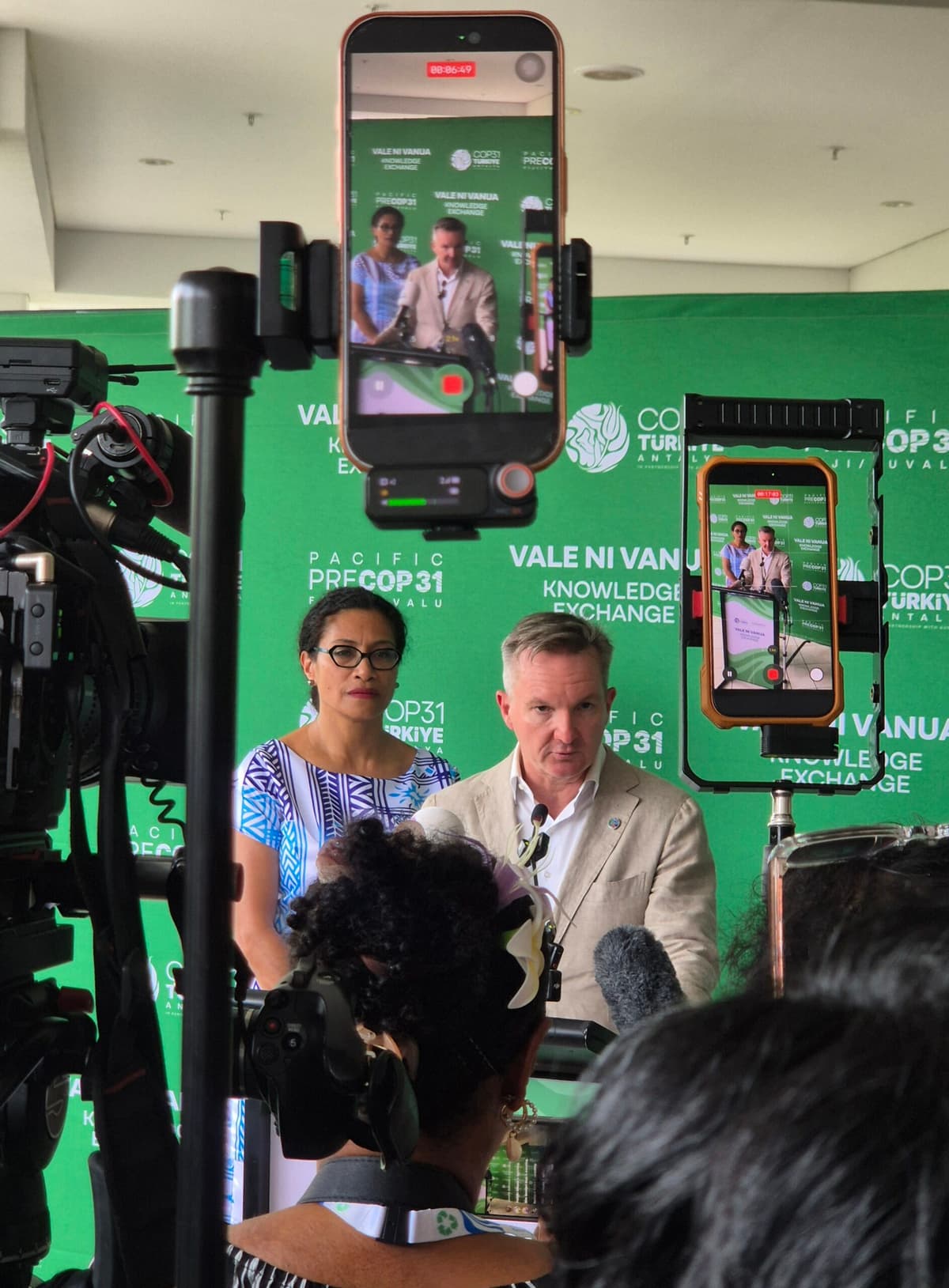
While the cameras chased a garland snub, Tuvalu told the world what COP31 must deliver
If you only followed mainstream coverage of the Pre-COP Leaders' visit to Tuvalu, you could be forgiven for thinking the big issue was headwear.
Australia’s $368 billion AUKUS pact is facing fresh scrutiny as the Albanese government continues to deepen its investment in a program critics warn may never deliver promised nuclear-powered submarines.
Wed 27 May 2026 10.10 AEST

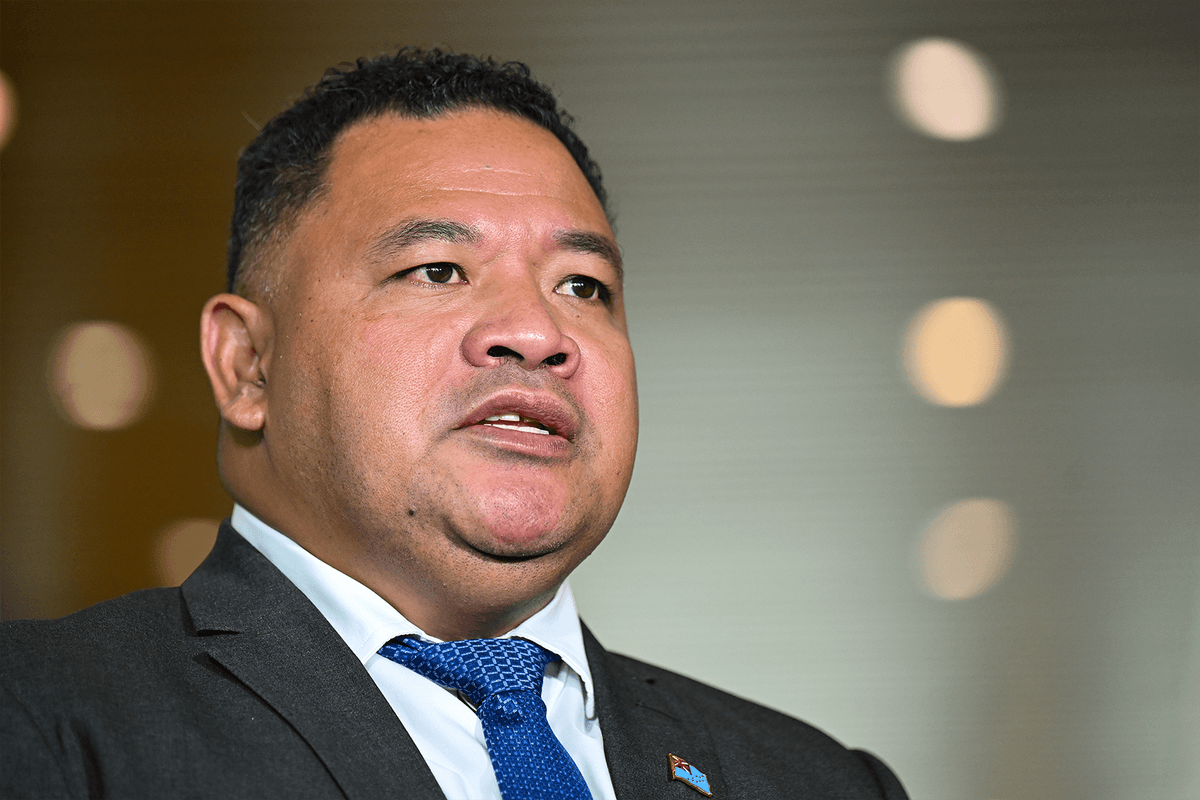
Photo: AAP Image/Con Chronis


Australia’s $368 billion AUKUS pact is facing fresh scrutiny as the Albanese government continues to deepen its investment in a program critics warn may never deliver promised nuclear-powered submarines.
Defence spending continues to rise, with Treasurer Jim Chalmers’s fifth budget allocating $62.6 billion to defence projects in 2026-27 alone, and an additional $53 billion over the next decade.
Notably, it included an additional $431 million over four years for the Australian Submarine Agency to manage the AUKUS deal, increasing its resources by roughly one-third.
The budget also earmarked $11 billion to extend the life of the country’s ageing Collins-class submarines by another decade, allowing them to remain operational until the planned arrival of the nuclear-powered fleet.
However, speaking on the Australia Institute’s After America podcast, Guardian Australia foreign affairs reporter Ben Doherty said the gap between the political rhetoric surrounding AUKUS and the practical reality was becoming increasingly stark.
“There’s a real dichotomy emerging with AUKUS,” he said. “The politics is, to quote Donald Trump, ‘full steam ahead.’ It’s all happening.
“But if you start to look at the reality on the ground, it appears very, very different.
“And it is on the ground because these boats aren’t in the water yet. The AUKUS boats don’t exist.”
The former foreign correspondent said Australia had already given the United States a US$2 billion to expand its submarine industrial base and roughly £500 million to the UK.
“That’s a lot of money to boost them, but we still have no guarantee of submarines,” he said.
“The US is giving its strongest signals yet about the difficulties they’re going to face in providing Australia with any Virginia-class submarines.
“The first of these Virginia-class submarines, Australia is supposed to get, it’ll be a second-hand boat. It’s due in Australia in five or six years.”
Mr Doherty said the US is “getting slower” at building attack submarines, pointing out it takes around 10 years, twice as long as it did 20 years ago.
Under its own legislation, the US is not allowed to sell Australia a submarine if it would degrade its own fleet.
“The US is already short about a quarter of the submarines it needs,” said Mr Doherty.
“It has 49 boats in the water. It says it wants 66.
“So, where these extra boats are going to come from is just really unclear.”
The US Navy’s current shipbuilding plan shows it’s falling short of meeting its target of 2.33 Virginia-class submarines per year.
“It paints this really dire picture of an industry that’s just consistently failed to meet targets, despite all the resourcing, despite the extra money pouring in, it just hasn’t got there,” said the Guardian journalist.
One contentious possibility being discussed by analysts is an arrangement that would see the submarines based in Australia but remain American-owned and under US command.
“Why would the United States hand over submarines and the command of those submarines?” asked Dr Emma Shortis, director of The Australia Institute’s International & Security Affairs Program.
“These are some of the crown jewels in the United States Navy.
“I can’t see how it would be in the United States’ interest to hand over command of those submarines to Australia.”
Australia also hasn’t decided where to build a much-talked-about East Coast base, with Mr Doherty describing the secrecy around AUKUS as “extraordinary”.
“There was no parliamentary debate, no sort of public discussion. It was just this fait accompli that we woke up to one morning.
“All of a sudden, we’re a nuclear nation with nuclear submarines.”
Through his own investigation, Mr Doherty has found that Port Kembla is increasingly firming as the preferred location; however, its residents are fiercely opposed to the idea.
He said internal NSW government documents obtained under privilege contain “some extraordinary sentences”.
“It says things like the East Coast nuclear base will harbour submarines that have nuclear reactors fuelled by highly enriched uranium on board in the event of a military conflict.
“The East Coast nuclear base could be a target for Australian military adversaries for these reasons.
“New South Wales residents may perceive the nuclear base similarly to a nuclear power station as a source of environmental disaster risk.
“Those are pretty frank comments to be coming from government documents and about the reality of what Australians will be living with.”
Australia is also yet to produce a long-term plan for where nuclear waste will be stored, despite warnings that it could take decades to build the necessary facilities.
“It took Finland 40 years to build a permanent waste disposal site,” said Mr Doherty.
“These things take a long time. They take a lot of money. They have long lead times.
“So, the decisions, the movement, actually has to happen now.”
The 2026-27 budget allocated $11.9 million over two years for the Australian Radioactive Waste Agency to assist “in developing advice to inform Australia’s future radioactive waste management and disposal pathways”.
Advertisement
If you only followed mainstream coverage of the Pre-COP Leaders' visit to Tuvalu, you could be forgiven for thinking the big issue was headwear.
There’s tension in the air at this pre-COP. Tension between Pacific Island states and Australia. Tension over the world leaders who have not turned up. Tension over Australia’s continued expansion of coal and gas, even as it asks to be applauded for its climate leadership. And tension over how to call out a powerful partner whose aid and cooperation you still need.