
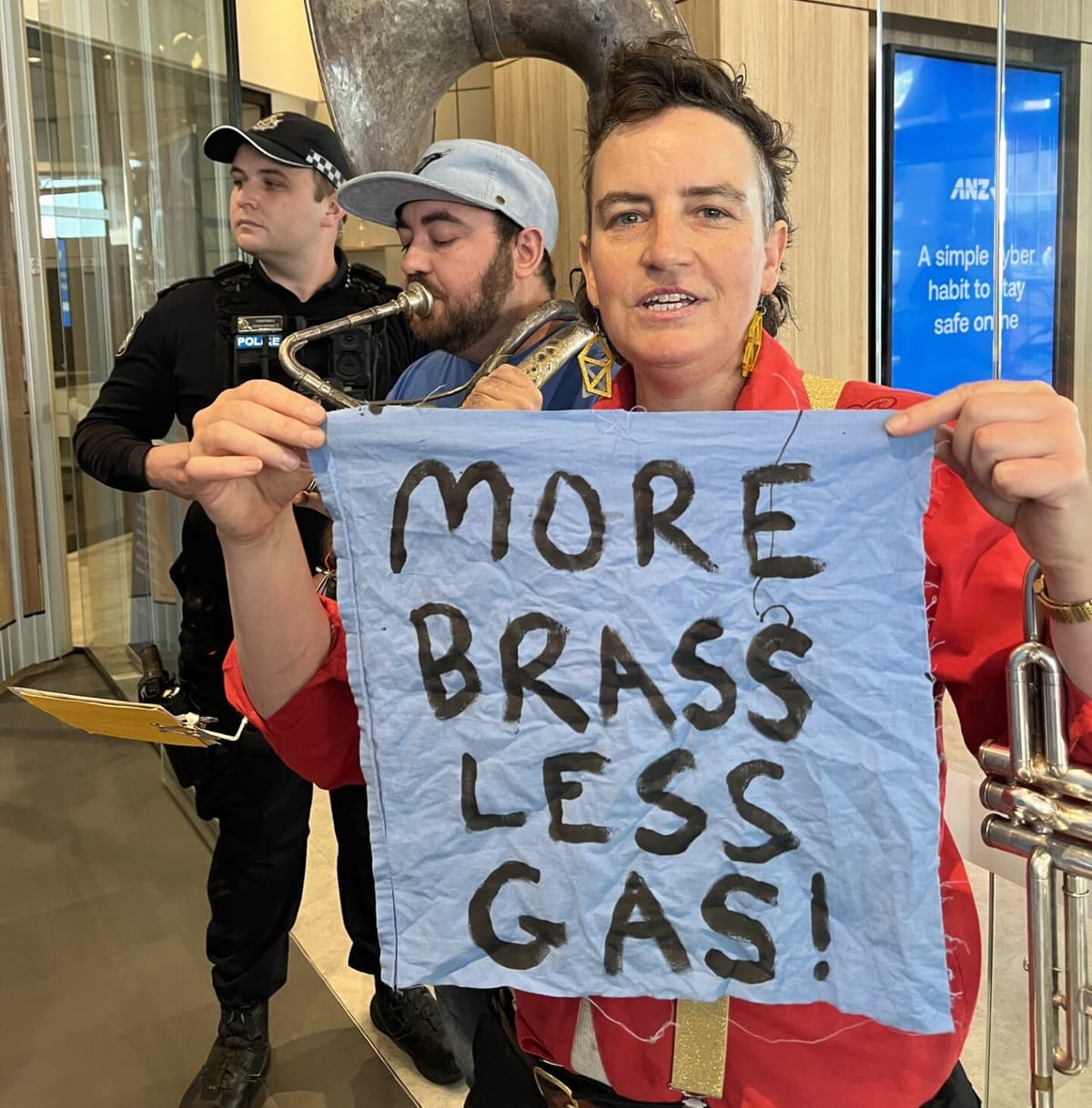
Marching band occupies ANZ branch over gas pipeline funding
This protest was the latest escalation in Rising Tide’s campaign calling on ANZ to rule out funding the North to East Australia (NEA) pipeline.
A court battle over a climate protest at Woodside Energy’s Perth headquarters has reignited calls for Australian governments to introduce laws to prevent large corporations from using costly legal action to silence critics.
Tue 14 Jul 2026 09.31 AEST
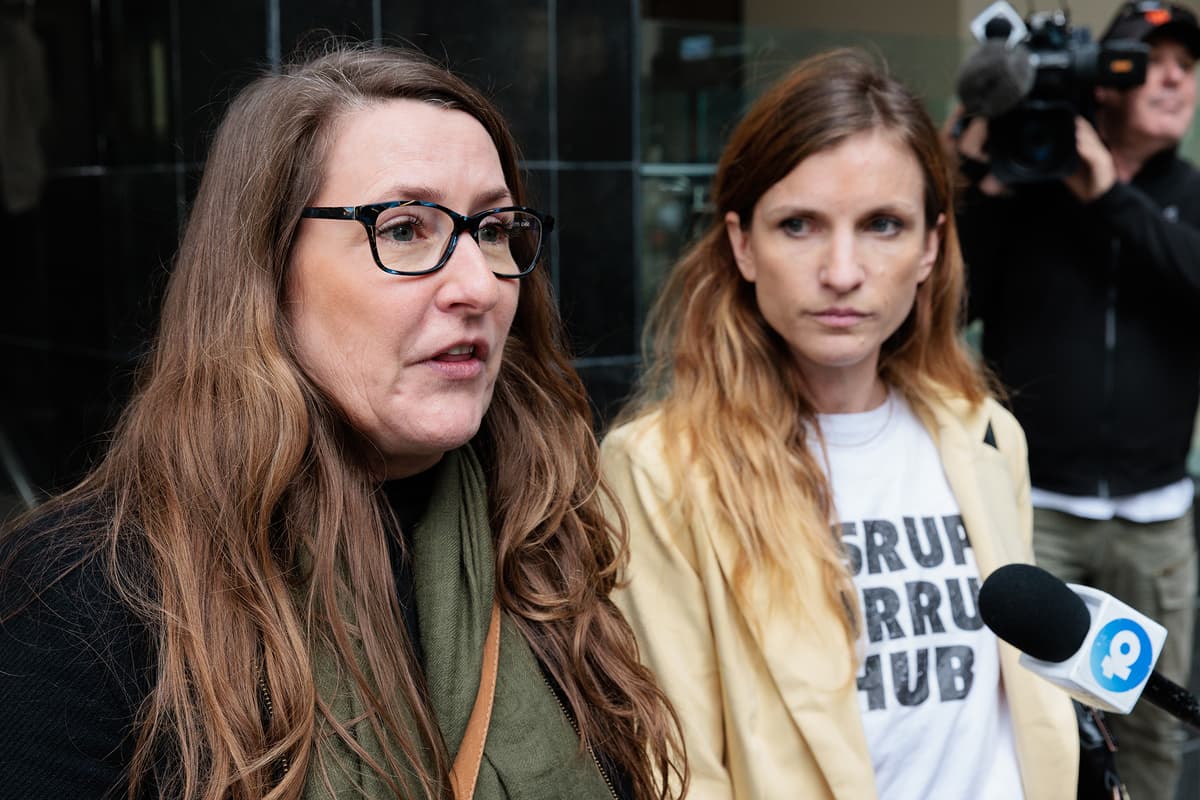
Photo: AAP Image/Richard Wainwright
A court battle over a climate protest at Woodside Energy’s Perth headquarters has reignited calls for Australian governments to introduce laws to prevent large corporations from using costly legal action to silence critics.
The energy giant has revived legal proceedings against three protesters over a gas hoax stunt in 2023 that forced the evacuation of around 2,000 employees.
Emil Davey, Kristen Morrissey and Joana Partyka pleaded guilty to charges arising from the incident and narrowly avoided jail in July 2025, but Woodside is still pursuing civil action against them for alleged losses, including cleaning costs and business disruption.
Woodside is also seeking documents about the planning and execution of the protest, which the Australian Financial Review (AFR) reports could reveal the identities of others allegedly involved.
”This is yet another blatant attempt by Woodside to threaten, intimidate and silence peaceful young campaigners sounding the alarm about their gas expansion,” said Mr Davey, as reported by AAP.
Greenpeace and legal advocates argue the case is an example of a Strategic Lawsuit Against Public Participation, or SLAPP – a type of lawsuit critics say is designed to intimidate or discourage public participation by exposing individuals and smaller organisations to lengthy and expensive legal proceedings.
“In the face of growing opposition to Woodside’s plans to drill over 50 gas wells at Scott Reef, this smacks of Woodside trying to intimidate and bully everyday Australians into submission,” said David Ritter, CEO at Greenpeace Australia Pacific.
“But the community won’t be silenced on this.”
Director of the Australia Institute’s Democracy & Accountability Program, Bill Browne, said the case highlighted why Australia needed anti-SLAPP laws.
“When corporations use their deep pockets and outsized power to harass and overwhelm activists, it has a chilling effect on free speech and peaceful protest,” he said.
“Woodside’s Burrup Peninsula project is a climate bomb, and deserves scrutiny for the threat it poses to 50,000-year-old Aboriginal rock art.
“Whistleblower reporting suggests that the WA Government has altered scientific reporting on the project to justify it going ahead.”
Concerns about the rise of so-called SLAPP suits have also been raised by the Human Rights Law Centre, which describes them as a ‘growing threat’ to free speech and democracy.
In the foreword to its Stop the SLAPP report, former Greens leader Dr Bob Brown warned that the “legal bullying of ordinary Australians as well as community groups by big corporations with ‘attack-dog’ law firms, is on the rise”.
“The bullies are mostly aggressive billionaires or rich companies which can tax-deduct their legal costs while threatening citizens with bankruptcy or the closure of their community organisation,” he said.
In an open letter to Attorney-General Michelle Rowland, the Australian Democracy Network said that increasingly, “the powerful are using the law to stifle debate and silence ordinary people”.
“We are calling on the federal government to stand up to companies that are attempting to undermine Australians’ right to advocate, by passing anti-SLAPP legislation that protects our right to public participation,” it said.
Currently, the ACT is the only Australian jurisdiction with anti-SLAPP laws.
Mr Browne urged the Albanese government to introduce federal protections and encourage other jurisdictions to follow suit.
“If governments are serious about democratic participation and a safe environment, they will back anti-SLAPP laws to protect public participation against corporate lawfare,” he said.
Advertisement


This protest was the latest escalation in Rising Tide’s campaign calling on ANZ to rule out funding the North to East Australia (NEA) pipeline.
Political commentators say that the change in leader will make things harder for the Albanese Government. But did the Greens’ more forceful negating strategy under Bandt hold back Labor’s agenda? If not, it is unclear why Shoebridge would be any different.