The AUKUS security agreement is an extraordinary and deep betrayal of Australia’s national interests and will invite the frontline of the next great war onto our doorstep, an independent inquiry into the deal has heard.
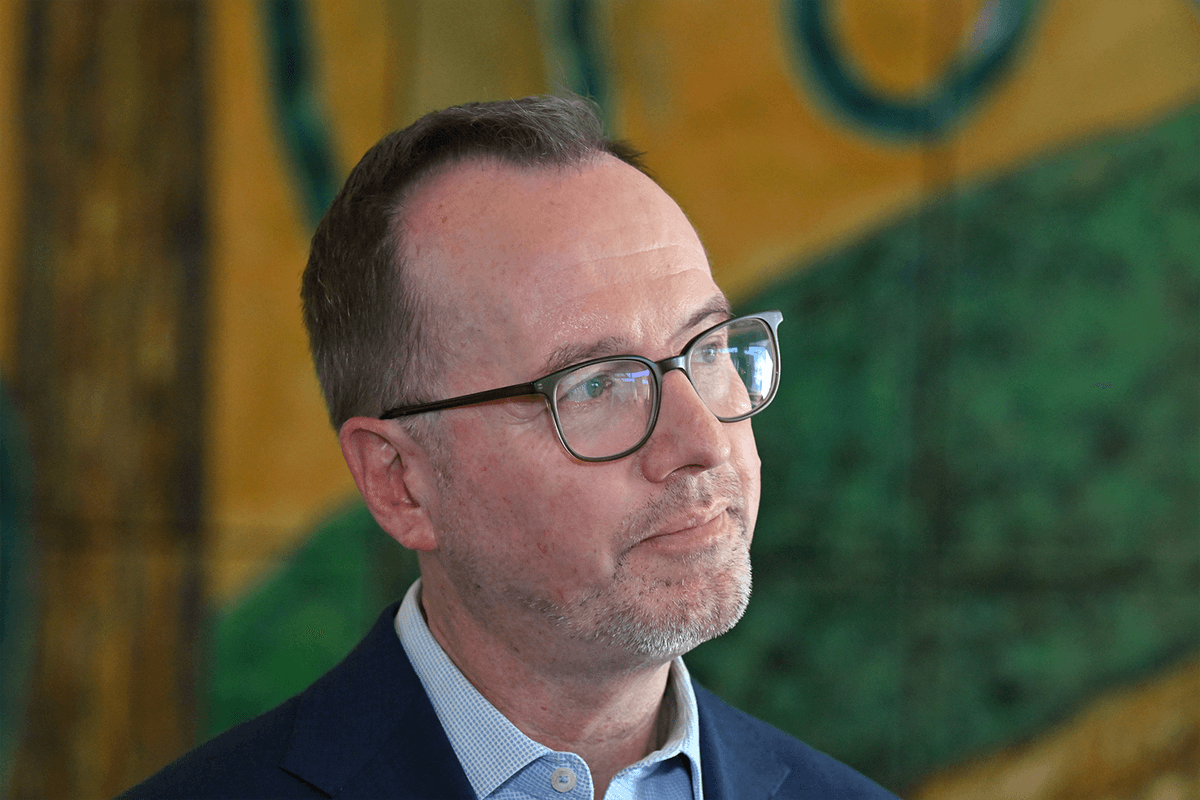
Greens Senator David Shoebridge delivered a scathing assessment of the $368 billion trilateral security pact at Canberra’s first public hearing, arguing it was a “ridiculously dangerous gamble with critical money that could be applied to Australia”.
“AUKUS is perhaps one of the most dangerous, unexplored, adventurous experiments in defence and foreign policy,” he said.
“The idea that we would be enmeshing ourselves in the U.S. military at untold human and material cost in order to be a mid-part in a U.S. war with China, our major trading partner in our region, with all of the disaster that would bring to us, the idea that that is in our national interest only needs to be expressed to be seen to be false.”
The NSW senator questioned Australia’s lingering nostalgia for powerful foreign allies, arguing it reflected a ‘colonial mentality’ and lack of national self-belief.
“We’re literally structuring our defence, our entire defence force to not be independent, but to literally be a cog, an interoperable cog with another country’s, an imperial country’s military,” he said.
“I don’t know how you describe that other than a colonial framework and the absence of imagination about us being able to do this ourselves.”
Senator Shoebridge accused his political colleagues and defence leaders of a ‘deep cultural cringe’ towards the US, arguing the superpower’s growing presence in Australia wasn’t a sign of military strength.
“What we’re seeing here is a sign of significant geopolitical weakness and vulnerability from the United States,” he told the commissioners.
He argued Washington, in its war gaming, was aware its bases across South Korea, Japan and the Philippines were exposed to attack and would potentially be destroyed in the early stages of a conflict with China.
“They are looking at where to relocate many of their assets, where to conduct the war from,” he said.
“They have chosen to actually conduct the war from Australia.”
From next year, HMAS Stirling, a key naval base near Perth, will host a rotation of US and UK submarines through to 2032, when Australia is meant to acquire its first Virginia-class submarine from America.
The former barrister said it wasn’t a sign of US military investment but rather a repeat of what America did in World War II.
Get our newsletter
Quality research, analysis, explainers and factchecks from experts you can trust.
“They said it quite openly,” he said. “They chose Australia in World War II not to save us, not to be nice to us. They chose Australia as the most convenient place to conduct their war in World War Two, and it is exactly the same now in 2026.”
Senator Shoebridge said it was hard to describe the “uncritical” decision-making behind AUKUS as anything other than a “deep betrayal”.
“What I cannot comprehend, and what I find extraordinary, is that there is this consensus amongst the Labor Party, the Coalition, and One Nation … that actually agrees with this strategy from the United States,” he said.
“We are literally inviting a major conflict between the United States and China, we’re inviting that war to happen in our country.”
He said the federal parliament needed to consider what ‘actual human security’ means and it would be wiser for Australia to adopt the ‘echidna strategy’ and employ a strategy of denial rather than aggression.
“We instead direct our resources to defending Australia, defending our maritime and aerial approaches … and a policy of denial of any other powers operating in our region, a prickly echidna not to project force,” he said.
“We say to our neighbours, this is our strategy. We’re no longer investing in global weapons. We’re no longer supporting a superpower to project force against you. We want to have a de-escalation.”
However, he argued Australian politicians were more fearful of Washington than Beijing.
“They pretend that the country they’re fearful of, even though they try not to say it, is China.
“In the quiet moments that I see them, they’re fearful of the US and they’re fearful that if we did say no … they’re fearful of whatever blowback would happen.”
Senator Shoebridge urged that the issue needed to be taken to the public.
“There’s not many things that wake me up in the middle of the night with a sense of anxiety and fear, but the idea that we would be dragged into someone else’s [war], make ourselves a target, and have ourselves destroyed because of a bunch of decisions made in my workplace,” he said.
“It’s one of the reasons we are trying to be as active as we can in the space, educate, get the facts and get the figures because literally, future generations, our future as a nation, is at stake with this.”