Thumbs up, everybody. And then thumbs down, and junk the smiles.
Rethinking “national security”
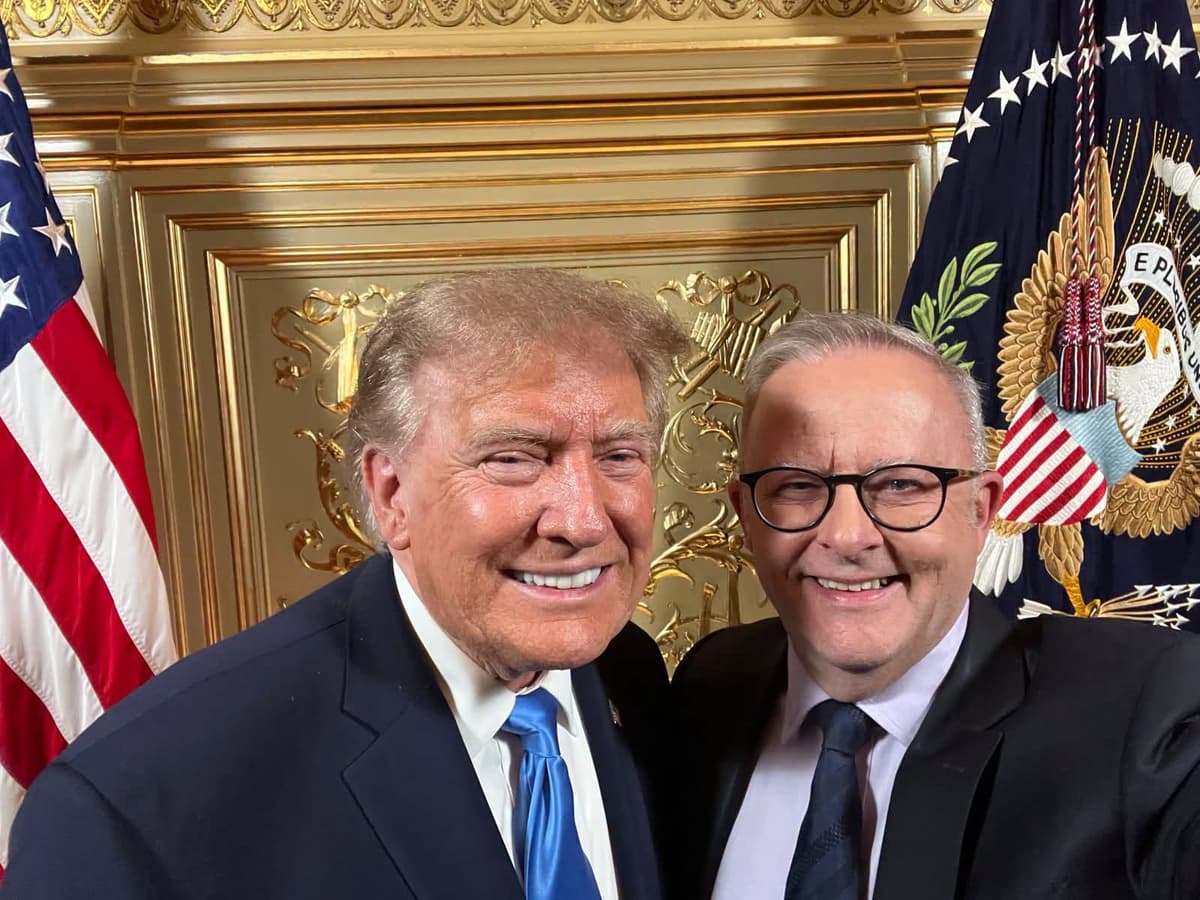
Hegseth is very busy reshaping the United States military in his image, as the Trump administration attempts to reshape the world. Despite the radical change underway – a change we can all see, and that the Australian Prime Minister has explicitly acknowledged – the Australian government is ploughing on, doubling down on the US alliance, full-steam ahead.
This is all driven, as we’ve written before, by old assumptions. Or by, as this great piece (also Mother Jones) argues: by “The Religion of National Security“. That has big consequences for our democracies; partly, as this piece in the Politics and Rights Review suggests, because the “National Security State” might well be “expanding beyond democratic control”, and partly because it blinds too many to the way the world is being reshaped around us. This grim piece in the Boston Review outlines one of the ways that is happening: through Trump’s “Board of Peace”, which is not only illegal, it is an “exit model” from the international legal order “being built in Palestine but [that] may be intended for the world.”
Speaking truth to pain
In Australia, though, it does seem as though the conversation is changing – despite the government’s reticence. The ascension of Senator David Shoebridge to the leadership of the Greens may well force more examination of our established national security assumptions. Shoebridge has recognised what is happening in the United States for what it is: we had a very interesting conversation about just that on After America last year.
But of course, don’t hold your breath. As this analysis of foreign policy coverage on the ABC’s 730 by Ette Media, outlines, much of our national conversation is badly lopsided.
That’s nothing new, of course, and it’s certainly not confined to issues of foreign policy and national security. As the brilliant Kate Manne argued in an arresting piece in The Cut this week, it also applies to violence against women, and specifically violence against women on college campuses.
Finally, regular readers will know that I am loathe to recommend an Ezra Klein podcast. But there are exceptions. I was particularly moved by his conversation with Michigan Senate candidate Abdul el-Sayed, who offered a radical reframing of how we talk about all this: “speaking truth to pain“.