The New South Wales Government’s gun buyback begins today, aiming to reduce the number of guns in the state. It comes in the aftermath of the shootings at Bondi in December 2025.
Mon 2 Nov 2026 13.18 AEDT
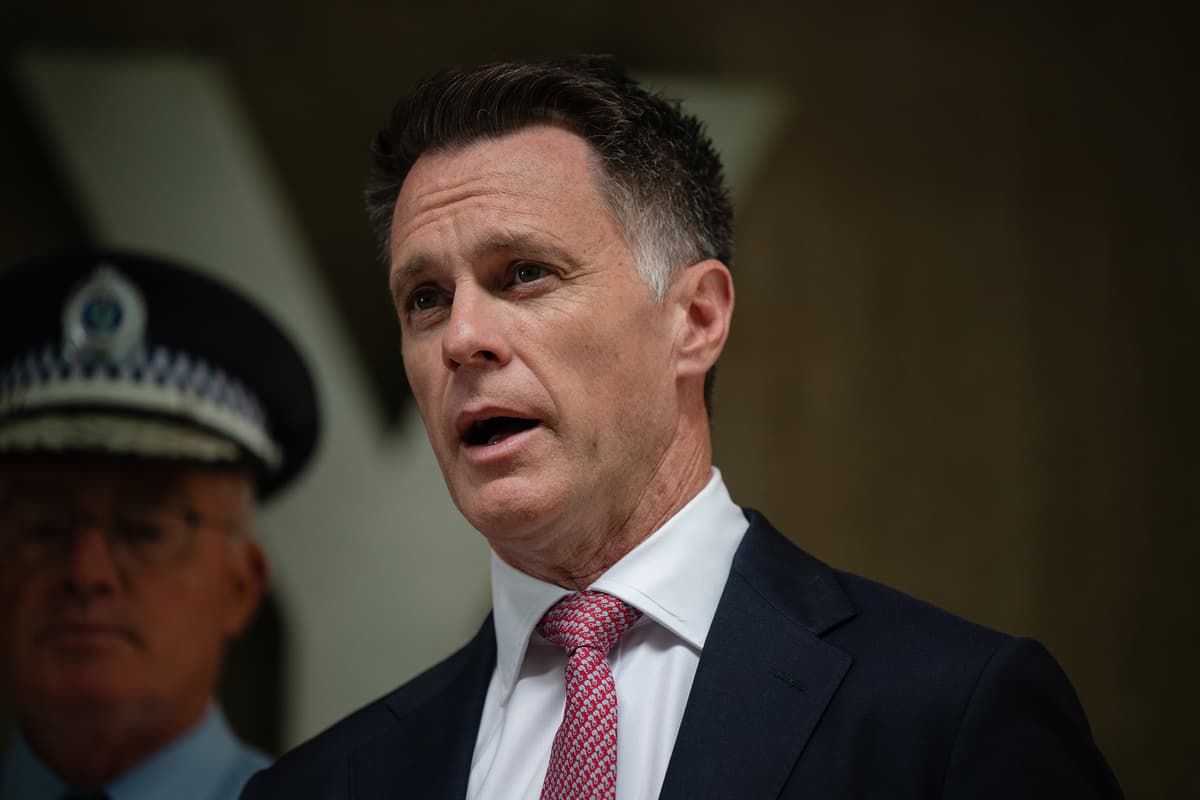
Photo: AAP Image/Sarah Wilson


The New South Wales Government’s gun buyback begins today, aiming to reduce the number of guns in the state. It comes in the aftermath of the shootings at Bondi in December 2025.
NSW Government statistics show that there are currently 1.16 million registered firearms in the state.
Australia-wide, gun numbers are now higher than before the Port Arthur massacre, which prompted the Howard Government’s gun buyback in the late 1990s. Prime Minister Howard’s reforms are widely credited with keeping Australia free of major mass shootings until the Bondi attack on Sydney’s Jewish community.
The current NSW gun buyback is also in response to a recommendation from the Royal Commission into Antisemitism and Social Cohesion. The Royal Commission’s interim report urged the Commonwealth and states to implement an updated and nationally consistent National Gun Buyback Scheme.
“After the horrifying terrorist attack at Bondi, we said we would take big and decisive action to reduce the risk of gun violence in our community – and that is exactly what we have done,” said Chris Minns, Premier of New South Wales.
“There are more firearms in circulation in Australia today than there were before Port Arthur. We have made a deliberate decision to put community safety first by reducing the number of firearms in our community, and I make no apologies for that.
“This is fundamentally about reducing gun violence, reducing crime and keeping people safe. Fewer unnecessary firearms in circulation means fewer opportunities for them to fall into the wrong hands.”
Theft of legally owned firearms is a major source of weapons for criminals in Australia, with the NSW Government estimating that a legally owned gun is stolen every day in the state. Research conducted by The Australia Institute in 2025 estimated that nationwide, a gun is stolen every four hours on average.
“Evidence shows that fewer guns in the community means a safer community, it’s that simple,” said Minister for Police and Counter-terrorism Yasmin Catley.
“Any gun can end up in the wrong hands, which is why we introduced a suite of reforms to reduce risk, strengthen compliance and safeguards, and reduce the number of guns in our community,” Minister Catley said.
The gun buyback is strongly supported by firearm safety advocates. Founder of the Alannah & Madeline Foundation, Walter Mikac, whose wife and daughters were killed at Port Arthur, told the Daily Telegraph that Australians are proud of the country’s approach to managing firearms.
Quality research, analysis, explainers and factchecks from experts you can trust.
“There is a simple equation that applies anywhere in the world: the more firearms there are in a community, the greater the harm,” Mr Mikac said.
“Where there is a risk to public safety, our society doesn’t operate on the laissez-faire approach of hoping everyone does the right thing. Just imagine if we did that with road safety. Public health and safety policy must look for risk, and governments must apply appropriate guardrails to reduce – not eliminate – that risk.”
The NSW Government urges firearm owners to make appointments at police stations participating in the buyback.
“I can’t stress this enough,” Minister Catley said. “Please do not walk into a police station with weapons without an appointment. The Buyback runs for 12 months, there is enough time for everyone to participate.”
The buyback has not been supported by the NSW Liberal-National opposition, which has pledged to freeze the initiative and launch a parliamentary inquiry into gun laws, if elected at the next state election in March 2027.
Western Australia conducted a buyback from 2024, and the Australian Capital Territory has announced it will move to reduce gun numbers. Queensland, Victoria, South Australia, Tasmania and the Northern Territory are currently not implementing policies to reduce gun numbers.
“Australians overwhelmingly want stronger gun laws,” said Rod Campbell, Research Director at The Australia Institute.
“Even before Bondi, seven in ten Australians wanted it to be harder to access guns.
“The NSW Government is not only acting to reduce the number of guns in the community, it is giving voters what they want.
“It will be interesting to watch the NSW opposition parties go to an election with a policy to have more guns in the community, not less.”

