The Australian Council of Trade Unions (ACTU) has warned against further interest rate rises, with new research estimating that almost 900,000 fewer Australians would be in full-time work if the country had followed New Zealand’s economic path.
By Tegan George
Tue 3 Nov 2026 13.12 AEDT
AAP Image/Dan Himbrechts


The Australian Council of Trade Unions (ACTU) has warned against further interest rate rises, with new research estimating that almost 900,000 fewer Australians would be in full-time work if the country had followed New Zealand’s economic path.
The “cautionary tale” comes as the central bank is widely expected to lift rates later today for the fifth time this year, taking the cash rate to an 18-year high of 4.85 per cent.
The ACTU report, A Tale of Two Strategies, compares how Australia and New Zealand tackled the post-pandemic inflation surge and what their different approaches meant for workers.
The report estimates 477,000 fewer women would be in full-time work, while matching New Zealand’s 5.6 per cent unemployment rate would leave another 145,000 Australians jobless.
It also found the average Australian worker would be around $1,300 worse off in real terms if wages had fallen as sharply as they did in New Zealand over the past year.
“Policymakers had the choice to support working people or try to quickly break the back of inflation,” the report outlined.
While Australia sought to preserve its post-pandemic employment gains, New Zealand raised interest rates more aggressively, while its newly elected National-led government also cut spending.
New Zealand fell into a recession and saw unemployment climb sharply, while Australia managed to avoid a recession and keep unemployment relatively low.
But despite taking different approaches, both countries ended up with much the same inflation rates.
“Workers are at the limit of their ability to absorb rate rises,” said ACTU Secretary Melissa Donnelly.
“Supermarket prices went up by 7 per cent for an average basket of items between March and June across all the major supermarkets.
“That’s well above CPI and I don’t know what the Reserve Bank expects people to do about that: not buy milk and potatoes? They’re hardly luxury items.”
Ms Donnelly said big businesses needed to do their part by keeping a lid on prices and profits.
“We are experiencing an overseas-driven inflation spike, and once again, working Australians are expected to pay the cost with higher housing costs, job losses and proposed cuts to public services. It’s time big businesses did their bit for Australia by restraining their profits and prices,” she said.
Quality research, analysis, explainers and factchecks from experts you can trust.
The ACTU also took aim at Australia’s big four banks over their multibillion-dollar profits as mortgage holders braced for more pain.
Ms Donnelly accused the banks of letting the community down.
“The profits of the big four banks currently total more than $30 billion after tax,” she said.
“Only BHP and Rio Tinto are more profitable than the banks and the last time the Reserve Bank went through a cycle of lifting the cash rate in 2022-23, the big four banks creamed off an extra $4 billion in profit from mortgage holders.”
The Australia Institute’s chief economist Greg Jericho has questioned the need for more rate rises, pointing out that unemployment reached 4.7 per cent in August – 22 months earlier than the RBA had forecast in May.
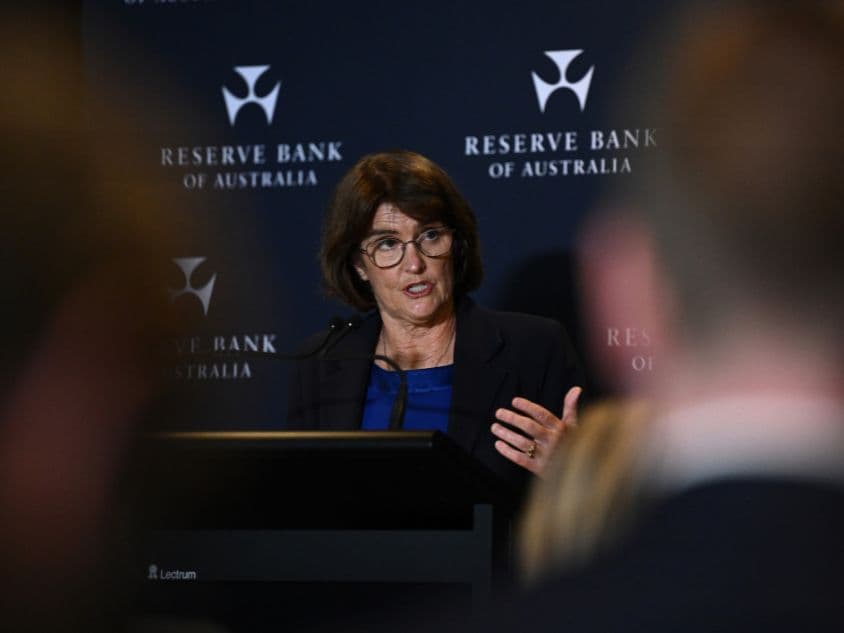
He highlighted comments made by RBA Governor Michele Bullock in August when she said slowing economic activity and rising unemployment didn’t necessarily mean the bank should change course.
“Actually, we need that,” she said.
Mr Jericho said the RBA’s approach risked putting more people out of work, as higher mortgage repayments left households with less money to spend.
“That then means business is slow in the shops and business owners not only don’t feel like they can raise prices too much, they also start cutting back on shifts and no longer employ new people,” he said.
“This not only raises unemployment but it makes workers more worried about asking for a pay rise and instead just feel glad they have a job.”
He argued that higher petrol and computer chip prices were largely behind the latest rise in inflation.
“So, the two biggest drivers of inflation are things utterly outside the control of the RBA. We can have as little money to spend as possible and that won’t affect the price of petrol one bit,” he said.
Ms Donnelly warned that Australia risked repeating New Zealand’s mistakes if the RBA pushed ahead with more rate rises.
“Lifting official interest rates and ignoring the risk to jobs doesn’t fix global inflation. But it costs jobs and Australian workers don’t deserve to be forced down that path,” she said.

