A nest of red imported fire ants was found in the western Sydney suburb of Auburn this week, two months after the insects were first detected at a logistics centre in Sydney’s inner west.
By Anara Watson
Fri 27 Nov 2026 12.08 AEDT
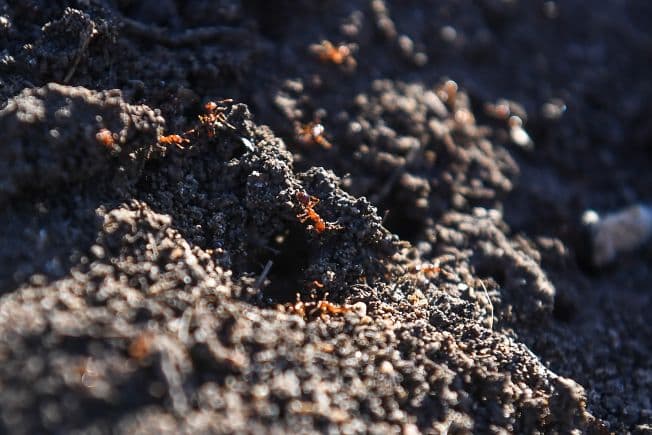
Photo: AAP Image/Jono Searle


A nest of red imported fire ants was found in the western Sydney suburb of Auburn this week, two months after the insects were first detected at a logistics centre in Sydney’s inner west.
It isn’t yet clear how the ants got there, but they have a great capacity to spread – they can even raft on flowing water. Human-assisted dispersal – on transported plants and plant matter, agricultural equipment and packaging – can also be a problem. NSW Agriculture Minister Tara Moriarty said that “the area where they were found is an industrial area and it’s connected to businesses that import products from other countries.”
Unfortunately, this latest detection is more serious than authorities first thought: although the nest was successfully treated, further surveillance revealed a far more extensive presence than first assumed.
That’s bad news for Sydneysiders and, if the ants are allowed to spread, for all Australians.
Australia has been fighting fire ants for two decades, but they have been mostly contained to Queensland. A dedicated task force has been set up in Queensland to fight them, and all states and territories have joined the Australian Government in sharing costs under the National Fire Ant Eradication Program. NSW has now established its own specialised fire ant task force, and Agriculture Minister Tara Moriarty says that NSW “will deliver whatever resources are needed” to address the threats that fire ants pose.
According to Invasive Species Council Advocacy Director Reece Pianta, the NSW taskforce announcement is welcome, but it will require more than vigilance from the state government.
Quality research, analysis, explainers and factchecks from experts you can trust.
Pianta says that “Fire ants are a national threat that requires a national response. Allowing them to establish and spread across Australia would have devastating consequences for our native wildlife, agriculture, economy and the way we live.”
He’s right. Australia Institute research shows that, if allowed to spread across Australia, red imported fire ants could cost households over $1 billion every year in medical, veterinary and management costs.
Costs would be highest in NSW, at more than $320 million annually. Each year, fire ants could sting some 2.6 million people in the state, cause more than 10 deaths from anaphylaxis, and lead to over 700,000 vet visits for pet cats and dogs.
Right now, Australia has a crucial window to halt the spread of fire ants and protect its environment, economy and communities. But with current funding set to expire in June 2027, the country risks going backwards.
To prevent the destruction these insects bring, sufficient investment is needed now.

