Support for making fossil fuel companies help pay for the cost of global warming has surged in Australia, as local councils ramp up their campaign for a national climate compensation fund.
By Tegan George
Wed 25 Nov 2026 17.07 AEDT
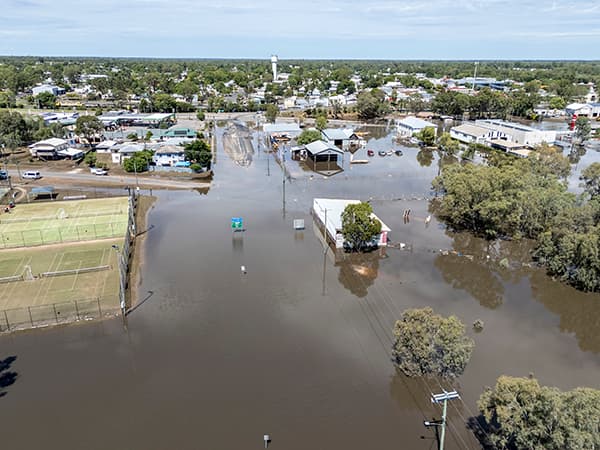
Photo: An aerial view shows flooding in Chinchilla, Queensland, Friday, March 13, 2026. Flood warnings are in place across huge swathes of Australia from Broome to Bundaberg as outback residents in Longreach brace for major flooding. (AAP Image/John Wilson)


Support for making fossil fuel companies help pay for the cost of global warming has surged in Australia, as local councils ramp up their campaign for a national climate compensation fund.
New research by the Australia Institute shows an historic shift in public sentiment, with 54 per cent of Australians believing fossil fuel companies should shoulder the costs of climate damage, up from 37 per cent in 2024.
It marks the largest and fastest shift in any response in the survey’s history, dating back to 2007.
The report’s authors said the shift in public sentiment coincided with growing public awareness of how little fossil fuel companies contribute to the economy amid a high-profile campaign for a gas export tax.
The annual Climate of the Nation survey also found just four per cent believed taxpayers should bear the bulk of the costs, while 58 per cent supported a levy on fossil fuel exports to help local government climate action.
“Australians remain deeply worried about climate change,” said Australia Institute co-CEO Dr Richard Denniss.
“They know that not only do big coal, gas and oil companies falsely claim to be the backbone of the economy, they don’t pay their fair share – and Australians are sick of it.”
The findings come just days after Local Government NSW backed calls for a National Climate Compensation Fund, adding to pressure on the Albanese government to act.
The proposed fund would provide ongoing financial support to councils to help them prepare for and respond to climate change, with the federal government urged to investigate funding sources, including contributions from coal, oil and gas companies.
“This is about giving councils the resources to invest in the future, while easing the financial pressure on local families and businesses,” said Bayside councillor Soraya Kassim.
New South Wales councils suffered $349 million in infrastructure damage from natural disasters in 2021-22, alongside $128 million in other disaster-related costs.
Quality research, analysis, explainers and factchecks from experts you can trust.
“Major polluters should be part of the funding solution, rather than leaving communities to carry the growing costs alone,” said Ms Kassim.
The decision follows unanimous support for a National Climate Compensation Fund at the Australian Local Government Association’s national assembly in June, with growing backing from councils across the country.
The Australia Institute’s research director, Rod Campbell, said the latest move by Local Government NSW shouldn’t be underestimated.
“This is a big deal. With tens of councils and the support of the NSW local government representative body, there is real political momentum building for gas and coal companies to pay for the damage they cause,” he said.
Local councils have been struggling to keep up with the rapidly increasing costs of climate damage.
Natural disasters were estimated to cost the Australian economy $38 billion annually in 2021, with that figure projected to rise to between $73 billion and $94 billion by 2060, depending on global emissions.
Separate analysis by the Australia Institute last year found that insured-costs of climate-related disasters had increased twelvefold over two decades, while local government revenue has only tripled.
Mr Campbell applauded local councils for taking a stand and demanding polluters pay for the damage they cause.
“Federal MPs watch their local councils closely, so this will translate easily into pressure at a national level,” he said.
“It’s not just a political push, but one backed by a very strong moral, environmental and economic logic.
“I hope the municipal associations of the other states follow the lead of NSW.”

