Advanced search
The Point - home
DonateSubscribe
HomeWhat's NewOpinionOff the ChartsExplainersFactcheckAbout Us
The Point — home
DonateSubscribe
The Point — home
Advanced search
  • Home
  • What's New
  • Opinion
  • Off the Charts
  • Explainers
  • Factcheck
  • About Us
DonateSubscribe
Subscribe
  • Home
  • What's New
  • Opinion
  • Off the Charts
  • Explainers
  • Factcheck
  • About Us
The Point - home
Privacy PolicySitemapComplaints & CorrectionsNewsletter

The Point recognises the ancestral connections and custodianship of Traditional Owners throughout Australia. We pay respect to Aboriginal and Torres Strait Islander cultures and to Elders past and present.

©2025–2026 The Point, an initiative of The Australia Institute

OFF THE CHARTS

Albanese says PRRT will ‘ramp up’. Budget papers show it will do the exact opposite.

Prime Minister Anthony Albanese has decided that 'ramping up' is his go-to phrase to use about the Petroleum Resource Rent Tax (PRRT). The problem is that only one fossil fuel item is actually going up, and it’s not the PRRT. It’s the Fuel Tax Credit, a subsidy to the fossil fuel industry.

By Greg Jericho & staff writers

Fri 22 May 2026 01.00 AEST

Economy
Albanese says PRRT will ‘ramp up’. Budget papers show it will do the exact opposite.

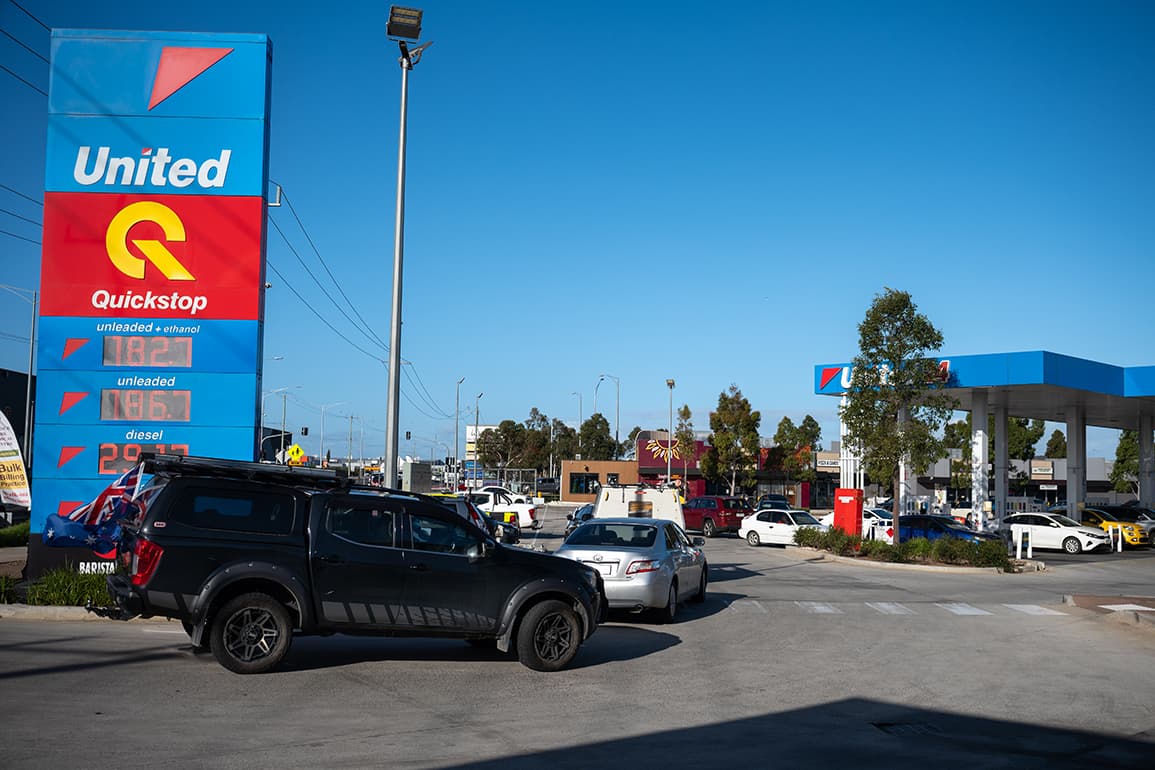
Photo: AAP Image/Jay Kogler

Republish this article

This article is licensed under Creative Commons — Attribution-NoDerivatives 4.0 International (CC BY-ND 4.0).

Republishing guidelines

  • You must credit the author(s) and The Point.
  • You must link back to the original article.
  • You may not edit or modify the article content.
  • Images may be subject to separate copyright and are not included in this licence.

Prime Minister Anthony Albanese has decided that ‘ramping up’ is his go-to phrase to use about the Petroleum Resource Rent Tax (PRRT).

Last week, pressed on whether PRRT had failed, Albanese defended it, saying the structure of the scheme meant revenue would increase over time, or ‘ramp up’.

We’ve heard this before: major gas projects require enormous upfront investment, companies recoup those costs first, and only then does the tax begin to generate larger returns for government.

The problem is that only one fossil fuel item is actually going up, and it’s not the PRRT. It’s the Fuel Tax Credit, a subsidy to the fossil fuel industry.

In the next financial year, the Fuel Tax Credit will cost $10.7bn and then it is projected to grow to $12.8bn by 2029-30.

So what is the Fuel Tax Credit? The credit is money that the Government gives to miners, farmers and transport for notionally paying the fuel excise despite ‘not using public roads’ (this is a very dodgy argument, imo).

Each year it keeps going up.

Ramping up, if you will.

By contrast, the PRRT? The ramp is still there… just in the opposite direction.

Advertisement
Related Articles

OPINION

Australia’s gender pay gap falls below 20% for the first time

By Gemma Killen

Australia's gender pay gap has fallen to a record low. This year, the pay gap is 19.7%, which means that for every dollar men earn, women earn just over 80 cents. Over a year, this adds up to an average difference of $27,467.

Society & InequalityEconomy
Australia’s gender pay gap falls below 20% for the first time

OPINION

Productivity, New Technologies, Working Time

By Greg Jericho

This is an edited version of a speech delivered by Greg Jericho (Chief Economist at The Australia Institute) at the Academy for Social Science in Australia Annual Symposium. 

Economy
Productivity, New Technologies, Working Time

FACTCHECK

Factcheck: No, a gas export tax would not drive up gas prices for Australians

By Greg Jericho

This morning, Minister for Industry Senator Tim Ayres argued that a gas exports tax would mean higher prices for Australians. Except this is not true. A gas tax would actually lead to lower prices for Australians.

Economy
Not true
Factcheck: No, a gas export tax would not drive up gas prices for Australians

WHAT'S NEW

All gas, no consensus: Albanese bill faces Senate showdown

By Tegan George

The Albanese government is facing renewed calls to introduce a 25 per cent gas export tax as its gas reservation bill comes under pressure from all directions.

Economy
All gas, no consensus: Albanese bill faces Senate showdown