Advanced search
The Point - home
DonateSubscribe
HomeWhat's NewOpinionOff the ChartsExplainersFactcheckAbout Us
The Point — home
DonateSubscribe
The Point — home
Advanced search
  • Home
  • What's New
  • Opinion
  • Off the Charts
  • Explainers
  • Factcheck
  • About Us
DonateSubscribe
Subscribe
  • Home
  • What's New
  • Opinion
  • Off the Charts
  • Explainers
  • Factcheck
  • About Us
The Point - home
Privacy PolicySitemapComplaints & CorrectionsNewsletter

The Point recognises the ancestral connections and custodianship of Traditional Owners throughout Australia. We pay respect to Aboriginal and Torres Strait Islander cultures and to Elders past and present.

©2025–2026 The Point, an initiative of The Australia Institute

OFF THE CHARTS

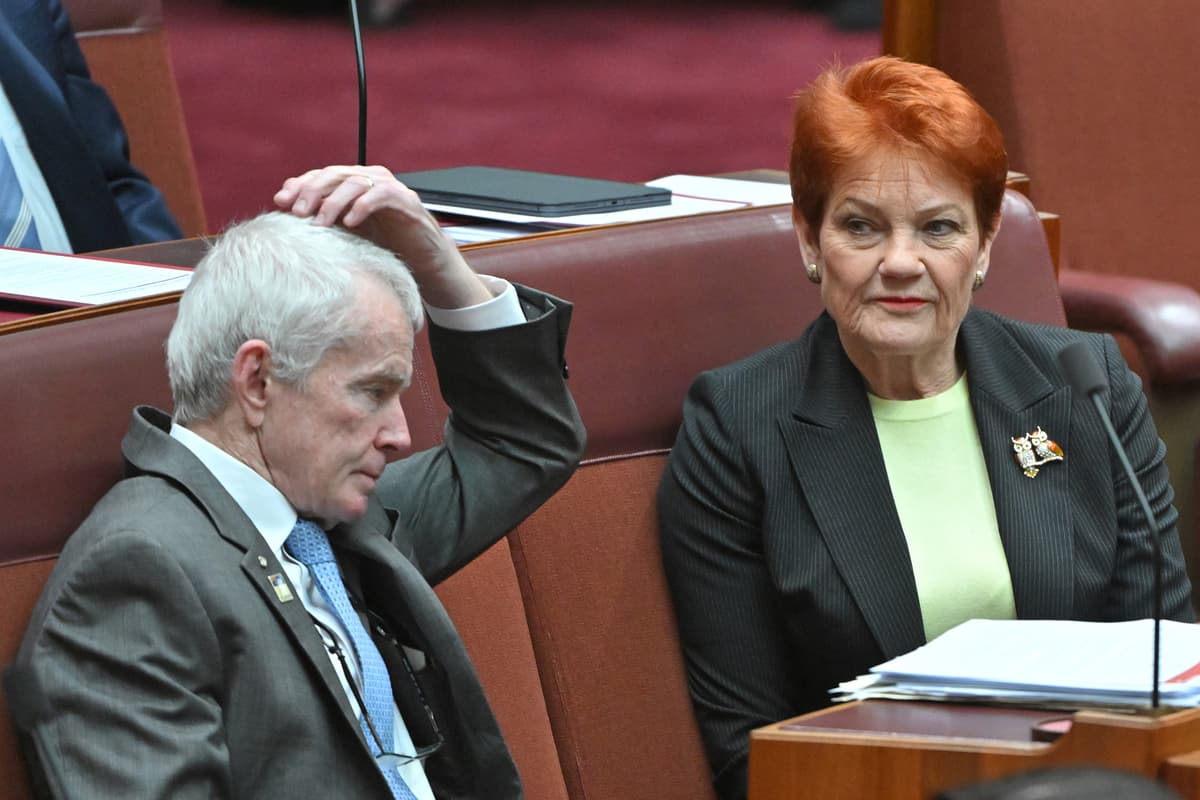
One Nation wants to cut the tobacco excise by 75%, but that won't stop illegal smoking

One Nation’s suggestion to cut the excise by 75% is utterly ludicrous. It would take the excise back to where it was in 2013, and in real terms back to where it was in 2001. That isn’t a policy to reduce illegal smoking; it’s a policy to increase all smoking.

By Greg Jericho

Tue 18 Aug 2026 12.54 AEST
Society & InequalityHealth
One Nation wants to cut the tobacco excise by 75%, but that won't stop illegal smoking

Photo: AAP Image/Mick Tsikas

Republish this article

This article is licensed under Creative Commons — Attribution-NoDerivatives 4.0 International (CC BY-ND 4.0).

Republishing guidelines

  • You must credit the author(s) and The Point.
  • You must link back to the original article.
  • You may not edit or modify the article content.
  • Images may be subject to separate copyright and are not included in this licence.

Today, the news is that One Nation wants to cut the tobacco excise by 75%. Tobacco excise is not a new topic – I wrote about it last year.

Essentially, the issue is one of tax and consumption.

Right now, the forecast for tobacco excise revenue is for it to fall to a level not seen this century:

Now that should be a good thing – it should mean fewer people are smoking.

The problem is, unless in 2021 we had a pretty astonishing drop-off in smoking rates, then something is amiss.

And it is.

As the ABS found in June through analysing wastewater, consumption of tobacco and nicotine has not fallen, but the consumption of legal tobacco has:

There is some debate over these figures – it may not mean that actual smoking rates have risen but that the level of nicotine in the cigarettes being smoked has increased.

So, what has happened? Well, over the past 15 years, there has been a very strong increase in the tobacco excise taking it from 26 cents a stick to $1.53.

That’s a 488% increase. Over the same period, overall inflation has risen around 54%. It has meant that tobacco prices have gone up well beyond other things:

It has meant a standard 25-pack of cigarettes has gone from around $12.95 in 2010 to now around $56 – an increase of more than 330%.

The issue though, is that the increase in excise and thus prices, while being excellent for reducing smoking rates, also got to a point where smokes were so expensive that those who were still smoking were more prepared than in the past to seek out illegal cigarettes.

The price had risen so high it had become, in effect, a financial prohibition, and as we know, prohibition always leads to black market operators.

And unfortunately, illegal products are always going to be cheaper.

So, is the solution to cut the excise?

Tobacco companies would say so, and their history of caring about the health concerns of people is unimpeachable…

The problem is, while it seems pretty clear that the excise raised the price of cigarettes too high so as to encourage the black market, cutting the excise essentially just means the government is trying to get into a price war with criminals. A war it likely won’t win – and which is likely not going to help reduce smoking rates.

One Nation’s suggestion to cut the excise by 75% is utterly ludicrous. It would take the excise back to where it was in 2013, and in real terms back to where it was in 2001.

That isn’t a policy to reduce illegal smoking; it’s a policy to increase all smoking.

There’s a decent debate to be had about what to do about illegal smoking in Australia, but the issue always needs to be about reducing smoking and nicotine consumption.

One Nation has come up with a policy that would have tobacco companies absolutely cheering.

Advertisement

Related Articles

OPINION

Career education shouldn’t end when school does

By Kira Clarke

We know high schools provide some level of career information—and what that looks like varies considerably between schools. But very little attention has been paid to what happens after young people leave their school's gates for the last time.

Society & InequalityEducation
Career education shouldn’t end when school does

OPINION

Adding life to our years, not years to our lives

By Luke Slawomirski

How long we live is only part of the story. What matters just as much is how long we remain healthy. And on that measure, we have a problem.

Society & InequalityHealth
Adding life to our years, not years to our lives

OPINION

All discrimination is wrong, unless you are a kid from a poor family

By Jane Caro AM

Discrimination is literally what private, fee-charging schools are about. They are transactional, designed to provide a private and positional good for the families who can pay their fees. Only public schools have any obligation to the public good – aka educating every child. The clue is in the name.

Society & Inequality
All discrimination is wrong, unless you are a kid from a poor family

OPINION

Victorian children who commit minor and low-level crimes don’t need ‘tough love’. They need connection and prevention

By David Jeffery

The Victorian Premier’s announcement of mandatory court-ordered rehabilitation for young people found guilty of low-level offences such as theft, vandalism, property damage and minor assaults isn’t entirely without merit. But the money could be better spent than on youth prison. Those of us working in youth and community services know that lasting reductions in crime come from prevention.

Society & Inequality
Victorian children who commit minor and low-level crimes don’t need ‘tough love’. They need connection and prevention

