'Don’t let the perfect be the enemy of the good’ has become the catch-cry of proud 'centrists' in Australia. But it’s time we admitted that the good has become the enemy of better.

Fri 28 Nov 2025 23.54 AEDT
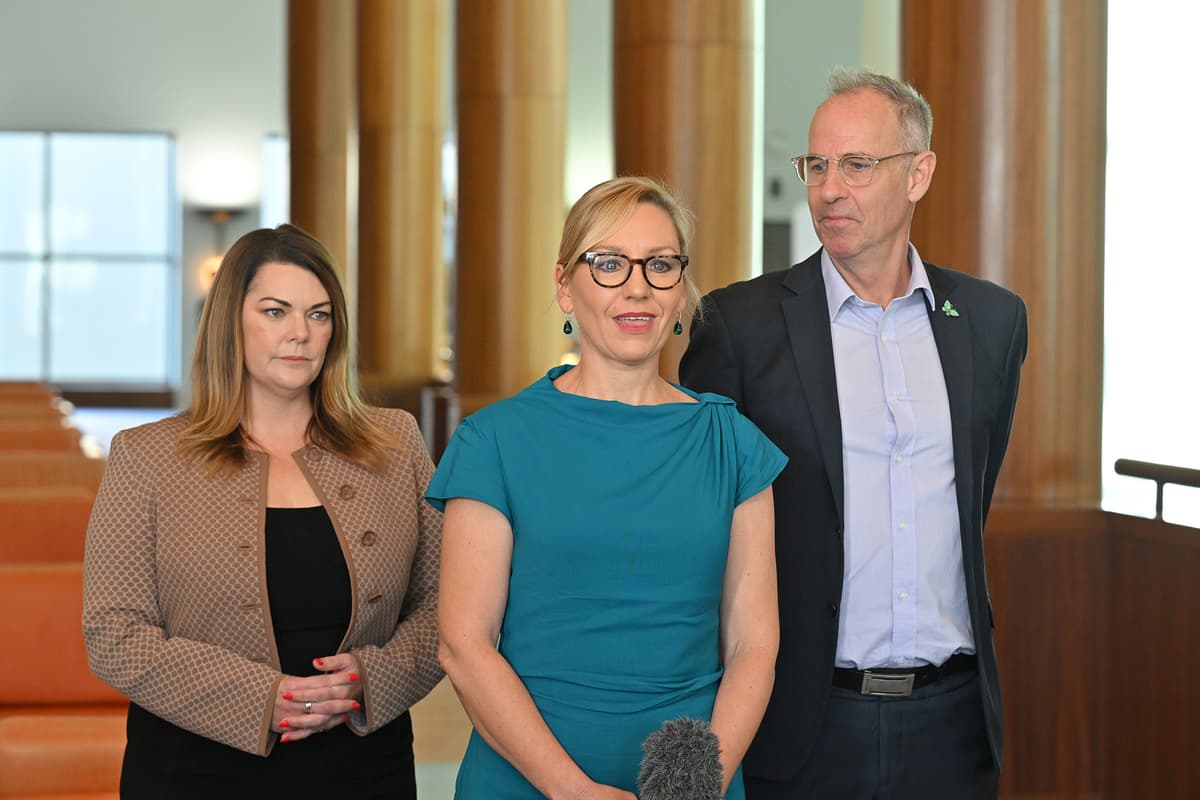
Photo: AAP Image/Mick Tsikas


‘Don’t let the perfect be the enemy of the good’ has become the catch-cry of proud ‘centrists’ in Australia. But it’s time we admitted that the good has become the enemy of better.
Put simply, if the Greens had simply said ‘sounds fine’ when the Albanese Government finally presented its new environmental laws on October 30, then coal mines would have been fast-tracked, native forest logging would have continued apace, as would land clearing in Queensland.
Luckily for Australia’s endangered species, the Senate ignored the instant urging of columnists to accept the Government’s opening gambit.
Most people understand that real negotiation takes time. Anyone who has ever bought a second-hand car knows you never accept the first price the seller suggests.
But within hours of the 1,500 pages dropping, some commentators insisted the Senate pass them unchanged lest the legislation be further delayed or abandoned altogether.
Leaving aside that it would take an actual expert in environmental law days to read through a phone book’s worth of technical amendments, why would anyone serious about getting the best policy outcome assume the Department’s first draft is automatically ‘good policy’?
And while it’s understandable that political commentators don’t have time to read 1,500 pages of detail, why would those whose job it is to report on politics be so quick to ignore the politics of negotiation between a government that lacks a majority in the Senate and the Senators whose votes will be decisive.
Every negotiation is different, but having been involved in plenty of them, here are some simple rules to keep in mind next time the newspapers are full of people without power telling those in balance of power to just support the Government’s legislation as is… which almost never happens.
Rule 1 – Only suckers start a negotiation with their best offer
I didn’t need to read all 1,500 pages to know the first draft was far from perfect, that the Government knew it was far from perfect, and that only amateurs would advise any Senator to ‘accept this or get nothing.’
Neither Murray Watt, the Greens, nor the Coalition ever ruled out amendments but plenty of commentators recommended an embarrassingly early yes all the same. Some crossbenchers even voted for the first draft of the Bill in the House of Representatives. Whoops.
Rule 2 – Only suckers admit they have just one option
You never tell a car dealer they have your dream car before asking for a lower price. Likewise, no Senator ever says “I love this draft legislation, I’ll pass it as is, but I’d like some amendments if that’s okay?”
Well played by the Government, the Greens, and the Coalition this week. Minister Watt made clear he was willing to deal with either, ensuring neither felt emboldened. Likewise, both major negotiating partners made clear they were willing to wait until March, which kept the Government honest.
Again, well played by the pros, but I’m not sure what the commentators and NGOs yelling about ‘perfect’, ‘good’, ‘baby’ and ‘bathwater’ thought they were doing, unless they genuinely wanted the original draft passed without improvement.
Rule 3 – No matter what happens, everyone will declare victory
Without pressure from the Greens, Labor wouldn’t have picked new fights with the fossil fuel industry, the loggers, or the cattle farmers who bulldoze land for cheap pasture. The Greens will declare their amendments a win. Labor gets to say it delivered and upset the right people by the right amount.
And of course the Liberals will now insist they never wanted a deal and that this week proves Labor and the Greens hate the economy, or some other nonsense. Who cares.
The new laws are stronger than the laws we had, and significantly stronger than the first draft tabled by Labor last month. Perfection wasn’t achieved, but nor was it the enemy of the good, or of better-than-good.
From a parliamentary point of view, this week was a solid showing. The result could have been better, could have been worse, or might have been delayed until March — which wouldn’t have been the end of the world.
In short, the Greens used Labor’s desperation to get the environment off the front pages as leverage to extract improvements. They also rightly bet that the Coalition was too shambolic to undercut them. It was a risk, and it paid off.
But while Parliament did its job, a lot of pundits had a shocker. Luckily for Australia’s endangered species, all those early reminders that ‘the perfect is the enemy of the good’ didn’t stop the Greens holding out for better.
Hopefully next time important legislation comes before the Senate, those who rushed to support the Government’s first draft will keep their caution to themselves while the professional politicians play out Rules 1, 2 and 3.
Richard Denniss is the co-chief executive of the Australia Institute.

