The native forest logging industry has stopped in Victoria and Western Australia. Right?
Wrong. The industry persists – but in ways that continue to damage forests and, in some cases, increase their susceptibility to future fires.
In May 2024, the Victorian Government announced it was winding up the native forest logging industry. Many people and environmental groups celebrated. But logging has persisted since then in different forms and under different names.
Although the state-owned logging agency VicForests was wound up, many of its employees moved into other parts of government, First Nations corporations, or into a foundation aimed at enabling logging activities on Country under a First Nations banner.
While the Victorian Government has claimed it stopped native forest logging, it persists through the construction of extensive so-called “firebreaks” through forests, including National Parks.
Several thousand kilometres of firebreaks are planned, despite very little evidence that they effectively stop fire, in part because embers can travel long distances, igniting new fires well ahead of a fire front. In practice, these firebreaks also enable access to timber – even though logging has supposedly ceased.
The Victorian Government has also funded mechanical thinning trials using wheeled or tracked machines to remove 30-50% of trees in a forest. Mechanical thinning is promoted as a way to reduce fire risks. Yet empirical evidence shows it has no effect on fire and, in some cases, can increase fire severity. This is not surprising – thinning-related increases in flammability have been recognised for decades and are documented in forestry management literature.
Thinning also produces timber for firewood or paper, making it just another form of logging. Repeated thinning can convert native forests into de facto plantations, leading to major reductions in biodiversity, increased soil compaction, and reduced overall resilience. It can also generate substantial greenhouse gas emissions – far more than wildfire.
For example, burning wood for biomass energy generates roughly one tonne of greenhouse gas emissions per tonne of wood burnt – it is far from clean energy and typically leads to forest degradation.
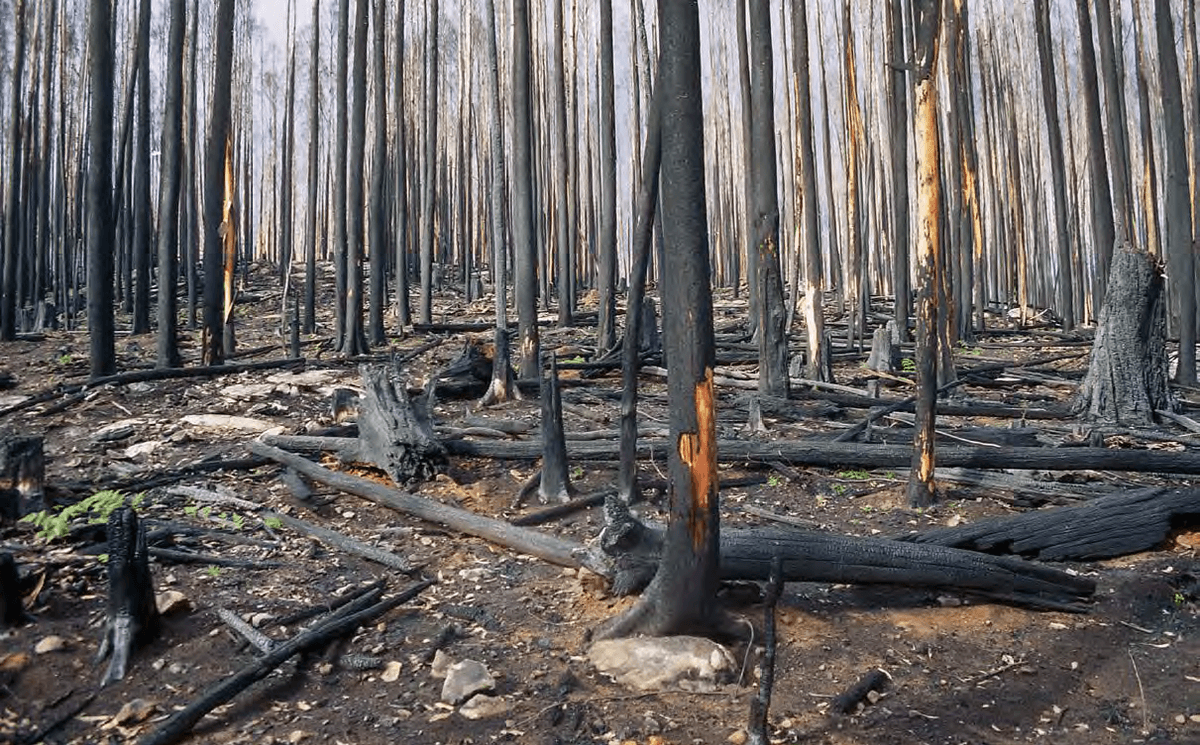
Another form of logging occurs after natural disturbances, such as wildfires or windstorms. Globally, this is known as salvage logging, and it occurs when authorities attempt to generate revenue by cutting damaged trees in disturbed forests. However, countless studies from around the world have shown that salvage logging has major negative impacts on ecosystem integrity and biodiversity.
Of course, the Victorian Government says it is no longer logging and has adopted a new name for salvage logging – terming it “post-storm debris removal”. However, this is a misnomer.
Many of the trees being cut after storms are clearly standing live trees that are not badly damaged. Many of these trees are then used for firewood or sent to sawmills, as occurs in standard native forest logging operations.
Helping First Nations people log their Country
One of the more concerning outcomes of the closure of VicForests has been the establishment of the Healthy Forest Foundation, which aims to support First Nations people to log their Country. Several former senior staff of VicForests are now involved in this initiative, which also has tax-deductible status.
A key premise advanced by some proponents is that forests on First Nations land are very dense with “too many trees” and therefore need to be logged to make them “healthy”. This is not supported by ecological evidence. Many forest types – including rainforests and tall, wet eucalypt forests – are naturally dense.
Over time, the overstorey trees in these forests undergo self-thinning, a well-documented ecological process in which stands transition to fewer, larger overstorey trees without mechanical intervention.
During this transition, layers of dense, wet understorey plants, such as Tree Ferns and even rainforest trees can develop, increasing shading and reducing fire risk. Understorey vegetation also provides habitat for many species and can store substantial amounts of carbon.
Unlike natural self-thinning, mechanical thinning involves heavy machinery that can damage and compact soils and impair plant growth for decades.
Importantly, many First Nations Elders and communities do not support logging. They have expressed strong concerns about logging activities, such as thinning and post-disturbance salvage logging, on Country and the forest degradation these activities will cause.
The fire-side of continuing to log and thin forests
A growing body of scientific evidence shows that logging can significantly increase forest flammability. Forests regenerating after logging are likely to burn at higher severity than intact forests, and this elevated risk can persist for decades. Logging in its various forms, therefore, adds to the overall disturbance burden in forests already under pressure from climate change.
Human safety considerations alone should prompt the cessation of native forest logging in Australia. These concerns sit alongside well-documented impacts on carbon emissions and biodiversity, as well as the long-standing economic losses associated with the industry.
The solution
Logging continues in native forests, even where governments claim it has ceased. A lasting solution requires full protection of forests, including through the expansion and proper resourcing of National Parks.
A recent survey by the Biodiversity Council found strong public support across the political spectrum for more National Parks, including increased protection of Australia’s forests. They also want this alongside adequate investment in the management of National Parks. Meeting these expectations requires a genuine end to native forest logging in all its forms.
Distinguished Professor David Lindenmayer AO is a globally recognised conservation biologist and landscape ecologist at the Fenner School of Environment at ANU.