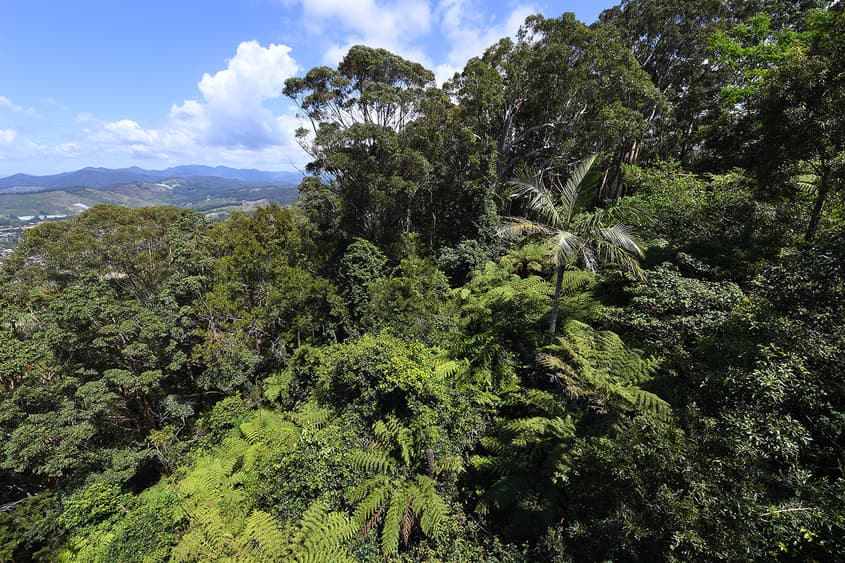
Imagine Moreton Bay and Port Jackson figs, Illawarra flames and wattles dead and dying across Sydney, Melbourne and Brisbane.
Imagine paperbark swamps devastated, and the sheoaks on the banks of rivers being wiped out.
Imagine what this will mean for the wildlife that depend on these keystone species.
This could be the future if the polyphagous shot-hole borer escapes Western Australia.
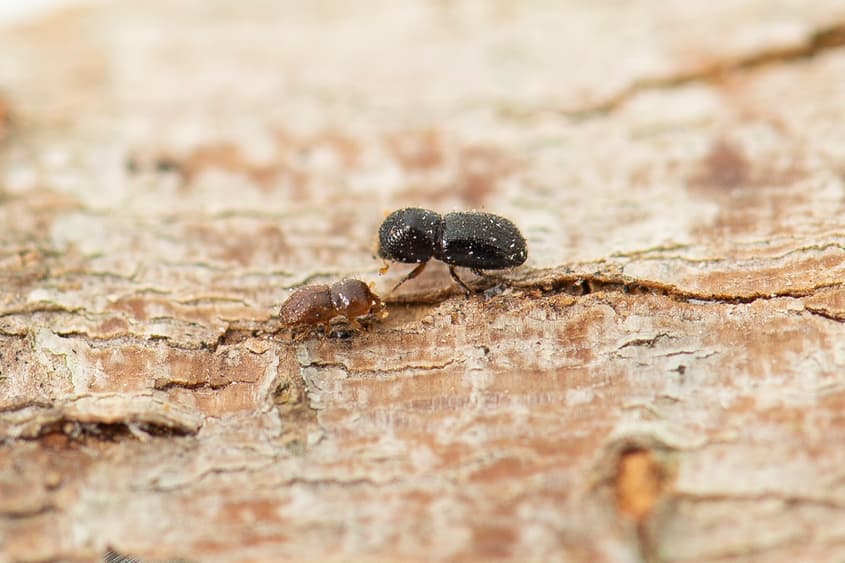
This tiny invasive beetle – no bigger than a sesame seed – has already devastated parts of Perth’s urban forest. Thousands of trees have been removed, eradication efforts have failed, and now new research suggests Sydney could be dangerously vulnerable.
The modelling, released recently, found almost half of Sydney’s urban trees are moderately to extremely susceptible to the beetle and the fungal disease it spreads.
The consequences would be enormous.
These trees cool our suburbs during summer heat, provide habitat for birds, bugs, and other wildlife, shape the identity of neighbourhoods and make dense urban life more liveable. Lose them, and Sydney becomes hotter, harsher and far less beautiful.
When it comes to invasive species, people are both the problem and the solution.
Human movement is how pests, like the shot-hole borer, move between states and suburbs – carried unknowingly in things like firewood, pot plants or green waste. But people are also our great biosecurity asset.
A parent noticing strange holes in a fig tree near a playground. A retiree photographing insects in their backyard. A walker noticing dead branches on street trees.
Some of the most significant early detections of invasive species in Australia came from regular, curious citizens or ‘citizen scientists.’
Governments cannot inspect every tree in every park, street and backyard across a city this large. Early detection depends on people paying attention to the places they love.
And in this case, timing matters enormously.
The shot-hole borer carries a fungus that it farms inside trees to feed its young. In some trees, this fungus spreads and blocks the tree’s vascular system until it declines and dies. In Perth, the infestation became so widespread that more than 4000 trees were removed before authorities eventually decided that eradication was no longer feasible.
Australia now stands at a critical moment when preparedness could mean the difference between prevention and irreversible loss.
Governments need to urgently invest in surveillance, monitoring and public awareness before this beetle arrives.
That is why citizen science is becoming one of the most important environmental tools we have. Apps like iNaturalist and projects like the Invasive Species Council’s Bug Hunt are turning ordinary Australians into frontline defenders for nature – helping scientists track invasive species, monitor native wildlife and spot threats before they spiral out of control.
And the best part is, anyone can do it.
You do not need a science degree. You just need curiosity.
Photographing strange holes in a backyard tree. How about logging unusual-looking noodles protruding from a trunk. Noticing a sick fig tree at a local playground. These small observations can become early warning systems that help protect entire cities.
Because the person is our best chance of stopping this beetle may not be wearing a uniform or sitting in Parliament.
They may simply be someone who stopped to look at a tree.
Jess Ward-Jones, Invasive Species Council Bug Hunt Coordinator
About Bug Hunt
Bug Hunt is a national citizen science project run by the Invasive Species Council in partnership with Invertebrates Australia and supported by Australian Geographic. Using the free iNaturalist app, everyday Australians are helping spot invasive species, track native insects and build a better picture of the wildlife living around us. Anyone can join – all you need is a phone and some curiosity. Learn more at bughunt.org.au