A couple of years ago I overheard a conversation between two well-known conservatives, who were speaking about a mutual acquaintance.
I’m not going to name them – I was eavesdropping, so ethical lines are blurred, and who they were isn’t the point of the story. It’s what they were talking about.
This mutual acquaintance had just held a dinner party they had attended and the pair were admiring how wealthy that person had become.
“Of course, they were one of the ones who jumped on the NDIS from the ground floor, made an absolute fortune from it,” one said in admiration.
“Yes, makes me feel a little sorry for myself I didn’t get in on it – I could have retired years ago!” the other answered, as they both continued speaking about the size of the Sydney harbour apartment they had visited, and just how many holidays their friend was taking.
The pair went on to discuss just how many of their social circle had made a “killing” from the NDIS, just as other friends had made a “killing” from mutual obligations as owners of job service providers.
In almost the same breath, the pair then started speaking about how the NDIS was growing “too unwieldy” and the government “needed to do something to cut it back”.
Their solution was not that the people in their social circles, with whom they dined and enjoyed vintage wines – presumably paid for, in large part by taxpayers – stop rorting the system with overpriced services. No, as always in this situation, their “common sense” solution was for fewer people to be able to access the system that had been set up to help people like them in the first place.
Much has been said about who is able to access the NDIS and the diagnoses considered eligible for assistance. But we very rarely speak about how the NDIS became a catch-all because we don’t have enough social services and supports to help people who need it.
And whenever it becomes apparent that needs for a particular service are growing, we don’t look at the gaps, or why such a public service was privatised in the first place, or why people with money were immediately able to exploit public money being spent on private services to blow out costs. We make the decision to cut people off from a service they so obviously need.
This is, as those two conservatives were so jadedly offhand about, “common sense”.
But for who?
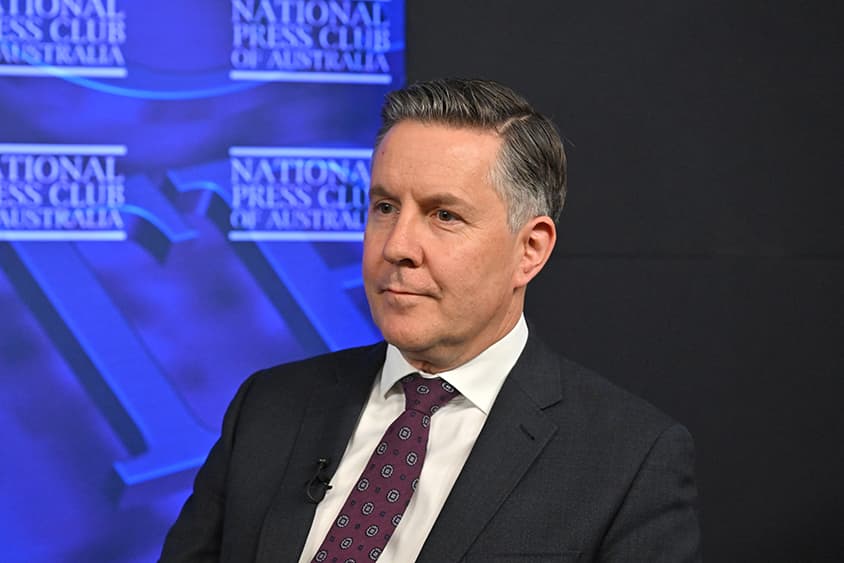
Mark Butler, as the 2026 Health Minister, inherited the NDIS cuts, and it has become his job to sell them. In anticipation of these budget announcements, much groundwork has been laid in the media to manufacture consent. We have heard about “blowouts” and the “waste”, with examples of hair cuts and movies used to justify widespread funding cuts that are going to have a materially negative impact on thousands of people and families lives. (Never mind that grooming is something we are all entitled to, not everyone can visit a regular hairdresser, and the movie spend was on companions to assist – again, an active social life and varied interests is part of the usual human existence and not something to be sneered at when it suits a budget.)
This echoes when Bill Shorten was lumped with the job and stories about sex therapists and the like filled the media. Cutting the NDIS has become more “unavoidable and urgent” under Butler’s tenure, as the budget heaves with fossil fuel subsidies, an ever-growing defence spend and an ageing population.
So 160,000 people are to be cut from the scheme over four years, to reduce it from 760,000 to 600,000, which will also mean people in that time will not be able to be added to the scheme (or if they are, more will have to be cut).
The hows and whens are not clear, but from Butler’s speech, the government plans on removing eligibility for people with “lower needs” and moving them to “other services”.
In most cases, those “other services” don’t exist, which is why they are on the NDIS in the first place.
The market will not fill that gap unless incentivised by the government, so these services will have to be supplied by government funding in other areas, including the states and territories. We know they are unlikely to step up, and that the level of care, support and assistance they will offer will be less than people receive now. That will have a huge impact on outcomes for people and their families.
But that doesn’t matter when you can throw around big numbers like how the NDIS is projected to cost more than $70 billion by 2029-30. (It is expected to come in at $50 billion this year.)
Annual growth is to be cut to 2 per cent (down from 5 per cent) every year until 2030, when allegedly, the government plans to return it to 5 per cent.
On average, the NDIS grew by 24 per cent a year between 2020 and 2024. Again, this is because the services are not offered elsewhere, in a way that people can afford them.
So because of people like the mutual acquaintance of two conservatives, who often speak about the need to be sensible about the budget, people in need are going to suffer.
At the same time, anyone watching the Senate inquiry into gas tax proposals would have heard gas executive after gas executive claim that there is no more the industry can be asked to pay that would not affect its ability to invest in Australia.
The gas industry will go elsewhere if we try to make it pay its fair share, we are told – so it is better that we let taxpayers pay for exploration and other costs, as well as subsidies, and then pay higher rates for domestic energy costs, than actually receive any return.
We are already seeing the scare campaign gear up here, too – suddenly, Australia’s fuel security is reliant on not changing a single tax setting on gas, and this is also considered the “sensible” position.
It doesn’t matter that fossil fuel subsidies cost Australian governments $16.3 billion in the past financial year – an increase of 9.4 per cent on the previous year, which outstrips the 7.6 per cent growth in the NDIS funding over the same time.
At the heart of that increase for fossil fuel subsidies was the fuel tax credit scheme, which cost $10.8 billion in foregone revenue in the last year. You’ll be told that’s for farmers, which ignores that BHP is Australia’s largest user of diesel fuel.
Those subsidies are not to be touched. Because it’s never the time to consider having the fossil fuel industry pay for itself, but it’s never not the time to have Australians pay the price.
Speaking to Labor’s caucus about the gas tax, in the context of all of these spending cuts on public services, is an exercise in depression. While members acknowledge a gas tax is “wildly” popular, they are not sold – not because they don’t think it is necessary, but because they fear the response campaign from vested interests.
“We quite like having Western Australian members in our caucus” is a common refrain, along with “well, you saw what they did with the carbon charge”.
So even as the economics, facts and the public will give Labor the room for reform, its fear has it falling back to what is becoming the default position – LACO. Labor always chickens out.
Amy Remeikis is a contributing editor for The New Daily and chief political analyst for The Australia Institute
This article was first published on The New Daily.