The Reserve Bank of Australia’s (RBA) decision to raise the cash rate to 4.35% was bad enough, but RBA Governor Michele Bullock’s explanation in her press conference on Tuesday afternoon saw her abdicate the RBA’s position as a useful economic institution.
The RBA’s official mandate as defined in the RBA Act is to “contribute to the stability of the currency [inflation], full employment, and the economic prosperity and welfare of the Australian people”
Well, forget that pesky act of Parliament, the RBA has decided it is simply a guide.
On Tuesday, Michele Bullock admitted that “we don’t give equal weight to both, and it depends a bit on where we think the relative risks lie” – with the RBA judging the risks to be on inflation, even as it forecasts unemployment to rise to seven-year highs.
She then admitted that, even though “Australians are poorer,” due to the shock from the Iran War, RBA still chose to raise rates, which will make Australians even poorer, despite knowing that it would have no impact on inflation.
Focus on that last point, though.
The RBA did not raise rates in order to lower inflation.
That is not a misconstruing of anything Michele Bullock said.
On Tuesday, she told journalists and Australians, immediately after raising interest rates, that “these interest rate rises are not going to do anything for inflation over the next six months”.
That might be the most extraordinary statement any central banker (let alone the Governor of the RBA), has said.
The only reason the RBA raises interest rates is because it thinks doing so will lower inflation, since raising rates slows the economy (i.e. raises unemployment) and therefore fewer people have jobs, less money is being spent, and workers feel less confident about bargaining for higher wages.
Yet Bullock has admitted that the raising of interest rates won’t lower inflation. So, why do it?
Well, the RBA has decided the problem is not inflation; it now says it’s worried about “inflationary expectations”.
What are those? They are just what households think inflation will be over the next year or so.
What drives them? Well, people don’t have any magic insight; they just notice what is happening to prices. If prices seem to be going up, then they expect them to go up. And the prices they see most often are petrol prices.
So, it was no surprise that in March, when petrol prices rose by more than 30%, people’s inflationary expectations also rose.
Will this rate rise affect inflationary expectations? Nope – because the rate rise won’t affect inflation, let alone petrol prices (remember, the RBA admits this).
This is because the RBA really does not give one damn about inflation or even “inflationary expectations”. Truly – Michele Bullock has belled the cat on this now that she has admitted raising interest rates has nothing to do with inflation.
All the RBA cares about is wages growth – they do not, under any circumstances, want workers to think they should be getting a decent wage rise.
Company profits? Oh gosh, well, those need to remain strong. Bullock told reporters that companies should raise their prices to cover costs, because otherwise, in her words, “they would go bust”.
But what about people going bust due to their wages not keeping up with inflation, or due to higher interest rates? Pfft, that’s a necessary, or even a “good”, thing.
In response to a question from the AFR on whether she was worried unions might want to push for higher wages due to the rise in inflation, she gave an answer that deserves to be related in full (with some key phrases I have emphasised):
“When we had the big inflation after Covid what you saw was real wages didn’t maintain – people got wage rises higher than they were getting but they weren’t keeping pace with inflation, so there were cuts in real income, and the other thing that was actually good about it… well good in an expectations sense was to the extent that there were EBAs at the time (enterprise bargaining agreements over say two or three years) you typically saw a larger increase in the first year and then smaller increases in the second and third years.
So that was sort of positive because it showed that people were accepting that ‘Yes, it’s probably not going to go on like this, so I probably don’t need to have 5% increases for the next 5 years’.
What worries me is this is the second shock of this nature in so many years and they might not think quite the same this time. So that worries me and with a tight labour market it’s possible that will be the outcome that you will end up with higher wages and that will feed through into business.”
First off, her slipping out “the other things that was actually good about it” was rather telling.
Her “sort of positive” was a situation where the real value of people’s wages fell 5.5% in 2 years:
There is no concern about that at all – that is, in her view, a sign the system is working.
She – and the RBA – remains utterly wedded to the belief that we are about to be hit with a wage-price spiral.
That there has not been a wage-price spiral for 45 years is no issue – best to smash people just in case.
That she thinks workers didn’t get a 5% wage rise over 5 years because they just decided they didn’t need them says a fair bit about her utter ignorance of the reality of wage negotiations.
She was blasé about unemployment rising to 4.7% – refusing to say it would be “too high” in a manner she never would if she were asked about inflation and merely that she “would hope to continue to have an unemployment rate in the 4s”. Again, imagine her suggesting she would just “hope” to keep inflation in the 2s.
You might now be starting to wonder about how that system is set up.
Because, remember as well, when Michele Bullock says that “Australians are poorer” due to the oil shock, that doesn’t mean “Australia” is poorer.
Australia is a net exporter of energy.
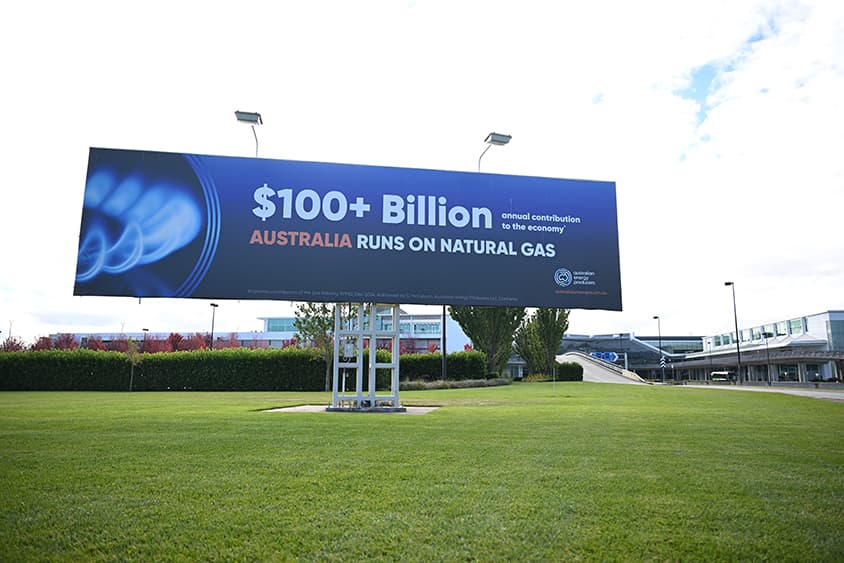
That means – much as it does for other places that are big exporters of oil and gas like Norway and Qatar – the shock increase in oil prices will deliver greater profits to oil and gas exporters than the hit to those who import energy.
You only need to look at the stock exchange since the Iran war began to know who is not poorer:
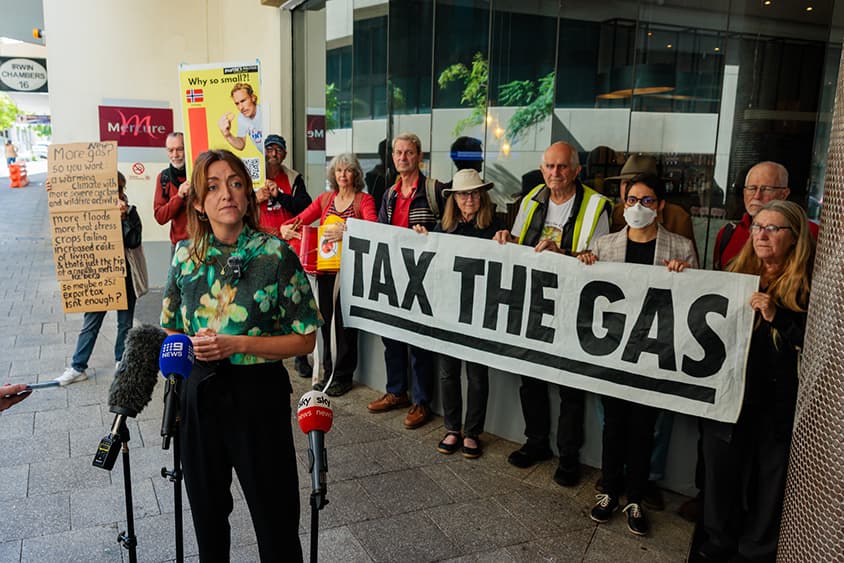
A tax on gas exports would enable the government to deliver benefits to Australian households. But Bullock wants none of that.
She told journalists that even though “Australians are poorer” they need to hurt more. Her devotion to the belief that inflation is actually being caused by too few people being out of work is such that she argued that “the extent to which government make up the shortfalls for households by giving them more money it makes it harder to dampen demand.”
So, she wants Jim Chalmers to be as cruel as she is. Spread the pain.
That way, I guess, if we go into a recession, the blame can also be spread.
A truly terrible decision.
Dr Greg Jericho is the Chief Economist at The Australia Institute