As the Treasurer acknowledged on Budget night, “the world is throwing a lot at us”. Chalmers is certainly right about that. As he said: “War in the Middle East has been pushing up prices, pushing down growth, and punishing Australians”. That passive construction of “war”, though, is doing an awful lot of heavy lifting.

Thu 14 May 2026 12.18 AEST
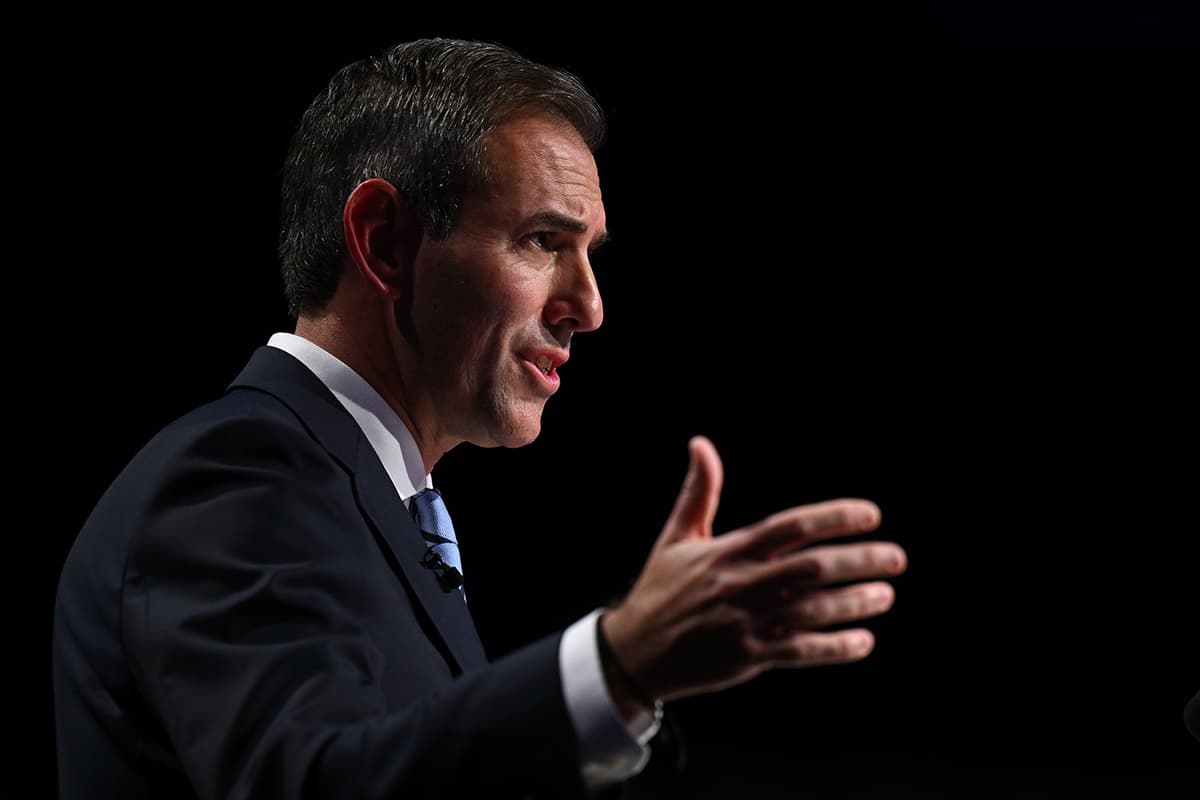
Photo: AAP Image/Lukas Coch


As the Treasurer acknowledged on Budget night, “the world is throwing a lot at us”. Chalmers is certainly right about that. As he said: “War in the Middle East has been pushing up prices, pushing down growth, and punishing Australians”.
That passive construction of “war”, though, is doing an awful lot of heavy lifting.
The Treasurer was forthright about the costs and the impacts of that war, and about the uncertainty that continues to surround it. Of course Australians “didn’t decide when this war began and have no control over when it will properly end”. What the Treasurer was much more reluctant to state plainly was…who did start the war, and who has control over ending it.
That brazenly illegal war was started by Australia’s most important security ally. It was started by President Donald Trump. And President Trump is continuing it.
The reason prices are going up, the reason growth is being pushed down, the reason Australians are being punished, the reason the budget must respond to “global uncertainty”?
Donald Trump.
It’s not unreasonable for the Treasurer not to name Trump specifically. Why provoke him, when that would only end in unnecessary pain and distraction? We know how Trump responds when allies do something he doesn’t like.
But while that might be understandable, the actual, material response to that “global uncertainty” is only making Australia more vulnerable to said global uncertainty. Arguably, it is encouraging it. We are fighting the costs of war on the one hand and contributing to them with the other.
In this budget, defence spending is going up. Defence is getting “an additional $53 billion over the next decade”, and a sizeable chunk of that will be spent on Australia’s alliance with the United States.
The Treasurer spoke of the need to increase Australia’s “resilience” in the face of “global uncertainty”. But when it comes to defence spending, the Australian Government is tying us ever closer to…the source of that uncertainty.
Put another way, Australia’s most important security ally is the source of the “global uncertainty” the budget must respond to. So, the budget is spending more money on deepening our relationship with our most important security ally. Which is the source of global uncertainty.
The math isn’t mathing.
As Ben Doherty outlined in The Guardian this morning, a big chunk of that is more funding for the Aukus submarine deal: $430m over four years. The Australian Submarine Agency will now get $2.13bn over the four years til 2028-9 (a decent jump on last year’s forecast of $1.7billion).
All of that is an attempt to shore up the Aukus deal, which is flailing on multiple fronts. It’s stubbornly throwing more money at our “most important security ally” even as Australians are going cold on that ally – for very good reason.
Recent polling research found 59% of Australians now believe Australia’s interests are better served by a more independent foreign policy rather than a closer alliance with the United States.
This budget does not reflect public sentiment.
Instead, the Australian Government is aiming to build resilience by spending more money on the very thing that’s undermining our resilience.
Advertisement