Factcheck: No, wealth isn’t just ‘hard earned savings’ and here’s the data that proves it.
Another day, day 15 after the budget, and the press is still full of stories trying to evoke sympathy for the downtrodden rich in Australia.
Labor had an opportunity to do what it said it would do in opposition and address Australia’s unfair and punitive mutual obligations system. But instead of brave reform, it announced a tiered system that divides up obligations depending on how ready the state thinks you are for work.

Thu 28 May 2026 09.30 AEST
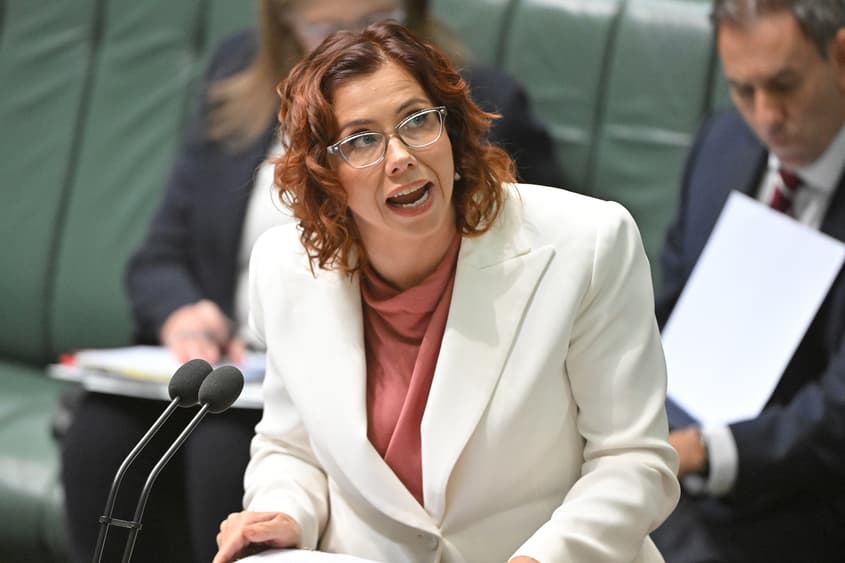
Photo: AAP Image/Mick Tsikas
When I was in my 20s, I was between jobs after an illness and signed up for unemployment benefits.
As part of my “obligation” to the state, I had to visit an employment service and watch videos on how to get a job. I had to travel to attend these meetings which, for someone who was recently very ill, and without a car, was an issue in of itself, and involved two different types of public transport and a 20-minute walk.
Still, it was all that stood between me and rent. So I attended my meetings, showed what jobs I had applied for, and smiled and nodded as I was told to “just try harder”.
The jobs I was sent to included what seemed to me to be a telemarketing scam convincing elderly people to sign up for holiday packages they neither needed nor could afford. I spent my limited shifts there dialling the talking clock and pretending to read out the script.
I eventually got a callback for a local restaurant. I was called in for a two-hour (unpaid) trial and would miss one of my scheduled job-provider appointments. I called, explained why I would miss my meeting, did the two-hour free trial and got the job myself.
Which, cool beans – job done, right?
Except no. Turns out the job-service provider reported that I had not been attending my obligatory appointments and Centrelink cancelled my payment. I wasn’t going to get paid from my new job for 10 days until I started and rent (and life) was due before then.
By the time I had it all sorted, I had been forced to borrow money from friends that neither I nor they had. I had overdrawn fees from my bank, at a time when $20 was the difference between eating or not. I had to delay a return to university as I couldn’t afford the fees.
The two weeks it took to sort it all out cost time, money and stress, and held me back financially for months. Because what we don’t see in our “mutual” obligation system, is all the hidden costs associated in keeping people jumping through hoops for a payment that already has them living below the poverty line.
The rules for people receiving unemployment benefits are clear – they cannot step a foot out of line and must perform meaningless tasks designed to make society feel that it is being “paid back” for the pittance spent on a social security net. Unemployed people pay taxes too – the GST makes sure of that – but don’t receive the benefits from tax cuts. What they do receive, is grief. And guilt. And pushback on the absolute bare minimum.
Labor had an opportunity to do what it said it would do in opposition and address Australia’s unfair and punitive mutual obligations system. Its own inquiry has found it’s unfair. The Commonwealth Ombudsman has warned about unlawful elements.
But instead of brave reform, which would take some of the load off people already carrying too much, it announced a tiered system that divides up obligations depending on how ready the state thinks you are for work.
This was repeated almost ad nauseam in media reports, with stories based off snippets of the speech provided by Employment Minister Amanda Rishworth’s office ahead of its delivery on Wednesday. Barely any referenced the ombudsman’s findings, which Labor still hasn’t properly addressed.
Instead of scrapping an unfair system and building one that actually serves people, Labor has just maintained the Howard government’s status quo, but made it a bit more palatable.
Launching Centrelink in 1997, John Howard said:
“We have a solemn obligation to help those in our community who are deserving of help. Equally, we have a right, as a responsible community, to ask of those who are receiving help where it is reasonable to do so that they do something in return for that assistance and something that is commensurate with the help and their own circumstances.”
Paying back help was not the underpinning of the Australian social security safety net until Howard and his government made it so.
This is not something to be proud of. We moved from entitlements to obligations. And for what? To create a bloated, largely useless “job-provider network” that enriches some of the most gauche individuals while demonising and humiliating those with no choices?
Sarina Russo, who has made millions from government contracts, told her local paper recently:
“Everyone’s going, ‘Oh, what’s in the [May federal] budget?’, well, really, what’s in your budget, and what are you going to do with what you’ve got? Maybe you need a second job. Maybe you need a third job. Maybe you need higher education. Maybe you need to learn AI. The government can only do so much.”
What the government has done, is make people like her rich, at the expense of helping people who truly need it.
Almost one million Australians already hold multiple jobs. And if anyone thinks that anyone could be living on the pittance we pay people in unemployment – a rate that that is about 42 per cent below the poverty line – then I invite you to try to live on it. See how great you are at budgeting then.
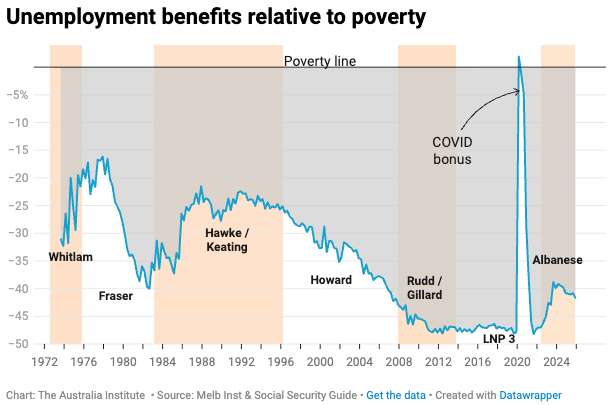
Labor had an opportunity to right a national scar. Instead, it just further entrenched it and managed good press at the same time.
Amy Remeikis is a contributing editor for The New Daily and chief political analyst for The Australia Institute
This article was first published on The New Daily.
Advertisement
Another day, day 15 after the budget, and the press is still full of stories trying to evoke sympathy for the downtrodden rich in Australia.
Advocates have warned the Albanese government’s planned overhaul of the National Disability Insurance Scheme (NDIS) risks repeating the very policy failures that led to the system’s creation in the first place. Muriel Cummins from grassroots campaign Every Australian Counts – which fought to establish the NDIS - cautioned that while the reforms may reduce visible government spending, they risk increasing costs elsewhere.