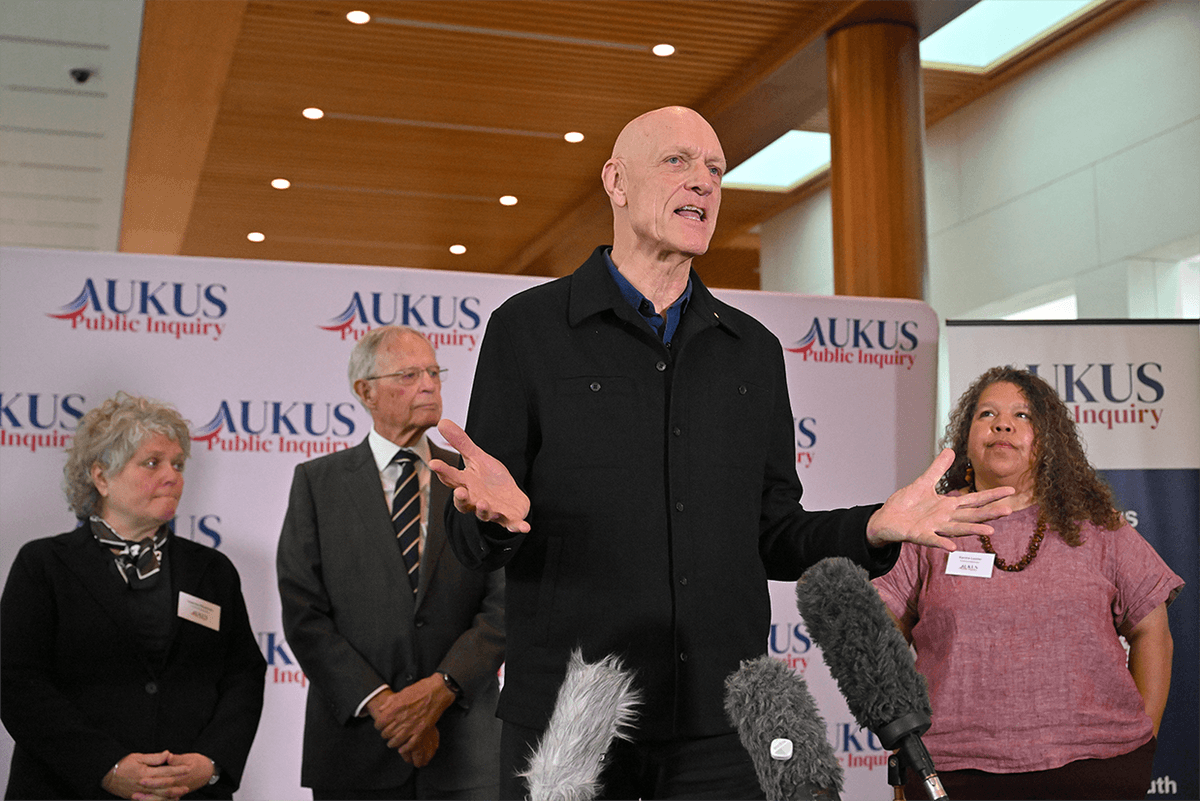
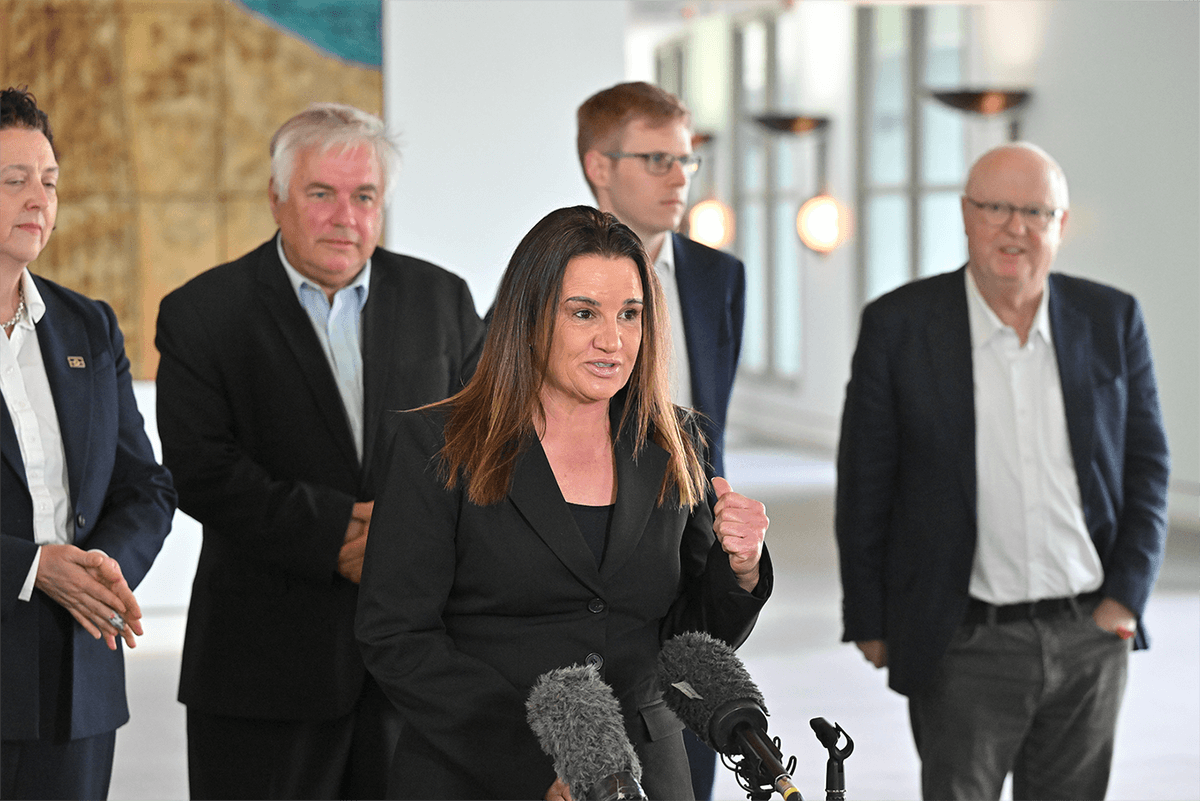
This morning at Parliament House in Canberra, I was honoured to help launch a public inquiry into AUKUS. I will be serving as a Commissioner on the inquiry, along with Chief Commissioner and former federal Labor minister Peter Garrett, former Western Australia Premier Carmen Lawrence, former Chief of the Defence Force, Admiral Chris Barrie, and Yankunytjatjara elder Karina Lester.
The inquiry was launched days after major changes to the rollout of AUKUS were announced by the Defence Minister Richard Marles, and only weeks after spending increases were announced in the budget. All of this occurring in the absence of public scrutiny. This public inquiry is not optional. It is overdue and a response to the government’s failure to hold a Parliamentary one.
Parliamentary inquiries are not rare events—they are routine instruments of democratic oversight. There are currently 88 active inquiries across Parliament, examining issues ranging from the Australian tyre industry to the National Disability Insurance Scheme.
AUKUS has been billed as the most significant defence agreement in generations. While Australians face cost of living pressures, AUKUS demands hundreds of billions of dollars in expenditure. While Washington undermines the rules-based international order it once helped construct, AUKUS binds us further to the U.S.
The public inquiry will mirror the processes of a parliamentary one; Commissioners will take evidence, hold public hearings, and report transparently to Parliament.
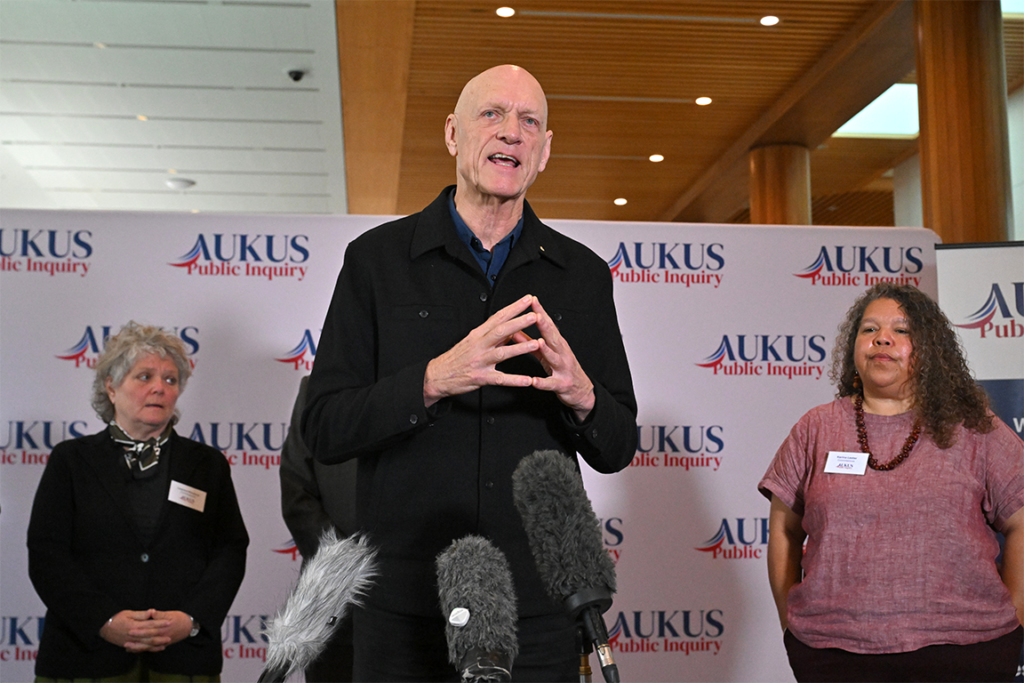
Photo: AAP Image/Lukas Coch
AUKUS is structured under two pillars.
The first focuses on Australia’s submarine capacity and was originally to include three stages: an immediate upgrade to the current fleet, acquiring Virginia class submarines from the US, and, from the 2040s, the first of the British-Australian designed, Australian-built, AUKUS-class nuclear submarines begin to enter service.
The second facilitates the sharing of ‘military capabilities and critical technologies’, including cyber artificial intelligence, quantum technologies, and undersea domains.
These broad publicly stated outcomes have already shifted, lack detail, and remain contested, and the financial assumptions continue to drift without meaningful public oversight.
There are several basic questions that remain unanswered:
Will new technology supersede the need for submarines?
On the sidelines of a defence summit in Singapore over the weekend, Federal Defence Minister Richard Marles announced that AUKUS will invest in underwater drones to be deployed in Australian waters by 2027.
Will this technology supersede the need for nuclear-powered submarines? If it does, will Australia still be held to Pillar One and the payment of billions of dollars to the US and the UK? Is a defence summit in Singapore the best place to announce a major change in our most ambitious defence pact?
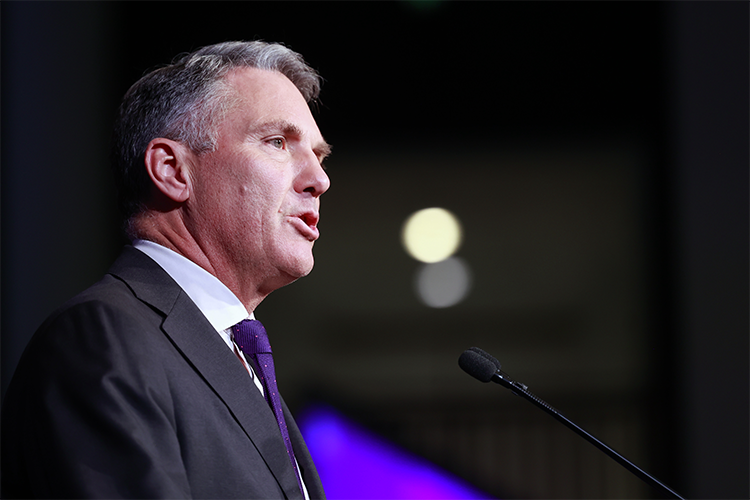
Photo: AAP Image/Hilary Wardaugh
Why did the government agree to only get used subs from the US?
At the same defence meeting in Singapore and with a lot less fanfare, Richard Marles revealed that Australia will only purchase used Virginia class submarines from the US rather than a mix of old and new ones.
Does Australia get a discount on the $4.53 billion we already committed to supporting the US industry? If, as the Minister suggests, having all old subs is a good thing because it ‘simplifies’ operations, why not start there in the first place?
How will the government address budget blowouts?
The government has already scaled back the upgrade of Australia’s existing submarine fleet due to budgetary constraints. Diesel engine upgrades to Collins class subs will no longer occur automatically, only if required. At the same time, their retirement date has been pushed back. What level of risk will this change carry for both the budget and defence capability?
Is there a plan C? This year’s budget included an extra $11 billion in support for these changes. Also included in the budget was an additional $431 million over four years for the Australian Submarine Agency to manage the AUKUS deal, increasing its resources by roughly one-third.
Is this deal going to make us safer? What does this agreement mean for Australia’s sovereignty over its foreign policy and decision-making? Where will the nuclear waste be stored?
I don’t have the answers to these and multiple other questions, but as a Commissioner, I believe these are questions the government should be addressing.
Australians deserve transparency and should not be asked to simply accept a project of this magnitude without scrutiny.
This inquiry is your opportunity to ask questions and provide opinions. Please send a submission and get involved.
Leanne Minshull is the co-CEO of the Australia Institute