Frontline care in a climate crisis - who is carrying the load?
Australia’s care workforce is absorbing the impacts of extreme weather in ways policy too often overlooks. It’s time to recognise community services as essential to climate resilience.

Since the Federal Budget, auction clearance rates have fallen and house prices have gone sideways. The slow-down in the housing market is being blamed on interest rate increases, and the Government’s tax changes to negative gearing and capital gains tax announced in the Budget.

Tue 16 Jun 2026 10.00 AEST
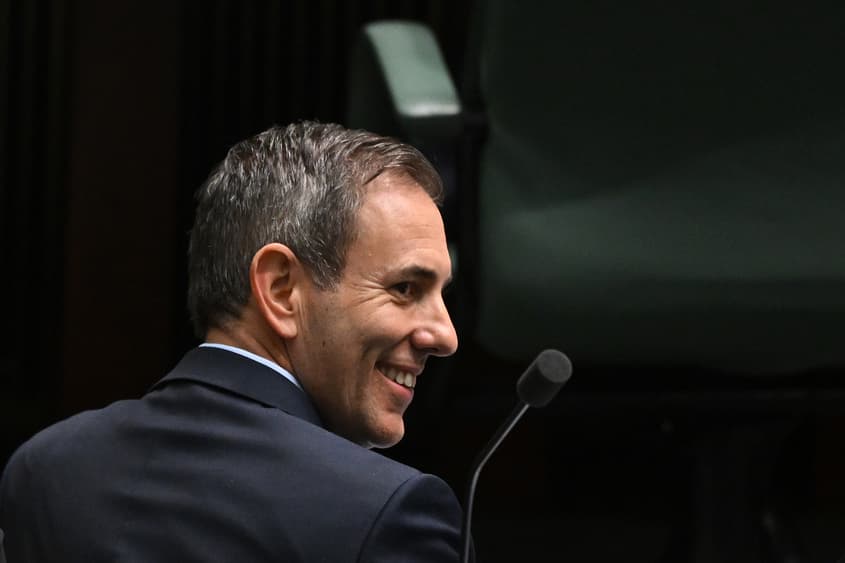
Photo: AAP Image/Lukas Coch
Since the Federal Budget, auction clearance rates have fallen and house prices have gone sideways. The slow-down in the housing market is being blamed on interest rate increases, and the Government’s tax changes to negative gearing and capital gains tax announced in the Budget.
Pundits on radio and in newspapers are starting to argue it’s a bad thing, but perhaps the changes are working as planned and making housing more affordable at a time when poverty and homelessness are on the rise.
As a country we need to ask a very obvious, but often ignored question: what is housing for? Is it a safe and secure place for people to live? Or is it a place to make a small minority of people rich?
The answer is important because the housing market over the last two decades has shown that it can’t be both.
For 25 years investors have flooded into the market, pushing up house prices, outbidding first home buyers, and making housing less affordable. Higher house prices mean bigger capital gains when an owner sells, which just attracts more investors.
But the tax changes are designed to discourage the very investors who have been pushing up prices, and recent evidence suggests it is working.
Westpac has reported a drop in investor loan applications and real estate agents are reporting a drop in investor interest.
This is a new situation. Previously the major parties’ policies on housing affordability fell into two categories.
The first are policies that increase supply, which in the long run will make housing more affordable, but to date have done very little.
The second are policies that give some financial advantage to a particular group of home buyers, most often first-home buyers. These policies increase demand, push up prices, and ultimately make housing less affordable.
Overall, the major parties’ offerings have failed. House prices have continued to increase faster than incomes. Australia is yet to have a serious conversation about what making housing more affordable actually means.
We also haven’t had to confront the fact that a small number of people have been making a lot of money from housing becoming less affordable. They are unlikely to be happy to see this situation come to an end.
Now that group is trying to fight back by claiming that slowly increasing house prices are bad. However, recent history shows that rapidly rising house prices are the opposite of affordable housing.
For years successive governments have promised more affordable housing while aspiring first home buyers have watched their dream of home ownership crushed under rising prices.
They’re angry and frustrated that after doing all the right things, they still can’t buy a home.
Reassurances from the Government that additional supply will eventually make housing more affordable are unlikely to cut it with voters – especially as they watch house prices rising.
The idea that housing developers are going to ride in and supply so much housing that it becomes cheaper is nonsense as recent history and the reality of housing development shows.
Developers release housing in stages, so they don’t flood the market and push down prices. They sit on development sites, in what is known as land banking, and develop them at a time they think won’t supress prices.
Like every profit-maximising business, they want to sell at the highest price they can.
That’s exactly what our market economy is based on. So, let’s not pretend that this same group of profit-maximisers is going to suddenly flood the market with new homes.
We also need to understand that the housing affordability crisis has not been caused by a shortage of supply. Immigration is not driving the problem.
Over the last 10 years the population has increased by 16% but the number of homes has increased by 19%. The number of homes is growing faster than the population.
The problem is not the number of homes but who is buying them. Investors have been increasingly buying houses which has reduced home ownership rates. More people aren’t living in a home they own and instead are filling rental properties.
To be clear, more supply will help but it is only part of the solution.
Homes will become more affordable when people’s incomes rise faster than house prices. This means flat house prices for 10 or 15 years or massive increases in wages. If this is unacceptable, then we need to admit to ourselves that we really don’t want affordable housing.
Matt Grudnoff is a senior economist at the Australia Institute.
Advertisement

Australia’s care workforce is absorbing the impacts of extreme weather in ways policy too often overlooks. It’s time to recognise community services as essential to climate resilience.
Getting a fair return on our gas exports makes sense, but thanks to some deft lobbying it's been avoided for decades. The issue has now landed squarely in the mainstream, with support from voters across the political spectrum. Despite that, the political class still can't bring itself to act.