Seventeenth-century French Finance Minister Jean-Baptiste Colbert once said that “the art of taxation consists in so plucking the goose as to obtain the largest possible amount of feathers with the smallest possible amount of hissing”.
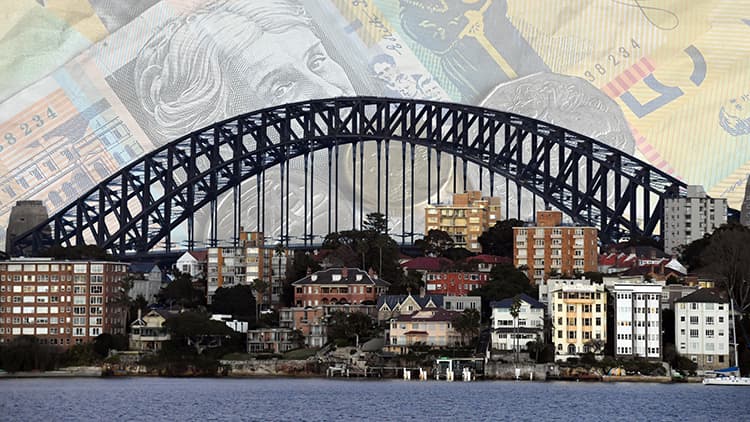
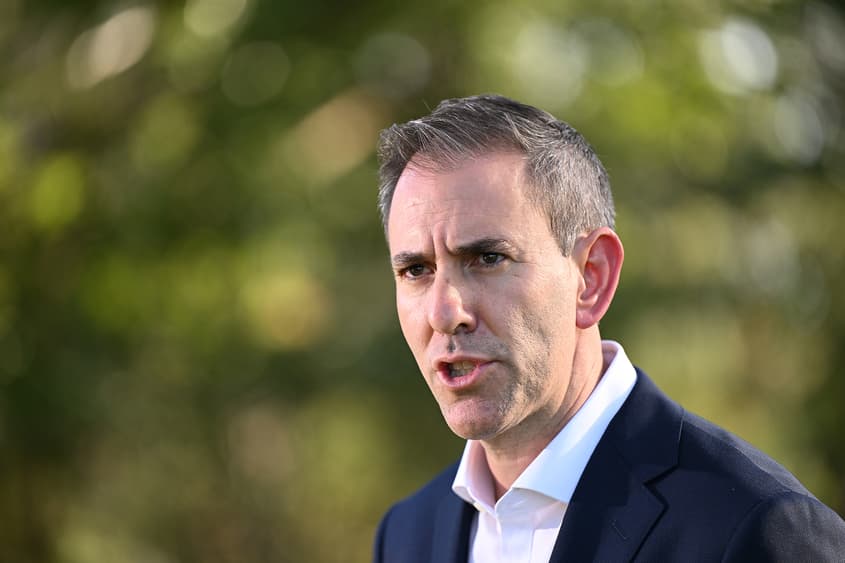
Since Treasurer Jim Chalmers handed down the federal budget in May, the hissing over the reduction of the capital gains tax discount has been so loud you’d be forgiven for thinking you had tinnitus.
Investors in the well-heeled electorate of Sydney’s Wentworth who are claiming $1.8 billion in CGT discounts are among those crying foul, accusing the government of an “assault on aspiration”.
Aspiration is an interesting word choice – are we not talking about greed with better PR?
Regardless, all over the news cycle and LinkedIn, the tax tantrum brigade is threatening to move to 50-degree Dubai or smoke-choked Singapore, where, incidentally, car tax revenue is now so high it exceeds Fiji’s gross domestic product.
As an Australian living abroad for the past six years, I can attest that expat life is no cakewalk – cue bureaucratic red tape in a foreign language, mediocre coffee and beaches, currency fluctuations, visa dramas, weird cultural quirks, language classes, homesickness and crushing loneliness.
Leaving Australia for the sole purpose of paying less tax will be a one-way ticket to regrets-ville. Mark my words, you’ll be crying into your Vegemite toast in no time.
Perhaps some international perspective might help some wannabe tax shirkers to calm their farm.
Australia’s tax levels aren’t astronomical. Australia ranks 29th among the 38 OECD countries with a tax-to-GDP ratio of 29.9%, compared with the OECD average of 34.1%.
During a three-year posting as a Southeast Asia correspondent in Thailand, I saw the grim consequences of low taxation on almost every street corner in Bangkok. Hardworking Thais, denied a quality education, have no choice but to stand in the blazing heat, torrential rain and air pollution, selling street food or Tuk Tuk transport for 12 hours a day.
In old age, many are also robbed of dignity. For a feature story about Thailand becoming a super-ageing nation that will grow old before it gets rich, I interviewed a granny who survived on tomato sauce with bread. It’s all she could afford on her meagre government pension worth 82 cents (US) a day. Meanwhile, at the top end of town, Thailand’s 50 top rich lister families have a collective wealth of $170 billion (US) – more than Morocco’s entire GDP output.
These days, I live in the high-taxing, high-trusting Nordics, which incidentally top global happiness rankings every year.
If tax collecting were an Olympic sport, Denmark would win gold every day of the week. Denmark had the highest tax-to-GDP ratio among OECD countries for the second consecutive year in 2024, at 45.2%.
Don’t choke on your Weet-Bix, but the Danish equivalent of GST is 25 per cent.
Yet, one never hears Danes complaining about paying high taxes. They’re openly proud of paying their fair share of “skat” which, as well as meaning tax in Danish, hilariously also translates to honey.
Denmark has a social code called Jante Law that emphasises collective community over being flashy and individual chest-beating. It stipulates that everyone is equal and deserves a decent life.
We used to believe in something similar in the so-called Commonwealth of Australia – remember that thing called “the Aussie fair go” and “egalitarian spirit?” Somewhere along the way, we replaced it with the sport of sneering at anyone in crisis needing a leg up.
But not in Denmark, it gives Danes solace to know there is a safety net if some terrible life event befalls them. You might not always have to use it yourself, but it is there when the chips are down. My Danish fiancé’s late grandfather injured his back on the farm, but could retrain for free as an accountant and thus became a taxpayer again.
The Danes have extraordinarily high trust in their political system to spend their taxes wisely. They understand heavy levies are a subscription service to enjoy nice things – subsidised childcare, free IVF, no-fee public health care visits to the GP and specialists, efficient public transport, tuition-free education, the list goes on. A new Danish coalition government, formed at the start of June, has added free universal dental care to its agenda.
Don’t let the kangaroo capitalists fool you – Denmark is proof a country can tax and thrive.
Now, if you’ll excuse me, I’ve got to run and return an electric bike I borrowed from the library for the past two months.
Lisa Martin is an Australia journalist living in Copenhagen