ABC’s Four Corners did what investigative journalism is supposed to do: follow the money.
In its episode Timber Turmoil, reporter Jessica Longbottom documented how Victoria’s ban on native forest logging – a genuine environmental win – has not ended the destruction. It has simply moved it.
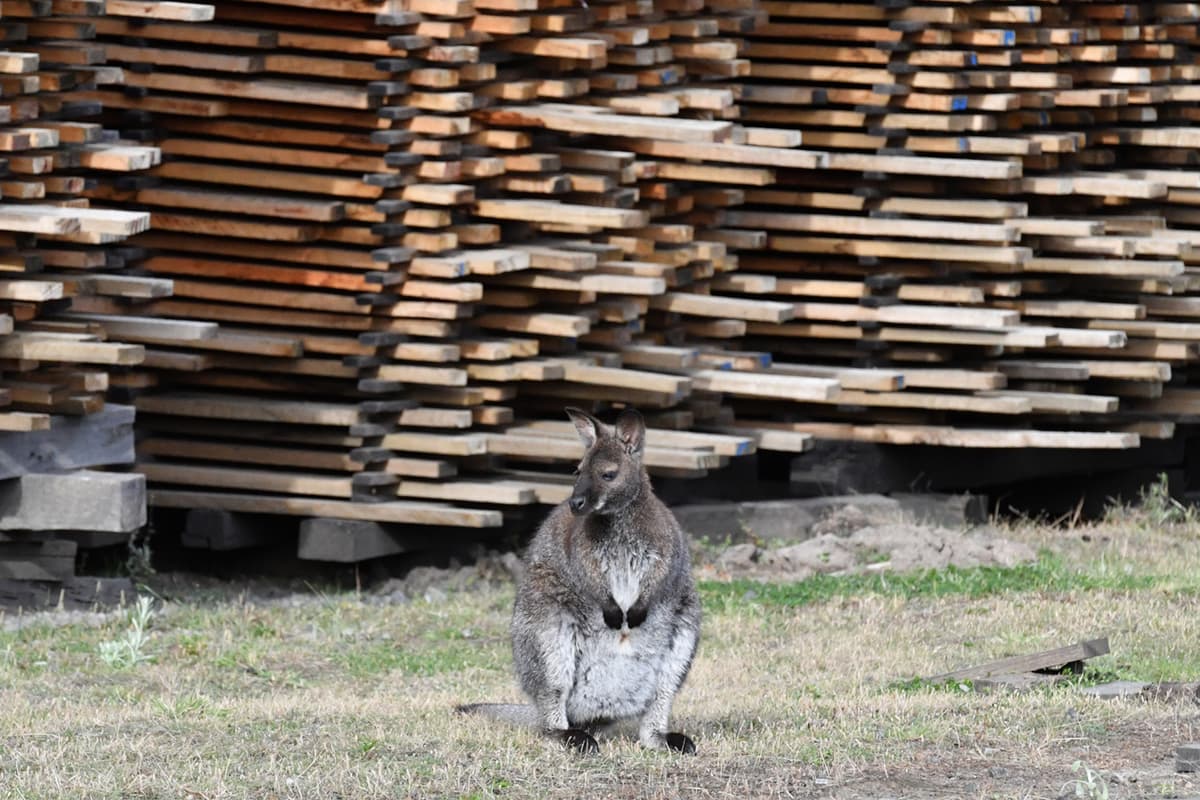
Logs sourced from Tasmania’s native forests are now being supplied to mills in Victoria, including businesses that received millions of dollars in public funding as part of Victoria’s native forest logging shutdown.
In other words, Victorians paid to exit the industry and then kept paying to import its product from across the Bass Strait.
This is not a new story. It is the same story, told with the same characters and the same public money, for some thirty years.
Tasmania is now effectively the last Australian state conducting large-scale native forest logging on public land. Emissions from native forest logging in Tasmania have been estimated at 4.65 million tonnes of CO₂ equivalent per year, making it the highest emitting sector in the Tasmanian economy. And yet the industry only exists because governments keep it breathing with taxpayer support.
Successive Tasmanian governments have provided over $1 billion in subsidies to the Tasmanian forestry industry over the past 20 years. That is money that could have gone to nurses, teachers, and housing.
The subsidy doesn’t stop at the Tasmanian border. The federal government has subsidised the export of native Tasmanian forest to Victoria by more than $20 million since 2019 through the Tasmanian Freight Equalisation Scheme, a mechanism originally designed to help Tasmanian manufacturers compete with mainland businesses, now quietly weaponised to ship raw native forest logs across Bass Strait. In 2023, the federal government provided another $15 million in grants to five Tasmanian mills, one of which controversially exports logs to the Heyfield mill in Victoria, a mill 49 per cent owned by the Victorian government itself.
The Victorian government banned native forest logging, then part-owned a mill that encourages it in other places. The federal government pays for the logs to travel via truck and ferry. The Tasmanian government pays for them to be cut and carried to the ferry. Meanwhile in this mess of subsidies and obfuscation, the forests continue to fall.
We have been here before
Anyone tempted to believe this dysfunction is a recent accident should revisit the 2011 Tasmanian Forests Intergovernmental Agreement (TFIA), which was supposed to be the deal that finally ended the so-called forest wars. As part of that agreement, $45 million in Contractors Voluntary Exit Grants were offered to logging and haulage contractors to leave the industry for good. It was, in theory, a fair and dignified exit.
What followed was anything but. The Senate Rural and Regional Affairs and Transport Committee investigated serious allegations of rorting within the scheme. Contractors took the exit payment and re-emerged under new company names – sometimes controlled by family members – doing the same work in the same forests. The Australian National Audit Office (ANAO) found that some who were paid out continued operating in the native forest sector, having received grants without genuinely meeting eligibility criteria. The Senate committee recommended significant departmental changes and stricter oversight — changes that came too late for the public money already gone.
A Tasmanian state parliamentary committee was subsequently established to examine further claims of fraud and mismanagement.
The findings included that the taxpayer-funded industry exit produced neither exit nor industry transformation. It produced phoenix companies, double-dipping, and a template for what has followed
The bill keeps growing
More than a decade later, the pattern continues. Forestry Tasmania – who’s public brand is Sustainable Timber Tasmania – the government-owned business managing logging in native forests, suffered a cash loss of $454 million over the period 1997–2017 and wrote down the asset value of the forest estate by $751 million. In its most recent reporting, it recorded cash receipts from customers below its total expenses. The most recent Tasmanian budget continues to provide an annual allocation of $8 million in Community Service Obligation funding to Sustainable Timber Tasmania.
The uncomfortable reality is that without subsidies and incentives, the native forest logging industry would not persist. Over decades, taxpayers have bankrolled losses and bailouts: more than $1.3 billion in accumulated losses in Tasmania, with handouts exceeding $1.5 billion in Victoria and about $1 billion in New South Wales.
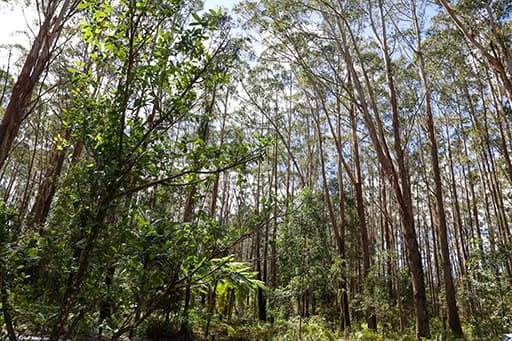
Meanwhile, the forests being destroyed are not replaceable. When a forest is logged, less than 1% of that forest’s biomass ends up as a sawn timber product. Some 60% of the forest’s biomass is simply left on site, and either burned or left to rot. These are some of the most carbon-dense forests on the planet, home to species found nowhere else on Earth.
The long-held myth that we need native forest logging for the survival of regional towns is a fallacy. Australia Institute research shows that 99% of Tasmanians do not work in forestry or related industries, and 97% of forestry on private land is based on plantations. Plantations already supply about 90% of Australia’s sawn timber, grow wood faster for higher value uses, and are around four times less likely to burn than logged and regenerated native forests. The transition has, in large measure, already happened. The subsidies are simply delaying the final act.
End the grift
Four Corners’ ‘Timber Turmoil’ is a portrait of policy capture in slow motion. An industry that has learned, over generations, to reap public money more efficiently than it reaps forests. The TFIA exit program showed that without genuine accountability and enforcement, industry transition funds become industry survival funds. The cross-Bass-Strait log trade shows that when one jurisdiction bans native logging without closing the import loophole, the destruction simply relocates, and the public pays the bill.
The federal government can close the Tasmanian Freight Equalisation Scheme’s loophole on raw native forest logs, and end the zombie subsides for native forest logging. The Tasmanian government must stop signing new supply contracts that lock in logging beyond 2027, when the industry’s long-standing exemption from federal environmental law expires.
And both governments must finally do what the TFIA was supposed to do fifteen years ago: support workers to fully transition into industries with a future, with real accountability for how that support is used.
The economic and ecological case has been made clearly for years. Native forest logging is a small employer, a large emitter, destroyer of biodiversity, and a permanent drain on the public purse. It is not a pillar of regional economies. It is a never ending subsidy habit government have not yet found the courage to break.
The forests cannot wait for another inquiry, another exit program, or another Four Corners episode to confirm what we already know.
Louise Morris is an Advocate at the Australia Institute