Imagine you lead a state government and two thirds of adults and one third of children in the state are overweight or obese. Excess weight has overtaken smoking as the lead risk factor contributing to the disease burden, and the state’s urban environment is saturated with junk food advertising. More than one study reveals that 80 percent of food and beverage ads within a 500 metre radius of the state’s schools are for junk food.
How do you respond?
You know that many of the children who are being targeted often do not distinguish between marketing messages and neutral information, let alone possess mature executive functioning and emotional regulation that helps impulse control. And yet, before they arrive at school each day, they are subjected to a whole curriculum of unhealthy eating options, delivered by some of the world’s most powerful corporations.
The lesson learned by rote, day in and day out, is that a can of Coke with ten teaspoons of sugar is perfectly unremarkable; burgers that contain 100 percent of the entire daily saturated fat allowance are a regular staple, and a breakfast bowl of child-marketed cereal that blows through a child’s entire daily sugar allowance before 8am is routine.
Last year, the South Australian Government responded to this situation as logic and basic care would dictate. It banned ads for sugar-sweetened drinks, confectionery, snacks, desserts, ice creams and fast-food restaurants on the interior and exterior of state-owned buses, trains and trams.
The question, twelve months on, is why haven’t other Australian governments followed South Australia’s lead? Only one other jurisdiction, the ACT, similarly regulates advertising on public transport. In Queensland and West Australia, governments in both states have made and backed away from commitments to phase out junk food advertising. Elsewhere, even the promise of a proportionate response is yet to surface on politicians’ lips.
Behind the inertia is the fierce resistance of a junk food industry determined to protect its bottom line. The South Australian Government acted despite a barrage of criticism designed to distract and deflect or outright fudge the facts, led by the Australian Association of National Advertisers (AANA).
The industry body insists that it fully supports measures that encourage healthier choices, but claims that “experience from around the world indicates that similar advertising bans have not been effective in reducing obesity rates.” In fact, the opposite is true. Transport for London banned ads for high fat, salt and sugar products across the metropolises’ transport system in 2019, and an expert study found that it contributed to a 1000 calorie decrease in unhealthy purchases in people’s weekly shopping, a result that translated into 100,000 fewer cases of obesity since the ban was implemented.
Undeterred by the facts, AANA plowed on, predicting that the South Australian ban would reduce investment in the state’s transport system. It hasn’t. Elsewhere, the industry has tried the obvious tactic of shifting blame to parents, conveniently ignoring its own role in fuelling pester power.
The deepest deceit is the mirage of “industry self-regulation”. Outside the two jurisdictions where governments have stepped up to the plate, advertising is monitored by Ad Standards. Their own Food & Beverage Code states that junk food marketing “must not target children.” So, by the industry’s own standards, self-regulation lies somewhere between abject failure and farce.
Why? Because Ad Standards is funded by the advertising industry and overseen by – you guessed it – the “voice for brands”, AANA. So, we have charged an organisation funded by McDonald’s, Coca-Cola, Hungry Jacks and Magnum with the responsibility to police what is appropriate for our children to see. Who could have imagined that it would go so horribly wrong? And now the same organisation responsible for the mess we’re in has the effrontery to mount a campaign against the solution.
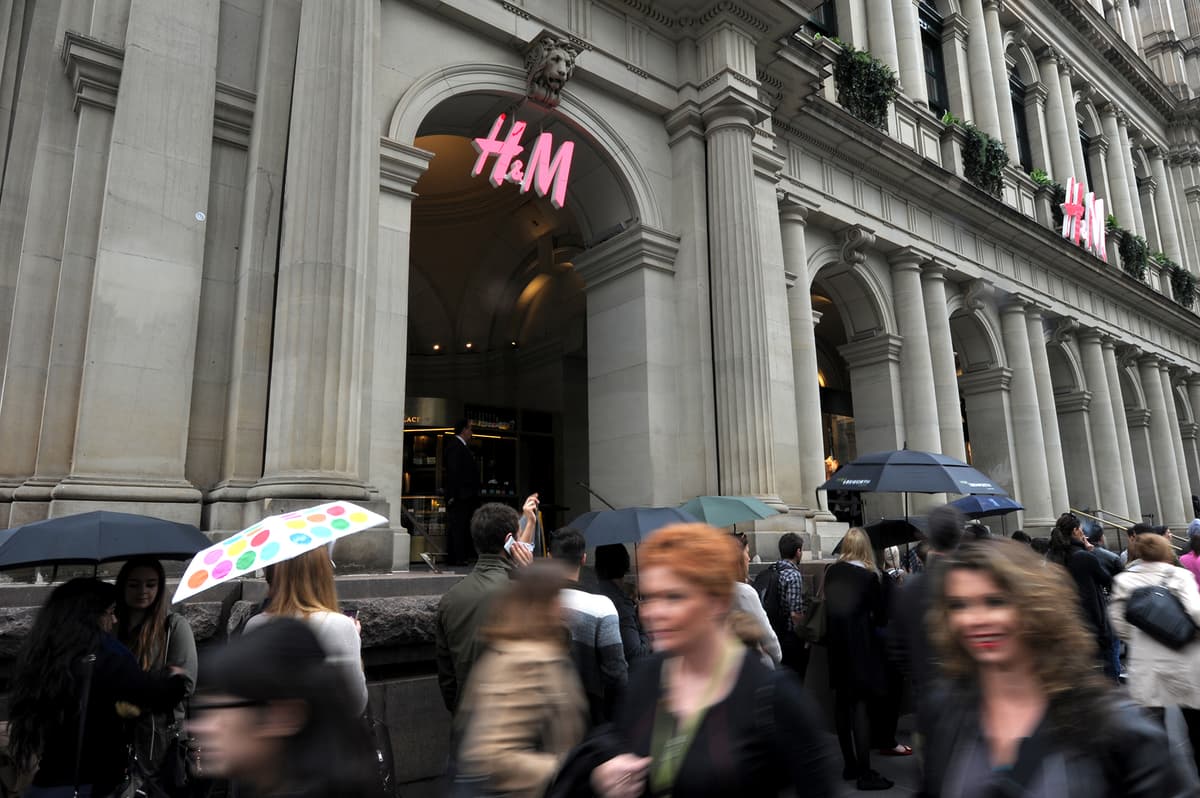
AANA’s lobbying offensive may be hopelessly conflicted and self-interested, but it has successfully cowered governments across the country. Amongst the consequences of this aggregated dereliction of duty, junk food companies continue to target Sydney school students with 2,800 ads every year just on public transport; three quarters of the food ads on buses designated to school routes are for junk food; and the proportion of junk food ads increases in low-income areas. Perth school children see between nine and 70 outdoor ads for junk food just on their journey to and from school each day.
South Australia has proved that change is possible, but it is only a starting point. The SA ban does not apply to billboards or bus shelters and permits brand-only ads (that don’t explicitly depict junk food products). Beyond these issues, we know that marketers constantly target our children whenever they are online or watching television.
On this front the UK has shown the way, successfully banning online junk food ads targeting children at any time, plus all TV ads for high fat, salt and sugar products between 5.30am and 9pm. In Australia the Healthy Kids Advertising Bill introduced by Independent MP Dr Sophie Scamps would achieve the same result, providing the critical national complement to state-level action.
The core question for our leaders is simple. Should public space – and our children’s mental environment – be governed by the people’s representatives or self-interested industry shills? It’s time to reclaim our streets, clear the airwaves, and protect our kids.
Tom Greenwell is co-author with Chris Bonnor of Waiting for Gonski: How Australia Failed Its Schools. He teaches History and Politics in the ACT public education system.