Even though clothing is ubiquitous, it’s not always front of mind when we think of industries that produce the highest levels of pollution. So here’s a question: how do you feel when you hear there are enough clothes on the planet to last the next six generations of humans?
Assuming the validity of this statement, it would mean that we have enough to clothe the human population until around the year 2206. Irrespective of this notion, we are faced with an unprecedented amount of excess clothing.
I’m not suggesting that we stop producing textiles. However, we could radically scale back the unnecessary and surplus parts of clothing production by minimising the aspects of production that are ecologically harmful.
How did we accumulate so much clothing?
Wearable mid-century to present-day articles of clothing make up the stock of excess clothing. However, the bulk of it came in the last three decades with the explosion of mass produced fast fashion and, more recently, ultra-fast fashion.
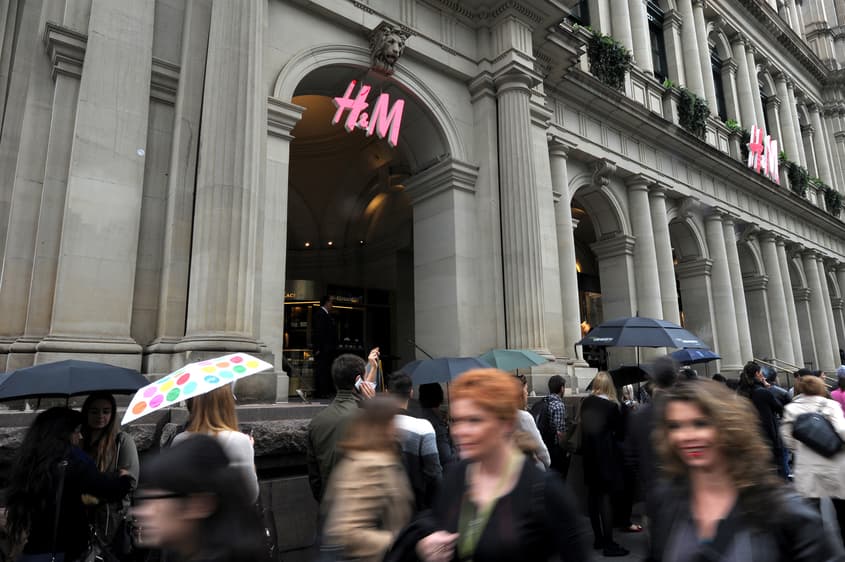
The former covers the likes of H&M and Zara, while the latter includes companies such as Amazon, Shein, Boohoo, Temu and Cider. The distinctive features of the ultra-fast fashion business model are the drastically accelerated production cycles with new, hyper-trends being added daily as opposed to weekly or monthly. And the extreme range of artificially lower-priced items. An ultra-fast fashion app may sell a brand-new winter coat for as low as $2.50, for instance.
For context, Shein has an estimated 600,000 items on its website at any given time. And it adds approximately 10,000 new styles daily. Prior to the US cancellation of the de minimis exemption for China and Hong Kong in 2025, Shein and Temu had each been shipping one million parcels to the US. The de minimis rule had been giving ultra-fast fashion brands a major advantage because it waived import duty taxes for all types of goods that fell below the USD $800 threshold.
Fast fashion spending & consumption
Here in Australia, two ultra-fast fashion giants had nearly $3 billion in annual sales in 12 months to June 2024: $1.7 billion for Temu and $1.1 billion for Shein. Australia imported 1.5 billion new garments in 2024. Globally, the acceleration of fast fashion has contributed to more than 100 billion garments being manufactured annually.
Factors such as the pursuit of high profits, fashion trends, planned obsolescence and unethical supply-chain practices such as wage theft fuel the fast and ultra-fast fashion production model. It has enabled a single-use, throwaway culture among many consumers and led to massive levels of clothing waste.
Australia is a prime example of the aftermath of this formula. In 2024, research from The Australia Institute revealed that Australia was the world’s largest per capita consumer of textile waste. The US, China and the UK were not far behind in their consumption levels. This shows that even a country with a relatively small population can consume vast quantities of clothing. Australia’s annual clothing imports are about 373,000 tonnes of textiles (2018-19) or more than seven harbour bridges. Consumers spent $9.2 billion on clothing in 2018-2019.
At the current rate of consumption, the World Bank predicts that by 2030, global clothing sales could rise by 65%.
What’s wrong with new clothes?
This overflow of clothing at first glance might seem like a positive situation where consumers have more choice and variety. Indeed, these are great features for consumers. Some might even say excess is just the nature of capitalism. The cost to the environment, however, is so colossal that the fashion industry is often called one of the planet’s biggest polluters.
From sourcing to manufacturing, retail, consumption, and disposal, the burden on the environment is enormous. For instance, it takes 2,700 litres of fresh water to make just one t-shirt. It’s about 8,000 litres of fresh water to make a pair of jeans. This is enough water to satisfy the daily drinking needs of about 4,750 people.
The UN has recently declared that the world has entered an era of global water bankruptcy as irreversible damage pushes many basins beyond recovery. There’s an increasing range of vanished lakes and wetlands, compacted aquifers, irreversibly lost biodiversity, and subsided land in deltas and coastal cities, according to the UN.
Most current manufacturing processes wreak havoc on ecosystems, increase biodiversity loss, escalate deforestation, pollute land, oceans and other waterways, and also add microplastics and other toxic chemicals into the atmosphere, water and soil.
The connection between excessive clothing consumption and poor health
More than half of our clothes are made from synthetic textiles such as polyester, a petroleum-based product derived from fossil fuels. An estimated 342 million barrels of oil are used each year to make textiles. The global clothing industry emits 1.2 billion tonnes of greenhouse gases a year.
The repercussions of polyester and other synthetic clothing are not limited to environmental pollution. These synthetics contain toxic chemicals such as phthalates, PFAS (also known as forever chemicals), restricted disperse dyes and industrial chemicals. The accumulation of these chemicals in the human body can lead to health complications such as increased cancer risks, infertility, skin irritation, endocrine disruption, migraines, and organ failure.
The more we purchase and wear brand-new clothing made of synthetics, the more we increase our exposure to toxic chemicals. The effects of these chemicals are not always immediate, which may be why this problem receives little attention in mainstream media.
How can I be sustainable with my wardrobe?
Real change is far more than just about one individual making changes to their closet. We need systemic change. It’s about what we can do collectively. A shift in one person’s habits alone is hardly a drop in the ocean, but together we can make a significant impact.
Here are some ways to help shift the status quo in both personal and collective ways:
As an individual
Buy well
The most sustainable items are the ones that are already in your wardrobe. The key is to use what you already have for as long as possible. It’s important to buy well, buy less and keep your clothes longer. Opt for clothes made of natural textiles like cotton, linen, hemp and tencel, or clothes that are second-hand, where possible.
Repair
Prolong the life of the clothes and shoes that you have by taking care of them and mending when you need to. Buy a pilling comb to keep your jumpers looking new. Learning to darn and mend holes in your clothes is also an option.
Buy second-hand
With second-hand/preloved clothing, there’s a reduction in toxic chemicals and microplastics from previous use and washing. The days of second-hand clothing being a symbol of low socioeconomic status are long gone. Second-hand clothing has been popular for years both for style and for its environmental benefits.
According to WRAP UK, “extending the life of clothing by an extra nine months has been estimated to reduce carbon, waste and water footprints by around 20–30% each and to have an estimated £5 billion (approximately AUD $9.4 billion) a year saving possible to the costs of resources used in clothing supply, laundry and disposal.”
Borrow, hire or rent apparel
You don’t always need to buy clothes to have new things to wear. Hiring, renting or borrowing clothes for special occasions, other uses or simply borrowing from friends or family can work too.
On a bigger scale (friendship groups, communities and other social groups)
Organise a swap or a mending bee
We’re all part of a workplace, a social group, a family, and a community. Try hosting clothes swaps. Repairing and mending groups are great ways to spread the word and reduce waste.
Contact your representatives (The potential within advocacy and legislative reform)
Policy and legislation can often be the way to secure long-term or permanent change. At the rate of ‘six generations of clothing’ on the planet or even just epic levels of existing textile waste, we need laws that will slow this down to protect the environment and humans from the perils of textile overproduction-overconsumption dynamics. An example is the cancellation of the de minimis rule, which officially began on the 29th of August 2025. As a result, one month later in September 2025, Shein observed an 8% decline in sales. This shows the impact that the right legislative reform can have.
Advocate for policy reform in the fashion industry with your local and federal representatives. It could take the form of requesting a government inquiry into protecting Australia’s textile industry from ultra-fast fashion competition and overproduction, or writing to your local councillors to ask what measures they are pursuing to help make the industry better and reduce textile waste.