When John Howard introduced Australia’s gun reforms after the Port Arthur massacre, he knew they would be controversial. He also knew they were necessary.
The campaign against the reforms was fierce. Interest groups warned they would punish responsible gun owners. Politicians predicted a backlash. Yet Howard recognised something more important than the noise. Australians wanted their leaders to act.
Three decades later, those reforms are regarded as one of the defining public policy achievements of modern Australia. They were not just effective. They were popular because they reflected what Australians already understood: when a product causes harm, governments have a responsibility to reduce that harm.
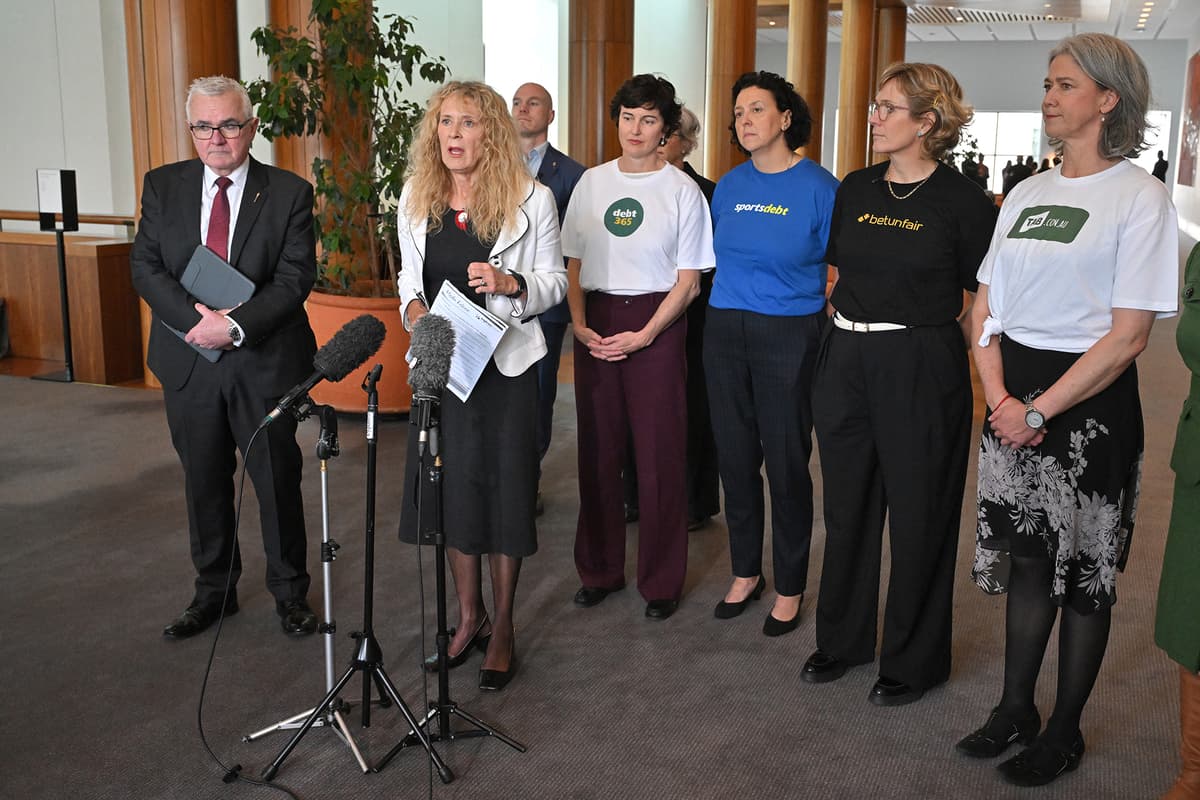
Parliament now has another opportunity to show that kind of leadership. There are encouraging signs that many MPs and Senators recognise the moment. Just this week, members of the parliamentary crossbench stood together with Anglicare Australia to call for stronger gambling reform and urge Parliament to finish the job. They have shown that courage and agreement on this issue already exists.
Almost four years after the late Labor MP Peta Murphy handed down her seminal report, the Government has finally brought legislation before Parliament. But their Bill has weakened from the findings of that report after negotiating with the gambling industry rather than the experts, researchers and people with lived experience who have spent years documenting the harm. Parliament now has the opportunity to finish the job and do it properly.
For too long, gambling has been treated as though it were simply a matter of personal choice. Anyone working in community services knows that is not true.
Every day, Anglicare Australia services see the consequences of gambling harm. Families who cannot pay the rent because money has disappeared into online betting accounts. Parents skipping meals so their children can eat. Relationships breaking down under the weight of debt. People arriving at emergency relief services after exhausting every other option.
The damage extends far beyond the person placing the bet. Financial stress, homelessness, family violence, mental ill-health and suicide all become more likely when gambling takes hold. These are not isolated personal tragedies. They are the predictable consequences of an industry built around encouraging people to keep gambling for longer and spend more than they intended.
Australians understand this. Just this week, polling from the Australia Institute found overwhelming support for stronger action. Nearly four in five Australians support a total ban on gambling advertising. Only one in three think the laws before Parliament go far enough.
Support cuts across age groups, voting intentions and states. This is not a niche issue, it is an area where Australians are remarkably united.
Too often, however, debate about gambling reform has been dominated by the gambling industry itself. We hear warnings about sporting codes losing sponsorship revenue, broadcasters facing financial pressure and restrictions on consumer choice.
We heard similar arguments before tobacco advertising was banned. We heard them before seatbelt laws, random breath testing and plain packaging. Powerful industries almost always argue that reform will go too far. History usually judges otherwise.
The truth is that Australians are saturated by gambling advertising in ways that would be unacceptable for almost any other harmful product. Children watch sporting heroes promote betting companies before they are old enough to understand the risks. Gambling odds are woven into sports coverage. Promotions follow people across social media, streaming services and mobile phones.
This constant exposure is not accidental. It is a business model. The landmark Murphy Inquiry recognised that reality. After hearing extensive evidence from researchers, people with lived experience and public health experts, it recommended a comprehensive, phased ban on online gambling advertising alongside broader reforms to reduce gambling harm. Those recommendations reflected a simple public health principle: if we want fewer people to experience harm, we need to reduce the forces driving it.
If Government MPs and Senators who took part in the Murphy Inquiry believe the evidence shows stronger protections are needed, they should have the courage to strengthen the legislation now, rather than hoping someone else does it later. Every compromise leaves more Australians exposed to preventable harm.
Governments often talk about making difficult decisions. This is one of those moments where doing the difficult thing is also the popular thing.
Australians are ready. Some parliamentarians have already chosen to stand with Australian families over the gambling lobby. The question now is whether enough of their colleagues will join them.
Years from now, nobody will remember how many gambling advertisements appeared during a football match.
They will remember whether this Parliament had the courage to put the wellbeing of Australian families ahead of the interests of one of the country’s most powerful lobbying industries.
Kasy Chambers is the Executive Director of Anglicare Australia, a network of organisations linked to Anglican Church.