Regulations on the ban of soft plastic waste exports came into effect in 2021 through the National Waste Action Plan.
During this time, several types of plastic could not be recycled in Australia, which led to the granting of temporary plastic waste export exemptions, to allow the industry time to catch up on recycling capabilities. Domestic recycling infrastructure was initially unable to process all collected materials.
The industry now says recycling capacity has increased and that too much plastic is being exported, through both legal exemptions and potential criminal actors selling waste internationally at higher costs than can be sold in Australia.
The industry has further claimed that Australian businesses are struggling to secure enough feedstock because recyclable plastics continue to leave the country, limiting the ability of local facilities to operate efficiently and grow. The federal government has confirmed that the exemptions will be wound back, but the industry wants more steps taken to keep plastic waste in Australia.
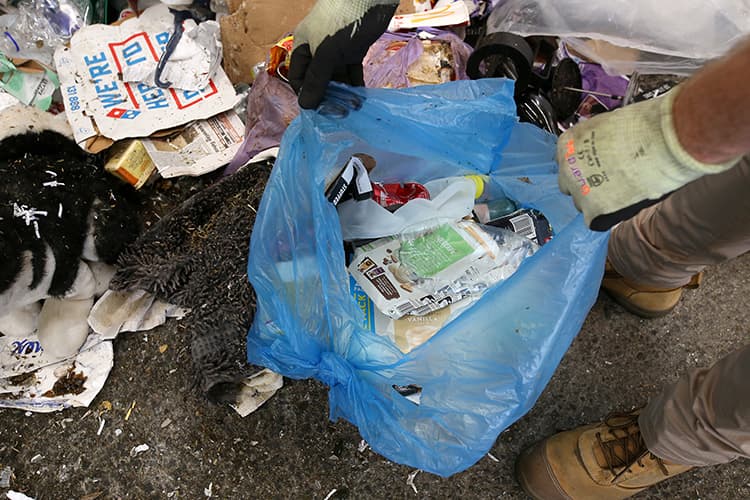
Australia goes through an estimated 70 billion pieces of soft plastics each and every year – that’s almost 3000 pieces per person. Australians used 3.4 million tonnes of plastic in 2018-2019. One million tonnes of Australia’s annual plastic consumption is single-use plastic. 84% of plastic is sent to landfill, and only 13% is recycled.
Australia’s soft plastics recycling industry is at a turning point
Significant developments have occurred in the last few years, resulting in the rapid expansion of Australia’s soft plastics recycling industry. It can recycle almost three times the level achieved during the peak of the failed REDcycle program in 2022.
11,000 tonnes of soft plastics stockpiled in warehouses after the collapse of the program have now been processed, marking a major milestone in rebuilding confidence in the sector.
These achievements demonstrate that investments in recycling infrastructure are beginning to pay off and that Australia is better positioned to manage its own plastic waste than it was four years ago.
Demand for recycled products
Despite greater soft plastic recycling capacity, recyclers say there is not yet a sufficiently strong market for recycled materials. Without reliable demand, companies may hesitate to invest further in recycling infrastructure and advanced technologies.
Environmental organisations and researchers have suggested mandatory recycled-content requirements for packaging as a possible solution. Such policies would create guaranteed markets for recycled materials and provide greater certainty for businesses investing in local recycling operations.
Designing packaging models & systems for a circular economy
Environmental advocates argue that recycling alone cannot solve Australia’s plastics problem.
A fundamental circular economy principle is designing products or packages in ways that make it easier to reuse and/or recycle. Poor packaging design continues to hinder progress around reuse and recycling.
The inaugural Unpackit Awards, organised by environmental groups, recently highlighted some of the country’s most problematic packaging designs. The awards named plastic-and-metal hybrid “franken-cans” as Australia’s worst packaging because they are difficult to recycle, often excluded from container refund schemes and combine materials that are challenging to separate.
The awards showcased examples of innovative packaging solutions, too, demonstrating that businesses can reduce waste through reuse and better design. The top award for best packaging went to The Udder Way’s refillable 18-litre milk keg system, which has reportedly replaced millions of single-use plastic bottles since its introduction.
The Australia Institute’s 2024 Plastic Waste in Australia report recommended a similar idea exemplified by the Fleurieu Milk Company, who had developed an 18-litre refillable keg for commercial use. Their kegs could also be used to refill glass bottles, and each keg eliminates the need for 7,000 single-use plastic bottles over the course of its lifetime. Reusable pallet wrap systems and reusable coffee cup initiatives for helping reduce packaging waste were also recognised at the awards.
The need to manage the crisis with circularity
Australia’s recycling industry is making meaningful progress, but improvements in packaging design, product stewardship and consumer demand are equally important. Recycling systems function most effectively when products are designed with circular economy principles of reuse, recyclability and waste elimination in mind. Poorly designed packaging increases contamination, raises processing costs and often creates confusion about what can actually be recycled.
Australia’s soft plastics recycling industry now stands at a critical juncture. The growth in processing capacity and the successful clearance of REDcycle stockpiles provide reasons for optimism. However, achieving a truly circular economy will require coordinated action from governments, manufacturers, retailers and consumers.
Retaining plastic waste materials within Australia, creating stronger markets for recycled products and encouraging packaging innovation will be essential if the country is to reduce plastic waste and build a more sustainable future.
The Packaging Extended Producer Responsibility (EPR) Bill
In May 2026, Senator Peter Whish-Wilson introduced the Extended Producer Responsibility (EPR) Scheme for Packaging Bill 2026, called ‘No Time to Waste’, into the Federal Senate.
The EPR scheme, in line with many overseas jurisdictions through the Bill, would have a direct and legally binding obligation on producers, importers or distributors of packaging for the end-of-life management of packaging they place onto the Australian market. The scheme would also see Australia’s National Packaging Targets mandatory and legally binding. More than 60 countries in the world have an EPR scheme around packaging. About 63–65% of Australia’s two-way trade is with Asian partners already implementing an EPR scheme, therefore it will be a positive trade alignment for the country.
Senator Whish-Wilson has been attributed to saying “Plastic pollution is one of the biggest environmental challenges facing human health and the planet – and like most environmental problems, it is also a wicked political problem.…”
Nina Gbor is the Director of the Circular Economy & Waste Program at The Australia Institute