This week, the federal and WA governments stood alongside Perdaman to announce a $4 million pre-feasibility study into a new large-scale oil refinery at Karratha in Western Australia. It is the first in Australia in more than half a century, under a $15 billion "fuel security" package rushed out after the war on Iran sent oil prices soaring.

Wed 29 Jul 2026 10.29 AEST
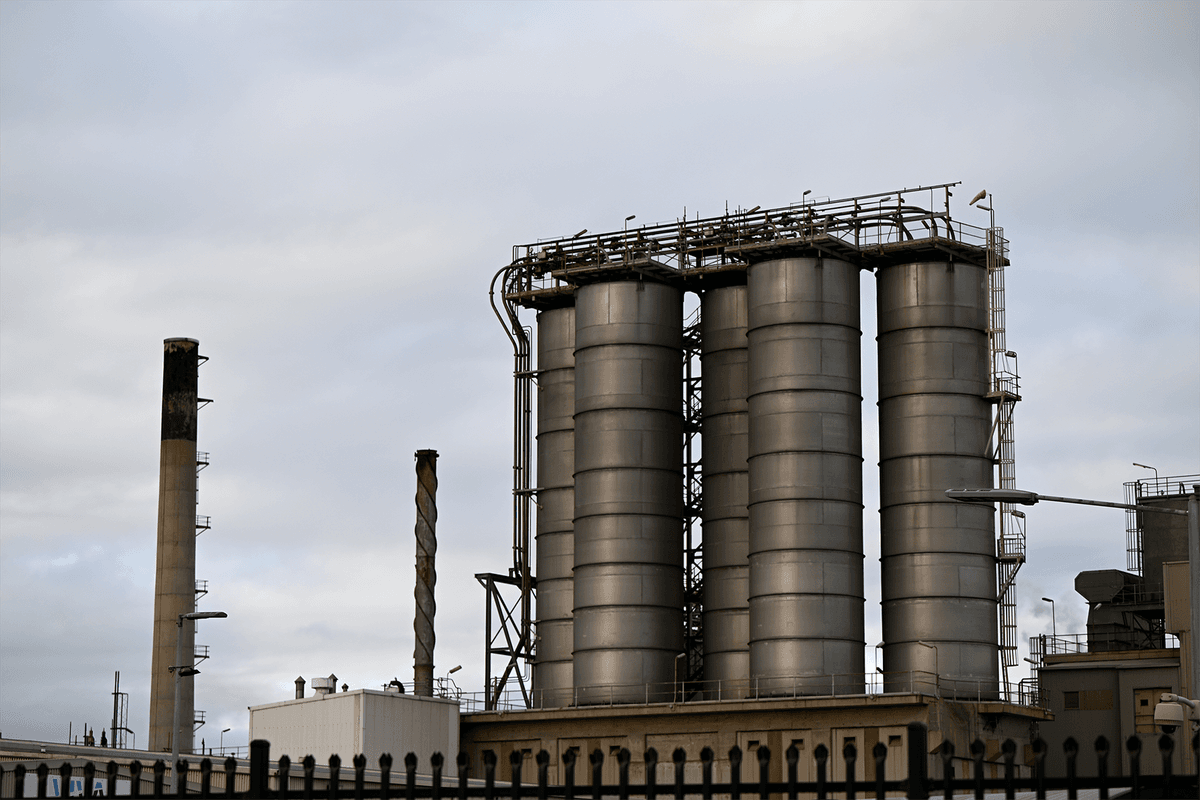
Photo: AAP Image/Bianca De Marchi


This week, the federal and WA governments stood alongside Perdaman to announce a $4 million pre-feasibility study into a new large-scale oil refinery at Karratha in Western Australia. It is the first in Australia in more than half a century, under a $15 billion “fuel security” package rushed out after the war on Iran sent oil prices soaring.
It sounds like energy security, but it is not. It is another fossil fuel company being handed public money to expand production, while the Safeguard Mechanism, created by the Tony Abbott Coalition government over a decade ago, would provide offsets cover to let it expand climate emissions, if it is ever built.
Let’s start with the basics. Grattan Institute’s Tony Wood has spent months explaining why building our way out of fuel import dependence doesn’t work. Australia has very limited oil reserves, enough to last less than a decade at current consumption, and a new refinery would still need imported crude to run.
Our existing oil refineries survive only because governments underwrite them, not because they make us more secure. A refinery running on imported oil doesn’t reduce our exposure to global shocks. It just gives a fossil fuel company another subsidised asset, another offset boondoggle, and another cycle of political cover to keep expanding.
The bit that gets left out of the ‘fuel security’ pitch is that Australia simply doesn’t have the crude to feed a refinery even if we wanted to. Geoscience Australia data shows more than 90 per cent of our conventional crude oil resources have already been extracted, and what remains in proven, commercially viable reserves would meet the nation’s needs for less than seven months. Yes, seven months!
Production has been falling for 25 years straight, not because of “green tape” but because our conventional oil basins are exhausted. Australia produced around 800,000 barrels a day at its peak in 2000, which is 26 years ago.
IEEFA puts current domestic production at just 5.6 per cent of demand. Meanwhile, the oil we do still pump is mostly ultra-light condensate, unsuited to conventional petroleum refining anyway. So, any crude a Karratha refinery processes would most likely be shipped in from the Middle East or Asian hubs, all exposed to the Strait of Hormuz risks. Building a refinery doesn’t uncouple Australia from a conflict-riven global oil market. It just creates a new way of staying hooked on it.
Perdaman is not new to this game. Its $6 billion urea plant near Karratha, built on Woodside’s Scarborough gas, is already the largest gas user in Western Australia, running on more than half a billion dollars in public subsidies and a vague promise to “offset the majority of direct emissions,” with no detail on how.
Analysts warn its production could blow through more CO2 than the whole Safeguard Mechanism is meant to save by 2030. Now it’s being handed money to explore an oil refinery, alongside plans to connect its Pilbara operations to onshore and offshore carbon dumping Carbon Capture and Storage (CCS), on the same stretch of coast proposed to be turned into a fossil fuel and CCS export/import hub.
I saw the pitch for that hub in person at the Carbon Capture APAC Summit in Melbourne in July, where Perdaman was in the room making the case that Western Australia should become an expanded fossil fuel zone. With CCS, onshore and offshore, as the business model that makes it all work with Safeguard Mechanism’s so-called offsets. No plans to reduce real emissions. Rather, ongoing justification for more fossil fuels, backed by public subsidies, low-integrity offsets and favourable legislation.
And look at who that expansion serves. Karratha is not a suburb full of suburban commuters; it is the heart of Australia’s iron ore and gas country, where the biggest fuel users are mine sites running haul trucks, and monster trains around the clock. A ‘fuel security’ refinery built there is less about shielding ordinary Australians at the bowser than about securing diesel supply for the mining industry.
The mining industry’s relationship with diesel increasingly looks like an addiction it refuses to kick. BHP spent years promising to electrify its Pilbara haul trucks and trains, the source of around 40 per cent of its Scope 1 and 2 emissions. Instead, internal documents show it has quietly pushed back the renewable power project meant to support that electrification, with no capital spending planned until at least 2031.
BHP is now talking only of “working towards a reduction in risk exposure to diesel displacement solutions” rather than committing to deploy it. Rio Tinto tells a similar story. Diesel is the crack cocaine of the mining industry: everyone knows it’s the problem, and there’s always a reason to put off quitting. A new refinery gives that habit a taxpayer-funded top-up.
Compare that with ordinary Australians, switching to electric vehicles faster than anyone predicted. EVs and plug-in hybrids made up 35.8 per cent of new passenger car sales in June, almost 49,000 sold that month, one in four new cars now fully electric. Households are switching wherever they can. It’s the biggest miners in the Pilbara, and the governments subsidising their fuel, who are resisting the transition.
Here is where offsetting goes full boondoggle. If this refinery is ever built, and its emissions come under the Safeguard Mechanism as expected, Perdaman would be free to buy Australian Carbon Credit Units (ACCU) to cover its pollution. Some of that new credit supply is set to come from the Great Koala National Park, which NSW plans to fund by selling ACCU credits generated from ending native forest logging. Credits that heavy polluters are compelled to buy to meet their Safeguard obligations.
Forestry Australia has already warned the method could understate leakage and fail additionality tests. Whatever you think of that debate, a koala habitat and biodiverse forest should not have to double as a laundromat for mining company’s emissions and balance sheet.
None of this happens in isolation. The Australia Institute’s research shows governments handed fossil fuel producers and major users $16.3 billion in subsidies in 2025-26. Growing faster than the NDIS costs, with the Fuel Tax Credit Scheme alone costing $10.8 billion. Subsidise expansion, subsidise increased emissions, subsidise so-called offsets, and call it energy security.
Meanwhile, the actual transition is happening anyway. AEMO’s latest data shows renewables supplied a record 46.5 per cent of generation in the National Electricity Market in the first quarter of 2026, the highest ever for that quarter. While WA’s own grid hit 46.1 per cent renewables, up from 40.8 per cent a year earlier. Battery storage more than tripled its daily role in the system, and Australia connected a record 9.1 gigawatts of new renewables and storage in the last financial year alone, more than double the year before.
Households, businesses and communities are choosing solar, batteries and wind faster than any government forecast predicted. It is the fossil fuel industry and the governments propping it up who are swimming against that tide. Funding refineries reliant on imported oil, gas projects dressed up as climate solutions, and carbon credits and offsets that let pollution keep growing.
Real energy security looks like the grid we are already building. It does not look like another oil refinery, gas export plan or carbon dumping hub in the sacrificial zones of northern Australia.
Louise Morris is an advocate at the Australia Institute, with 20 years’ experience encompassing climate, energy, forest protection, and law reform in the not-for-profit sector, and federal politics.
Advertisement