Community radio was another dangerously socialist idea that sprang from the Whitlam years. Minister for the Media, Moss Cass, was not confident he could wrangle the legislation through a hostile Senate. Even getting it past his own Cabinet was a challenge, and so he wedged the door open using experimental licences.
Having dodged advice from the Attorney General’s and Postmaster General Departments, Cabinet approved, but it wasn’t clear the twelve licences were even legal.
Observing this, somebody quipped with a tag that remains today: community radio began life as “Cass’s dirty dozen”.
Three weeks later, John Kerr dismissed the Whitlam government, leaving the fledgling stations in a precarious situation. Although their licenses had been approved, they had not been formally signed. That left them dangling while the caretaker minister decided what to do with them.
The feeling was that the new Liberal government didn’t like community radio and would happily see it wither. Even though he was bound by convention to implement existing policy, the Acting Minister for the Media, Peter Nixon, prevaricated.
A shaky beginning
Facing a shaky future, the would-be stations scrambled, and not all were well-prepared. Among the clutch was 2XX in Canberra, emerging from ANU campus radio. They knew what they wanted, but there was a problem: without a formal organisation, there was no such thing as 2XX.
The license needed to go somewhere, and so they enlisted an ANU student for a couple of weeks until the formalities could be sorted. While it was hardly an elegant solution, it was enough to keep the station alive.
Around Australia, the mood was buoyant as it became clear that people wanted stations they could own.
They filled a gap for the voices not heard elsewhere, voices missing on mainstream media. Commercial radio was seen as for business to sell more products, and the ABC, highbrow. As one commentator put it, “the media in Australia still only reflected the Anglo-Celtic view of the world. One arm of the media slavishly copied the English imperialist BBC model whilst the other increasingly mimicked the American world view”.
Even after the approvals, uncertainty lingered. A surviving Labor MP from the Whitlam years pushed the issue in parliament, saying, “…community radio is at risk because the Government intends to hand it over to private enterprise”. But if the government had been thinking this way, they soon recognised an emerging social phenomenon. In 1978, the Minister for Posts and Telecommunications, Tony Staley, finally gave public broadcasting a proper legal footing.
And then the backlash arrived
With the legalities sorted, community radio was up and running. But what should it look like? What content should it put to air, and who should decide? If community radio were to truly reflect the huge public diversity, there would be disagreements.
Given the university origins of a few of the stations, progressive-minded listeners were usually glad to hear genuine alternative views. Less pleased were those who considered them a hive of left pinko communists.
In March 1988, things got ugly. Perhaps it was 2XX’s outspoken support of the Pan African Congress and the South African Liberation Centre outside the Apartheid South African Embassy. Or perhaps it was their advocacy for Indigenous, feminist and gay rights – nobody knew for sure. Certain was the arson attack that destroyed the station’s transmitters, a studio and other equipment.
It might’ve ended there, but supporters believed that 2XX should have a future. They stepped in, and the station was soon back on air.
From the ‘Dirty Dozen’ to 5 million listeners
Undaunted, 2XX and the network of sister stations continue, as they say, broadcasting ‘people-powered radio’. They promote local music and the arts and encourage environmental and political activism.
They champion the rights of a diverse population, a place where people outside the mainstream can feel proud of their identity. They celebrate the rich variety of Australia’s multicultural experiment, countering the sad, depleted notion of a monoculture.
Today, there are around 450 not-for-profit stations, with nearly 5 million Australians tuning in each week. Brisbane’s 4ZZZ promotes alternative music, news and culture, while Melbourne’s 3CR aims to “voice ideas to create social change”. 2MCE in Bathurst offers “a diverse range of programs across Wiradjuri Country”. The RPH network serves people who are print handicapped.
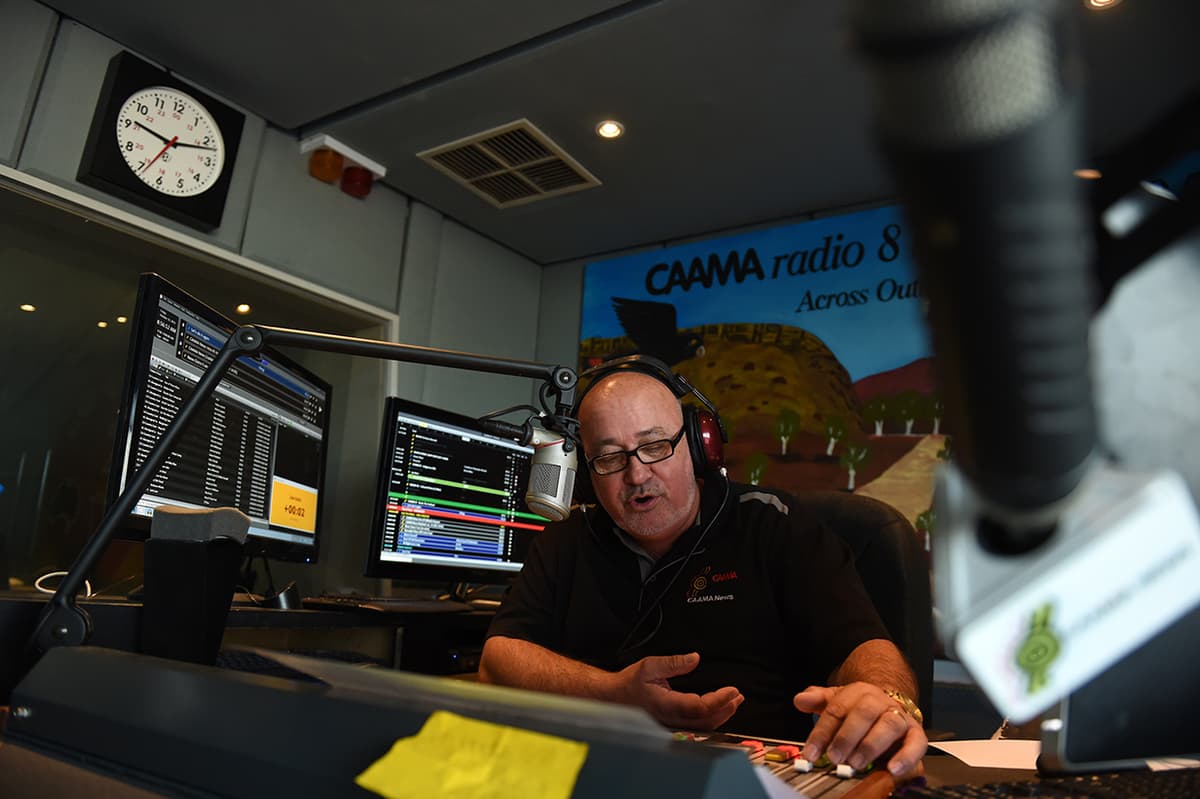
Not least among the challenges is the tangled plumbing needed to reliably broadcast a quality signal. Beyond the microphones and mixing desks sits a bewildering array of blinking lights understood only by a few specialists. There’s air conditioning, rent and insurance, all of which are expensive. In a time of splintered media and unpredictable funding, they face a challenging future.
Ultimately, community radio continues, driven by the passion of thousands of volunteers.
They do it for the community and because some things are more important than profit.
Rod Taylor credits Canberra stations 2XX and 1RPH as the grounding for his media career, leading to multiple books and a Fairfax column that began over 15 years ago.