For the first time since red imported fire ants were discovered in Australia 25 years ago, we have genuine reason for optimism.
The national eradication program has reached a major milestone. After years spent chasing the growing edges of the infestation, eradication teams are now moving into the core of the invasion. This marks the turning point and means the strategy is working.
Unfortunately, it also comes at the exact moment governments are approaching another funding cliff.
Five years ago, experts warned governments that the eradication program needed around $200 million a year to succeed. Instead, it received barely a third of that.
When governments delayed and debated, the fire ants infestation grew by more than 40 per cent, expanding from around 600,000 hectares to 850,000 hectares. Every year of underinvestment made the task bigger, harder and more expensive.
The communities hit hardest by fire ants have been those least able to afford it – particularly around Logan and Ipswich.
Taxpayers have since spent millions of dollars to recover the ground that was lost. Now – just as the eradication work is moving into the dense infestation areas the rug could be pulled on communities who are about to receive relief.
Australia’s fire ant history is a cautionary tale in public good program investment. Underfunding does not save money; it’s deferred maintenance. It passes the bill to future governments, future taxpayers and communities. Underfunding destroys confidence that we can achieve large-scale public good projects.
When governments finally invested properly, the program turned around.
An independent review last year found Australia’s fire ant eradication effort was on track after receiving its first year of full funding. Today’s milestone is the practical proof that years of sustained work have pushed the infestation back far enough for teams to begin treating the core populations driving the invasion.
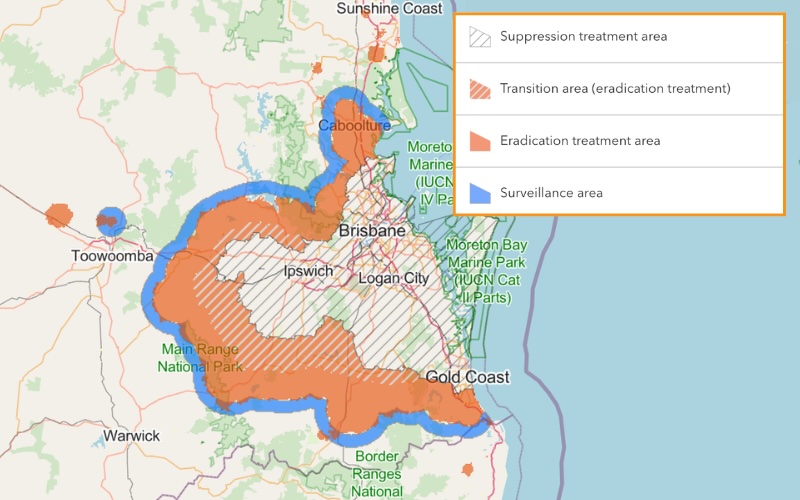
This is exactly what eradication is supposed to look like.
Walking away now would be like stopping halfway through building a bridge because the foundations are finally finished. The hardest work has been done to get us to this point. Abandoning the effort now would squander decades of investment and allow fire ants to rebuild their numbers.
And the cost of failure would not be confined to south-east Queensland.
Fire ants don’t respect state borders. They spread through freight, soil, machinery and floodwaters. Almost every part of mainland Australia has a suitable climate for them to establish.
If they do, Australians won’t just be dealing with an environmental problem.
Fire ants threaten agriculture by attacking livestock and damaging crops. They make parks, sporting fields and backyards unsafe for families. They damage electrical infrastructure and equipment. Their painful stings can cause severe allergic reactions, sending people to hospital and, in rare cases, proving fatal.
They also pose a serious threat to wildlife, attacking native reptiles, frogs, birds and small mammals, adding another pressure to ecosystems already under strain.
Independent modelling from The Australia Institute estimates an established fire ant population would cost Australia over $2 billion every year through agricultural losses, infrastructure damage, medical costs and reduced productivity.
Against those costs, finishing fire ant eradication is one of the best investments governments can make.
Environmental biosecurity rarely captures public attention because success is invisible. When eradication works, the disaster never happens. There are no dramatic headlines about the species that weren’t lost, the farms that weren’t invaded or the billions of dollars that didn’t have to be spent.
But those avoided costs are very real.
Australia has a long history of invasive species becoming permanent because governments acted too slowly or gave up too early. Rabbits, foxes, feral cats and cane toads all remind us what happens when prevention and eradication fail.
Fire ants are different because we still have a chance.
After decades of work, Australia is closer than ever to eliminating one of the world’s worst invasive species. It would be extraordinary if we allowed short-term funding uncertainty to undo that progress.
Governments now face a simple choice.
They can lock in the long-term funding needed to finish the job once and for all.
Or they can repeat a mistake we already know will cost Australia far more in the years ahead.
Reece Pianta is Advocacy Director at the Invasive Species Council.
The Invasive Species Council is calling on governments to secure long-term funding for Australia’s fire ant eradication program. Sign their petition today.