I am a Life Member of the ALP, and I have been the longest-serving Minister for Environment in any Australian jurisdiction so far. I believe I am full square in the environmental tradition of Wran, Carr, Hawke, Gallop, Kirner. The ALP environment network LEAN was conceived in my office in the early 2000s.
I was part of the Carr Government when it managed a native forest industry restructuring program which was larger than the process needed now to finish the transition to 100% plantation in NSW.
Carr also introduced a so-called baseline and credit scheme for large emitters, the first effective Greenhouse Gas Emissions Trading Scheme in the world.
Among other market based tools for environmental protection, I introduced a successful cap-and-trade scheme to control salinity in the Hunter River. Such schemes place a cap on emissions and create a market limited to companies within an industry sector to buy and sell allowances as supply and demand set the price. Companies have a strong incentive to save money by cutting emissions in the most cost-effective ways.
I implemented a Biodiversity Offset framework, first in the nation and very early in the world. It was designed as a last resort scheme; projects needed to ensure no net loss for the environment. The Baird Government removed the environmental guardrails, developers profited handsomely, and the scheme failed utterly to protect nature.
Attempts to manipulate offset schemes are normal. The Federal Safeguards Mechanism and the associated framework of unlimited trade in carbon credits was set up to help big greenhouse polluters wind down their emissions in an orderly way. Instead, it has morphed into a mechanism which effectively supports the indefinite continuation of high emissions from industry.
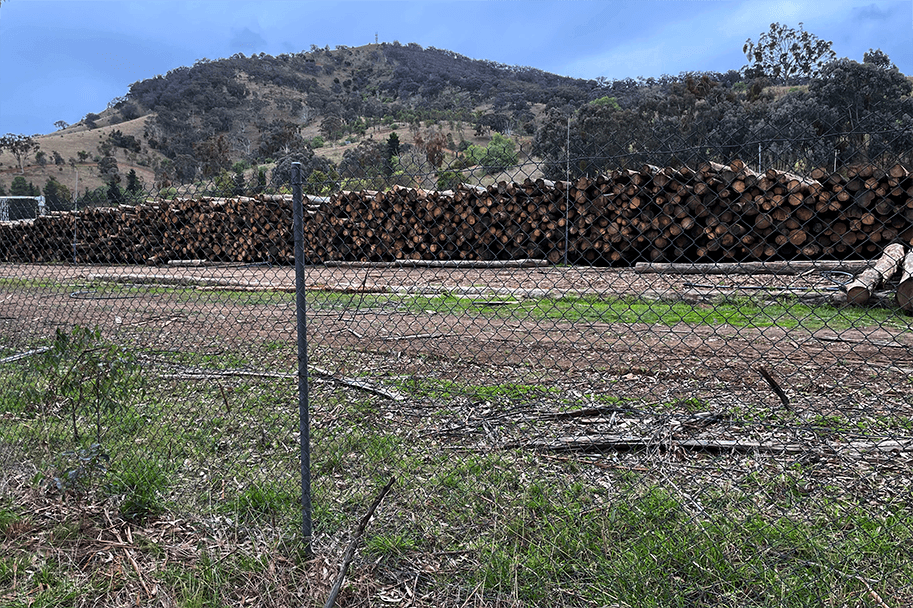
Yet we don’t need to monetise or trade emissions benefits at all. When native forest logging stops, the consequent emissions reduction is reflected automatically in State and Commonwealth greenhouse gas accounts. It is one of the most effective pathways to the achievement of national climate goals available to governments today.
Systemic flaws in offset scheme
The proponents of the INFM method can certainly demonstrate some technical improvements over other methods, but no carbon offset arrangement can escape several decisive, systemic flaws. Which is why they are being increasingly abandoned around the world.
When carbon credits, however well designed, are traded as offsets, they don’t reduce emissions: they maintain the status quo. They don’t advance decarbonisation: they simply allow emitters to continue business as usual. It makes no real difference if government notionally directs credits away from fossil fuel companies to other big carbon emitters in the industrial, transport and manufacturing sectors if offsets are still widely available and unlimited trading is allowed.
Anyway, the system of carbon offsets is based on sleight of hand, a blatant pretence. Science clearly shows that land carbon (‘green carbon’) and fossil carbon (‘black carbon’) are not the same thing. Forest carbon cycles in an active biological loop over decades and centuries; fossil fuel burning immediately releases carbon that has been safely stored underground for millennia. Sequestration in forests cannot offset fossil fuel emissions in the period that counts because their timeframes don’t match up. The atmospheric impact of a tonne of fossil CO2 emitted today lasts for hundreds if not thousands of years. And it takes an even longer time for the tiny fraction of a tonne of CO2 pulled down from the atmosphere today to end up in a permanent carbon pool – the deep ocean sediment.
Moreover, the INFM method does still depend upon a number of quite unrealistic assumptions: that climate change will make no difference to the severity of bush fires in the next 100 years; that logging will continue over the next 15 years; that governments will make no attempt to protect forests – they will effectively ignore community opinion – for at least the next 15 years if ACCUs are not created.
The design of the INFM method and advocacy for its adoption have been concentrated around the Australian Climate and Biodiversity Foundation (ACBF) and groups closely associated with it in one way or another. ACBF has an especially deep influence within Labor Governments, but it is also a very narrow one. I would very much like to see Ministers and MPs at least consult more thoroughly among professionals as well as NGOs across the sector.
Structural Conflict of Interest
This is especially important because the NSW Government is judge, jury and beneficiary of the INFM method. It is simultaneously the method proponent and designer (with a contractor); the largest eligible landholder; the project proponent; the primary financial beneficiary (of ACCUs created from its own regulatory decisions and design); and a jurisdiction whose largest industrial facilities can use those ACCUs to comply with the Federal Safeguard Mechanism. It has a direct interest in optimistic assumptions that maximise ACCU volumes and revenue; and a direct interest in giving NSW-based emitters a cheaper local offset pool.
Already we can see the policy drift. The Great Koala National Park (GKNP), originally justified by biodiversity conservation values in the normal fashion, has now been tied operationally to revenue from offsets. The NSW Government has made protection of the habitat of an endangered species conditional on its monetisation as an offset commodity.
It’s a troubling precedent for future conservation initiatives. That arrangement could only be made because the NSW Government was able to create enough pressure on the Commonwealth bureaucracy for it to agree that previous and unconditional promises to create the GKNP, made over several election cycles, should be treated merely as interim feasibility steps. This perverse interpretation allows the INFM method to generate credits for abatement as if unconditional protection had not already been promised on numerous previous occasions. “Words mean just what I choose them to mean.”
An end to Native Forest Logging?
Some NSW environment groups have considered a proposition something like this:
Even if the INFM scheme isn’t half what it’s cracked up to be, and even if the commodification of nature is the last gasp of the dying spirit of neoliberalism, the climate damage it causes could be worse; the Government is going ahead with the scheme anyway and the payoff will be a new source of revenue that can be used for ending native forest logging and managing land for conservation. If that deal is all that’s on the table, shouldn’t we take it?
There are no government estimates of what the revenue could be. We seem to depend upon an unpublished, unverified consultants report commissioned by ACBF, which suggests revenue of $1.5 billion over 15 years – if the carbon price is nearly twice its present level! So the actual revenue might well be an order of magnitude lower. We don’t really know.
This level of uncertainty would obviously be unacceptable for a major project in any other policy domain. On the other hand, organisations like Frontier Economics have shown us that the cost of a fair transition to 100% plantation forestry in NSW is within the ordinary parameters of government spending now.
Nevertheless, a small number of organisations, including the NSW National Parks Association and the NSW Nature Conservation Council, have accepted the uncertain deal on the table and recently taken up the Government’s role of advocacy for the INFM method .
A preemptive buckle instead of action to hold the line for nature and climate change abatement.
Leaders of the environment movement from another time would never have let me off so lightly.
Bob Debus was a member of the NSW Parliament from 1981 – 1988 and 1995 – 2007, during which time he served as Attorney General, Minister for Emergency Services and became the State’s longest serving Environment Minister.
Bob is currently the Chair of Wilderness Australia and sits on the Board of several other prominent organisations.