This week, with the return of parliament, the debate has largely been drowned out by melons. Two Crown melons, in particular, also known in Japan as the king of fruit and the most perfect rockmelons you could ever imagine.

Thu 13 Aug 2026 12.22 AEST
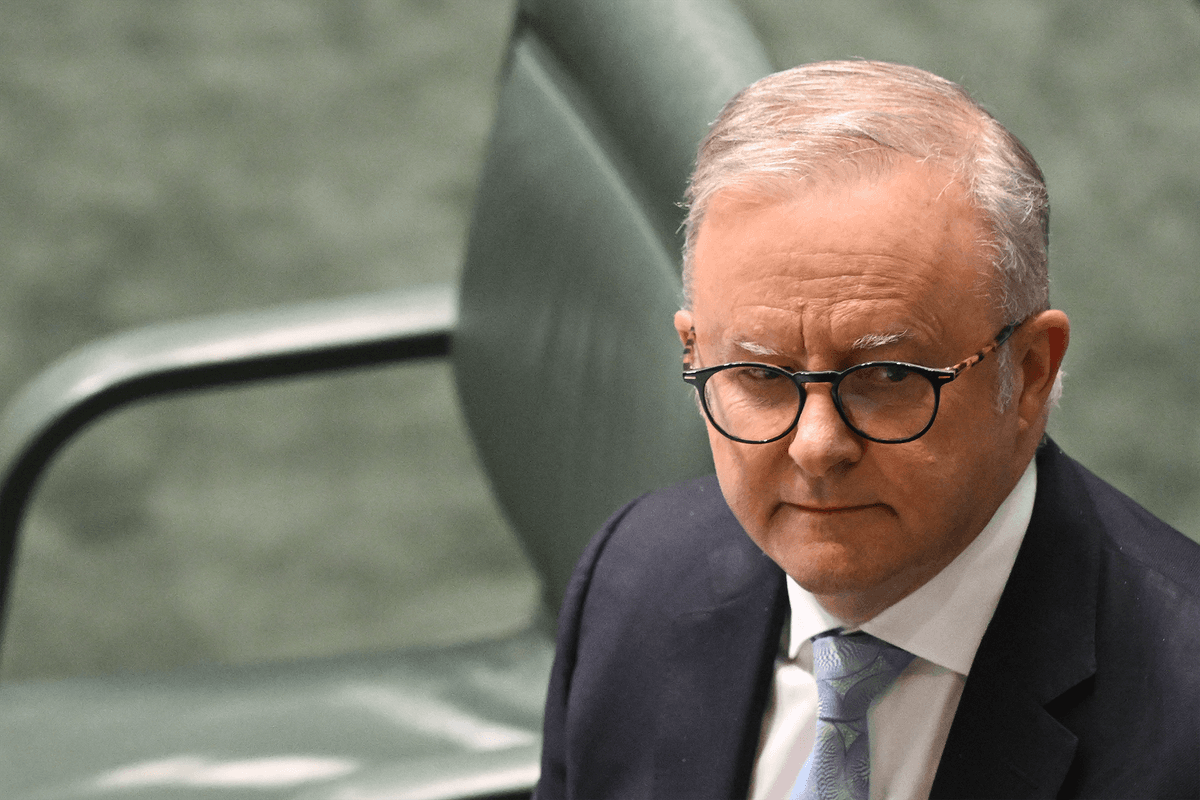
Photo: AAP Image/Lukas Coch


America likes to tell itself that Trump is an aberration. An anomaly, rather than a symptom of the deep, deep issues within American society, still festering from the civil war (which, I think now we can admit, the South won).
But what story do we tell each other about Australia? What story makes us feel better about the choices our leaders make?
This week, with the return of parliament, the debate has largely been drowned out by melons. Two Crown melons, in particular, also known in Japan as the king of fruit and the most perfect rockmelons you could ever imagine.
Only the most perfect specimens receive the “crown melon” tag. Each candidate is the only fruit allowed on that particular vine, and speciality farmers hand tend them for more than three months before submitting them for the label. It’s a connection of care, country and culture that white Australians rarely appreciate and to joke about it is to insult all three.
Albanese should have pushed back in the Bush Deep podcast. On the melons, on the jokes about him and wife Jodie Haydon and on the juvenile games. Just as he should have not played the game of word association where he linked Grace Tame to the word “difficult”.
The PM’s Office doesn’t mind – it sees it as speaking to people Albanese likes to reach in FM radio world, and most of those people think it’s all a bit of a storm in a teacup. Which, fair enough. When you are struggling to make ends meet and your dollar is going backwards, getting worked up over some clumsy podcast jokes is a big ask.
So why are we talking about melons, a month after the Bush Deep podcast aired and about a month after the last controversy from the same podcast?
It’s because Labor and the Coalition mostly agree on the big issues.
There is no policy fight at the moment, because they are in sync. On gambling, the deal is all but done, with leader to leader talks coming to a middle ground on inducements, but not the advertising ban Labor doesn’t want to do.
On the NDIS cuts, which won’t address fraud, but will have a detrimental impact on Australians just trying to live their lives on their own terms, the Coalition is largely on board. If it is not there as you are reading this, it is close.
On gas taxes, both are largely on the side of fossil fuels companies. On defence the fight is over who loves America more, and who would send more taxpayer funds into the neverending defence pit.
On migration, they are largely happy to head in the same direction – a direction that was mapped out by literal Nazis by the way, who were among the most vocal groups marching the streets demanding cuts to migration – and while they might argue the toss about how to get there, they are in the same space.
The Liberals are following One Nation. Labor is following the Liberals following One Nation. Who are all following neoliberalism.
Milton Friedman used to link Australia and Argentina together all the time. “If Australia were to go the way of Argentina in its political system it would go the way of Argentina in its economic system,” was one of his warnings in 1981. There were more before that, in the 1970s.
And on Wednesday, Andrew Bragg, a “moderate” Liberal in the way that some fires only cause “moderate” damage, was once again using Argentina as a warning. So convinced was he that all the old tropes would work, he delivered his press club speech as if it were his audition for a McCarthy-era Yesteryear – where instead of a trad wife influencer waking up in the early 19th century, it’s Bragg waking up in Moscow in the 1950s.
Bragg is so panicked about communism, he almost managed to raise the ghost of Joe McCarthy, an invocation much like Beetlejuice, but you just yell “communism” 30 times into the abyss. His answer – a new liberalism. Which seems to look a lot like the old liberalism. Which is what Labor is doing now.
But perhaps we once again have more in common with the libertarian leadership of Argentina than we think. Its president, Javier Milei, took the FIFA World Cup fever over the country’s second place and used it to send out a “anti-foreigner” decree, barring the entry and threatening to expel any foreigner who had “spread messages of hate, verbally or in writing”, as well as anyone who had incited violence against Argentina or Argentinians, from the nation.
So everything old is new again, except this time, both of Australia’s major parties are on the same page, fighting over melons because on major policy there is not much difference.
What then, are we to say about an Australia that produces this narrow political spectrum and calls it choice? And what are we to say about leaders who could be making a difference but prefer fights over the largely inconsequential, because they know we’ll all be switching off?
In the background to all of this, of course, is the power of unelected figures who continue to exert outsized influence over our media and politics.
Gina Rinehart gets upset but the independent arbiter finds no breach of an ABC editorial code? No problem – the government has already installed someone who will react to those bad faith news pages and change the code.
Need a new culture war? No problem, we’ve got hours of words about how this is really an insult to all women, everywhere, from the same people who brought you hours and hours of words about why Scott Morrison and Tony Abbott don’t need to apologise, to anyone, ever. The right has suddenly discovered “feminism” and it’s what it says, and not the women being abused and killed, the Indigenous women being incarcerated or disappearing, or the growing attack on abortion which we need to focus on.
Why do we pretend these people are fighting? They’ve largely proven themselves to be on the same side of anything that truly matters. So what does that say about Australia?
Amy Remeikis is a contributing editor for The New Daily and chief political analyst for The Australia Institute
This piece was first published in The New Daily. Read original here.
Advertisement


