“Humanity is not an abstract concept. It becomes truly meaningful and tangible precisely when it begins to disappear.” This is the message at the heart of Ai Wei Wei’s beautifully presented essay Manifesto Without Borders, and it’s a message that is as uplifting as it is timely.
Sat 29 Aug 2026 01.00 AEST
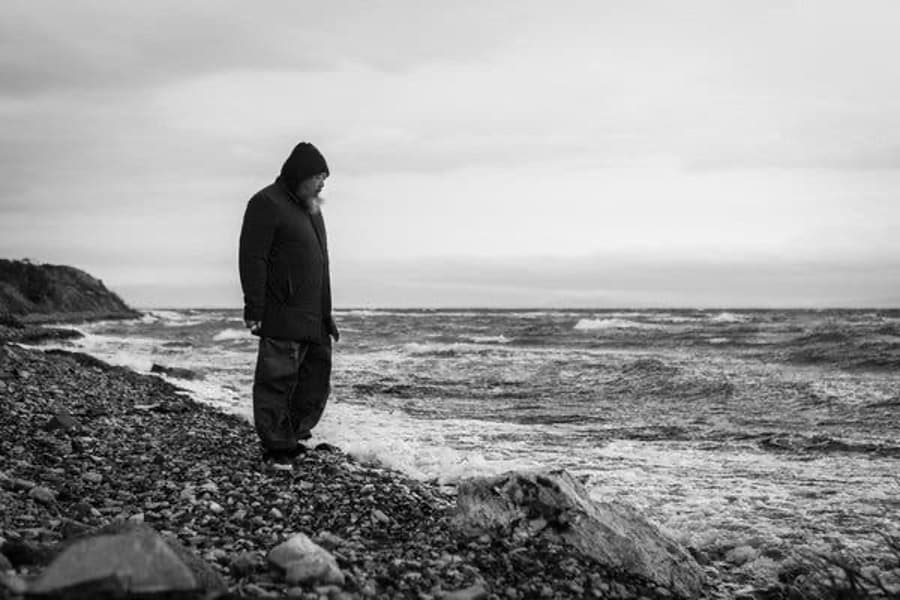
Ai Weiwei on the island of Lesbos, Greece (As published in Manifesto Without Borders)


“Humanity is not an abstract concept. It becomes truly meaningful and tangible precisely when it begins to disappear.” This is the message at the heart of Ai Wei Wei’s beautifully presented essay Manifesto Without Borders, and it’s a message that is as uplifting as it is timely.
The Manifesto was published in July, but it is based on spoken reflections the Chinese artist made whilst living in Berlin in 2015. This was the year in which an estimated 1.3 million people came to Europe in search of asylum as multiple crisis shattered the Middle East and Africa. To document the biggest flight of asylum seekers since World War II, Ai visited 40 refugee camps across 23 countries, interviewing 600 people along the way for what became the 2017 film Human Flow. The Manifesto provides a more personal insight into his reasons for pursuing the project. He argues that “art has always been a realm of activism when it comes to questioning consciousness and moral judgement” and that his task is to go “beyond the old tracks of ideology and resentment.”
The passage of time since it was composed – coupled with a translation from the original spoken Chinese to German text and then to English – give the Manifesto a haunting feeling that the past is waiting for us, just around the corner. It was also in 2015 that Australia, under the leadership of Tony Abbott, almost doubled its intake of refugees – to a total of 25,000. The Australian Government also gave $44 million dollars towards the Syrian refugee crisis.
This very week, it was reported that the Labor government plans to cut Australia’s refugee intake by a third, although the Prime Minister intervened mere hours later to say there will be no change to Australia’s refugee intake. Wherever Labor lands on its policy, One Nation, the Coalition and Labor have all set targets to reduce migration. This comes as serious conflicts in Gaza, Ukraine, Sudan, and other parts of the world continue. As Ai reminds us in his Manisfesto, “People have always fled, from the beginning of humankind. It is almost as natural as the movement of water, wind and grass” Ai Wei Wei says. He calls being a refugee a “fundamental anthropological constant.”
Quality research, analysis, explainers and factchecks from experts you can trust.
Despite its heavy subject matter, the little black-and-white book is easy to take in. The large-font text appears only on every other page, and points of emphasis are in inset like pull quotes from a newspaper. The text is further broken up by monochrome photographs from across Ai’s life – as a baby in China, as a young man in the United States, talking to refugees and soldiers in Europe. A ‘manifesto’ might sound like the literary equivalent of eating a plate of raw lentils, but the attractive package makes the message easy to digest. But then again, why would we expect anything less from one of the world’s foremost visual artists?
Ai was a refugee himself. His father, Ai Qing, was a poet and government critic whose comments provoked the family’s exile from Beijing to Xinjiang Province in far Western China, an area mainly inhabited by Uyghurs. The family was not allowed to move back to Beijing until Ai was 20 years old. If the experience was meant to teach him a lesson, it probably wasn’t the one intended. In 2011, because of his own political statements, Ai Wei Wei was imprisoned for 81 days. Upon release, his passport was confiscated and he was prevented from leaving China for several years. He moved to Berlin as soon as he could.
These experiences of exile and oppression shaped Ai’s world view, and it’s this world view that is distilled in Manifesto Without Borders. “Ultimately, I came to understand that we are all part of the refugee cosmos – either because we were once refugees ourselves or because we made others into refugees – both victims and perpetrators at the same time … The self-righteous assumption that we are fundamentally different from ‘them’ is part of the catastrophe.”
Manifesto Without Borders is available now from PalmArtPress.