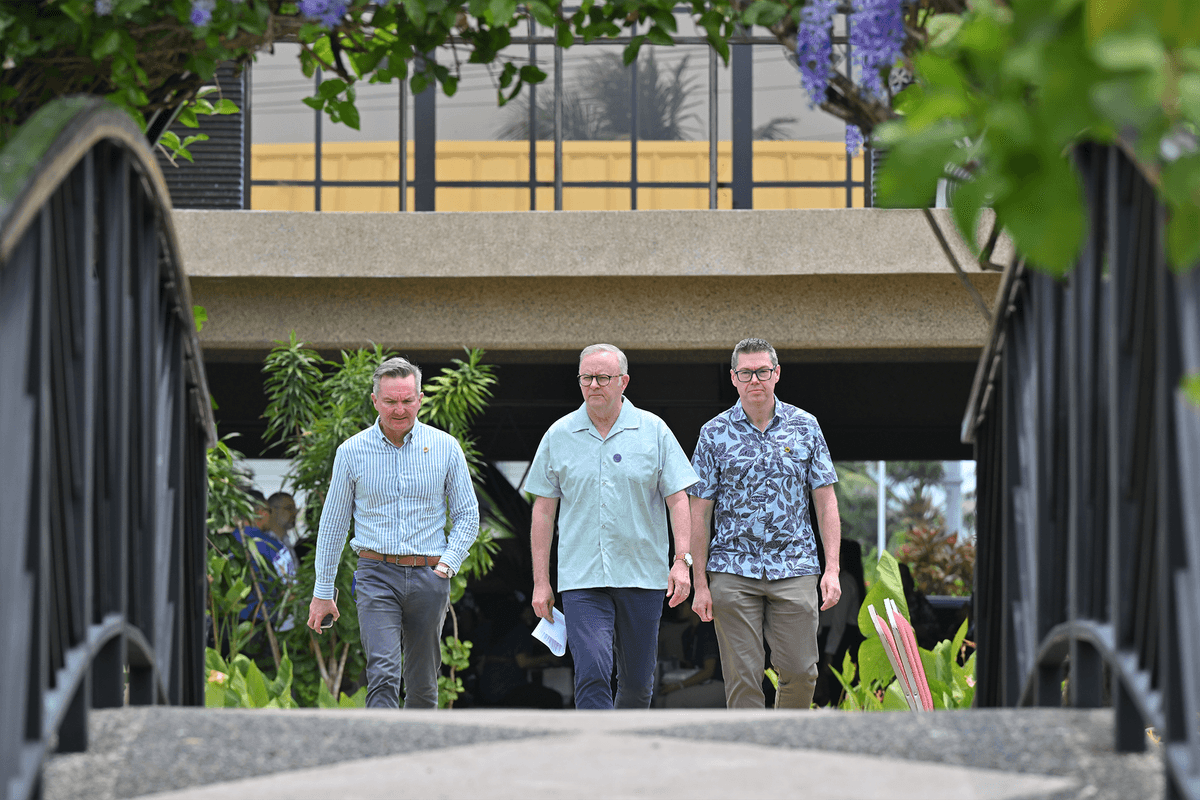
Prime Minister Albanese didn’t look too enthusiastic as he set off for Palau on 31 August. A presidential republic in free association with the USA, Palau is less than 500 square kms in size and has a population of fewer than 18 thousand people living on 340 little islands to the east of Indonesia and the Philippines. It may be off the beaten track, but not so far off that Albanese hasn’t been there before. He and his wife holidayed there just last year. So at least he knows where it is and what he’s in for.
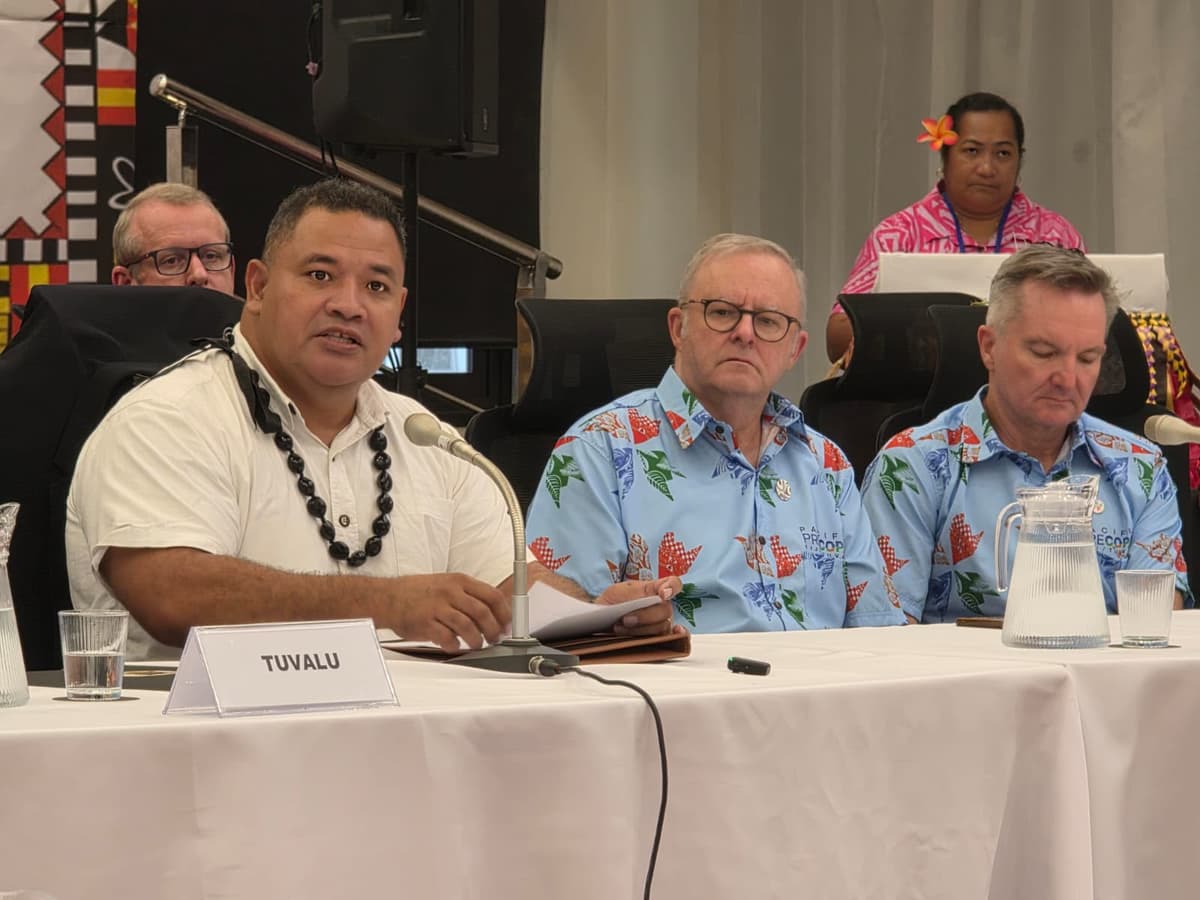
He knows that Palau is another example of where insignificant does not mean inconsequential. One of only three Pacific countries that maintain diplomatic relations with Taiwan (the Marshall Islands and Tuvalu being the others), Palau has invited Taiwan to attend the Pacific Island Forum (PIF) as an “official development partner”. That’s doubtless where Albanese’s long face begins.
But sadly, it does not end there. China is also attending as a PIF “official dialogue partner”, and is understandably piffed off. Five of the PIF leaders have suddenly found themselves unable to attend — claiming political problems at home (the Solomon Islands), indisposition and other priorities (Kiribati, Samoa, Vanuatu and Fiji).
So once again, at a time when cohesion and collaboration are at a premium in the Pacific, the PIF is split by geo-political competition that has nothing to do with addressing the climate, economic development and social infrastructure issues affecting the well-being of the people living in the PIF countries. China is once again acting out its displeasure at being upstaged by Taiwan, and Taiwan is making the most of its ability to disrupt even as its cohort of diplomatic partners is atrophying.
All of this has provided New Zealand’s Foreign Minister, Winston Peters, with another opportunity to generate a bit of self-attention by insinuating “foreign interference” as the reason for the fall off in representation — without actually calling China out. This is exactly what Albanese does not need after his halting efforts at security diplomacy during the past year or so. His approach has unfortunately been all too consistent with the anti-China narrative that has infected so much of the Australian media.
Containment of China, or at least constricting its freedom of action in the South Pacific, has been the implied objective of Australian diplomacy in the Pacific for most of this decade. Instead of maximising and exploiting our significant advantages in the Pacific, Australia has attempted to pursue a “strategy of denial” by constraining China.
Most of the PIF members just don’t want to be caught up in this game, preferring the focus to be on what they want from both Australia and China rather than what Australia doesn’t want from China. And Australia has not met this diplomatic challenge at all well, especially given how prone China itself is to maladroit manoeuvre in the Pacific.