

While the cameras chased a garland snub, Tuvalu told the world what COP31 must deliver
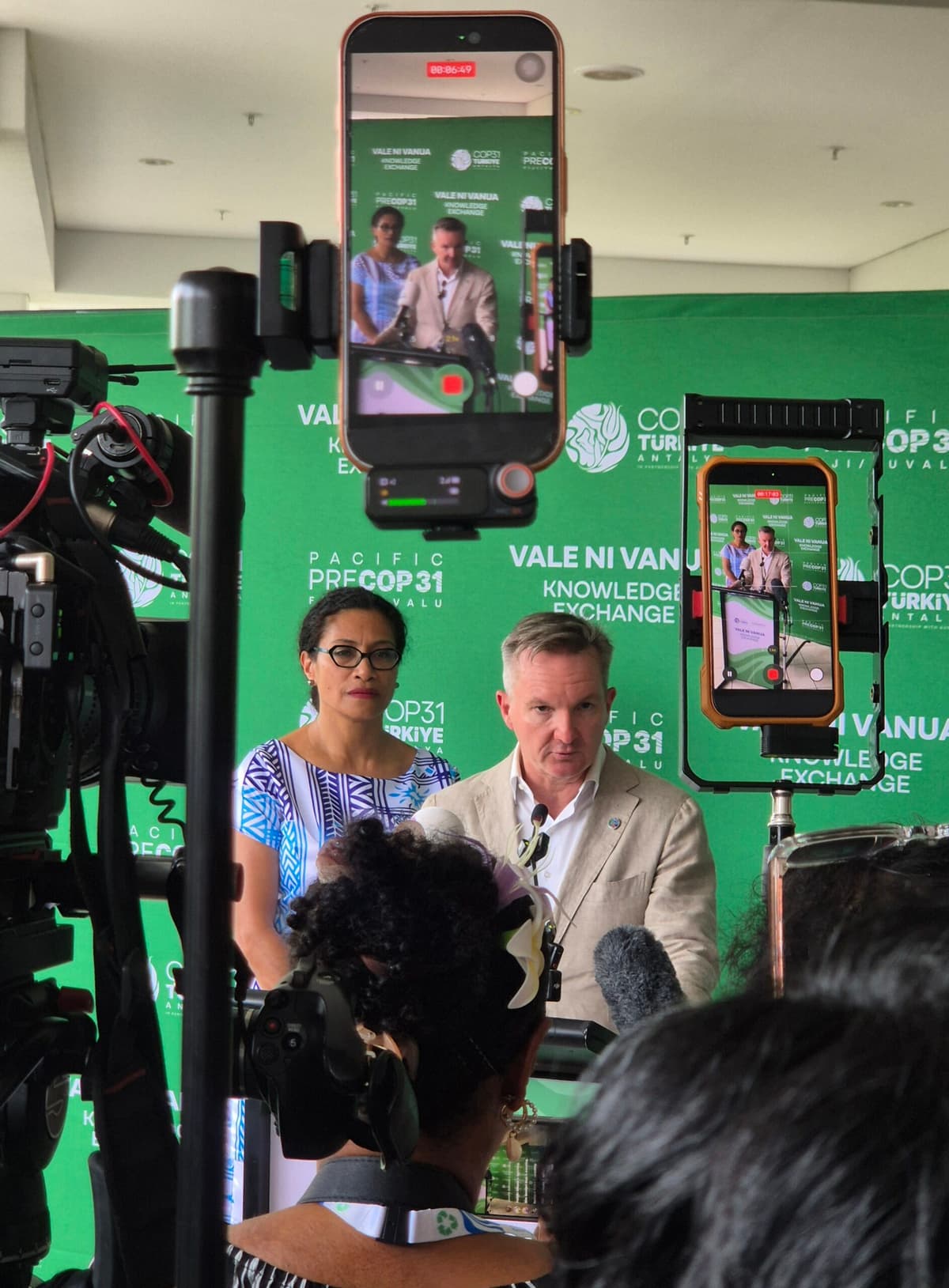
If you only followed mainstream coverage of the Pre-COP Leaders' visit to Tuvalu, you could be forgiven for thinking the big issue was headwear.
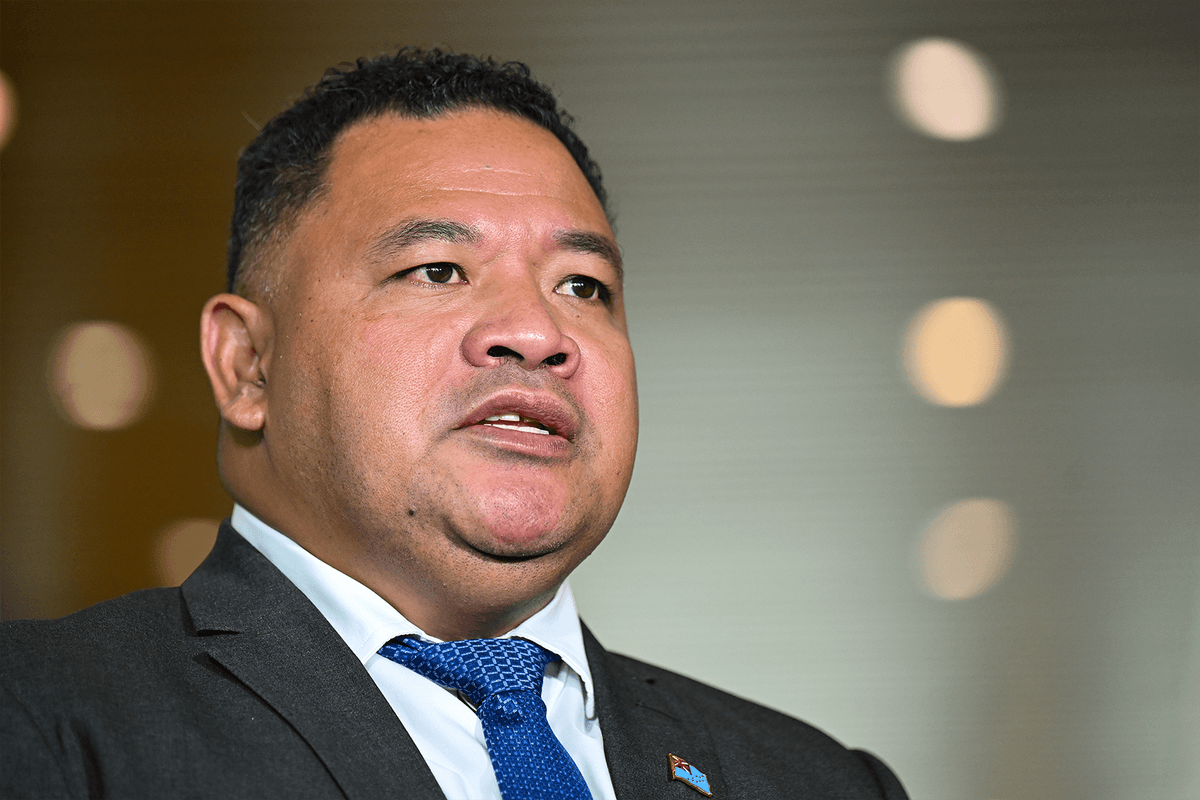
With dozens of strategic bombers and nine Carrier Strike Groups, the United States likes to maintain a near-permanent display of its military might (what defence groupies call “strategic posture”) around the globe. Until it can’t.

Mon 12 Oct 2026 12.33 AEDT
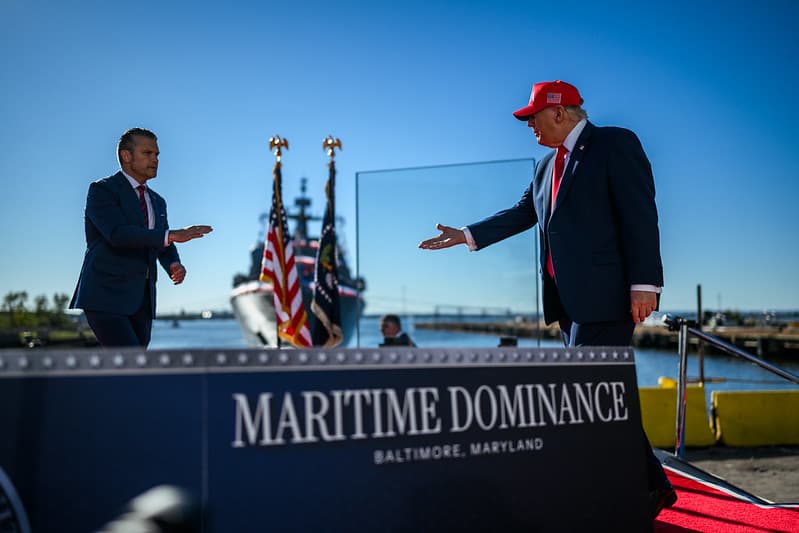
Photo: The White House/Flickr
If you only followed mainstream coverage of the Pre-COP Leaders' visit to Tuvalu, you could be forgiven for thinking the big issue was headwear.
There’s tension in the air at this pre-COP. Tension between Pacific Island states and Australia. Tension over the world leaders who have not turned up. Tension over Australia’s continued expansion of coal and gas, even as it asks to be applauded for its climate leadership. And tension over how to call out a powerful partner whose aid and cooperation you still need.
With dozens of strategic bombers and nine Carrier Strike Groups, the United States likes to maintain a near-permanent display of its military might (what defence groupies call “strategic posture”) around the globe.
Until it can’t.
The quick relocation of twelve B-1 strategic (that is, nuclear-capable) bombers from the British air force base at Fairford back to the US in response to a perceived threat from a couple of suspect white vans and men wearing black balaclavas demonstrates once again that American “strategic posture” is little more than bluff and bluster.
The answer to the question “what does ya strategic posture cost ya” is evidently “too much if it is threatened” — especially by low-cost drones. The testosterone-enabled wizards like Secretary for War Hegseth and his predecessors have forgotten that the Big Bad Wolf of their childhood cautionary tales is nowadays an expert at shapeshifting. Whether your posture is straw, twigs or bricks, the BBW can blow it up anyway.
This has — or at least it should have — big implications for America’s allies, including Australia.
Anyone who regards Article IV of the Australia-US force posture agreement that affords the US “unimpeded access to and use of agreed facilities” as some kind of security guarantee needs a big and quick rethink. Like the ANZUS Treaty, which requires nothing more than “consultation”, the stationing of B-52s in the Northern Territory and US Virginia-class submarines in Western Australia offers nothing more than a Clayton’s guarantee — the guarantee you have when you don’t have a guarantee. It means nothing.
The implausibility of such “posture-based” security was again highlighted just a few days ago at a Defence conference in Perth when the Acting Prime Minister and Defence Minister referred to the 15 thousand mile “strip of coastline from Cape Leeuwin through to Darwin — “the front door of our nation to the world” — as “Australia’s strategic ground zero”.
Quality research, analysis, explainers and factchecks from experts you can trust.
Wow! That’s some “ground zero”. Most of it is so remote that its lack of basic infrastructure makes it practically impregnable and unassailable. For that reason alone, it is one of the best defence assets we have.
Events last week in the UK showed that if a threat (or even the vague perception of a possible threat) did materialise in the vicinity of Fremantle, the American submarines would be at sea and submerged in less time than it takes to launch a drone. It is all very well for the Acting Prime Minister to trumpet Australia’s supreme self-confidence in its ability to maintain the security of shared bases. But if Britain, with over 80 years of experience in Gloucestershire, is false-footed by an asymmetric threat and immediately abandoned by the B-1s, what basis is there for Australia’s bluster? Or is that, too, an extension of posture?
A strategic posture built around military power is little more than the triumph of the past over the future. Legacy systems embedded in legacy thinking have mired President Trump’s war against Iran in a spiralling military and economic crisis from which he seems incapable of extricating himself, or anyone else, for that matter.
Until the US is able to back its military brawn with diplomatic brain, it will stumble from lingering stalemates (like Korea) to out-and-out defeats (like Vietnam and Afghanistan). The same applies to America’s allies, including Australia. A “strategic posture” premised on unrealisable ambition — such as sufficient Virginia-class attack submarines to beat China — and the increasingly uncertain backing of the US military is the defeat of realism by illusion. It is, as Oscar Wilde said, life imitating art.
And that applies equally to the “deterrence by denial” mantra — the fiction that if Australia can stop an aggressor from reaching Australia, then they won’t even try to do so. Iran’s use of drones and proxies has in fact driven the US out of bases and other ground facilities in the Gulf States, a kind of reverse denial far from the imagination of planners in the Pentagon. American warships have not been able to keep sea lanes open through the Strait of Hormuz and the Bab el-Mandeb Strait. Iran is winning the denial competition and, at this point at least, appears to be winning the diplomatic contest as well.
The message for Australia is as simple as it is challenging. Australia no longer needs reliance on the US as much as confidence in the ability of the US to generate good international politics backed by good international policy. And if, on all the current indicators, that is difficult, Australia needs to be considerably more self-directed in the pursuit of its own interests. Those interests are now, quite evidently, separate from those of the US.
Allan Behm works with The Australia Institute’s International and Security Affairs program.


