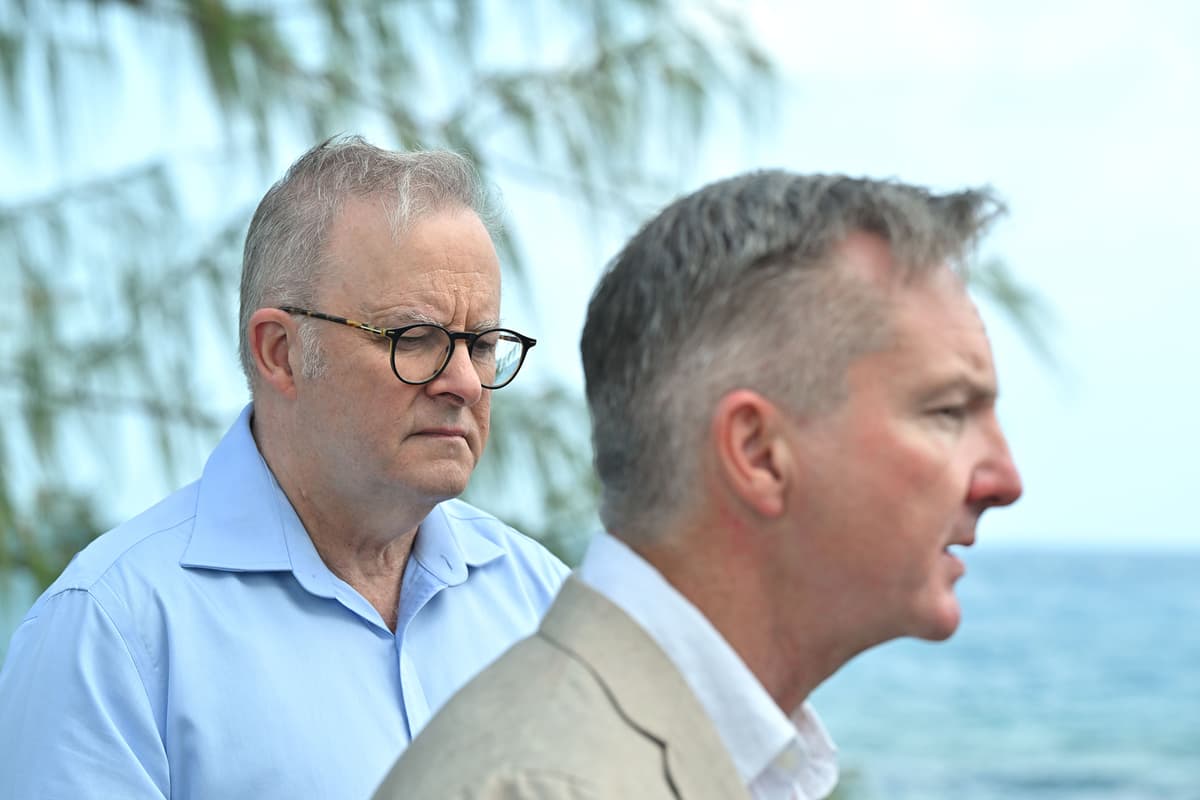
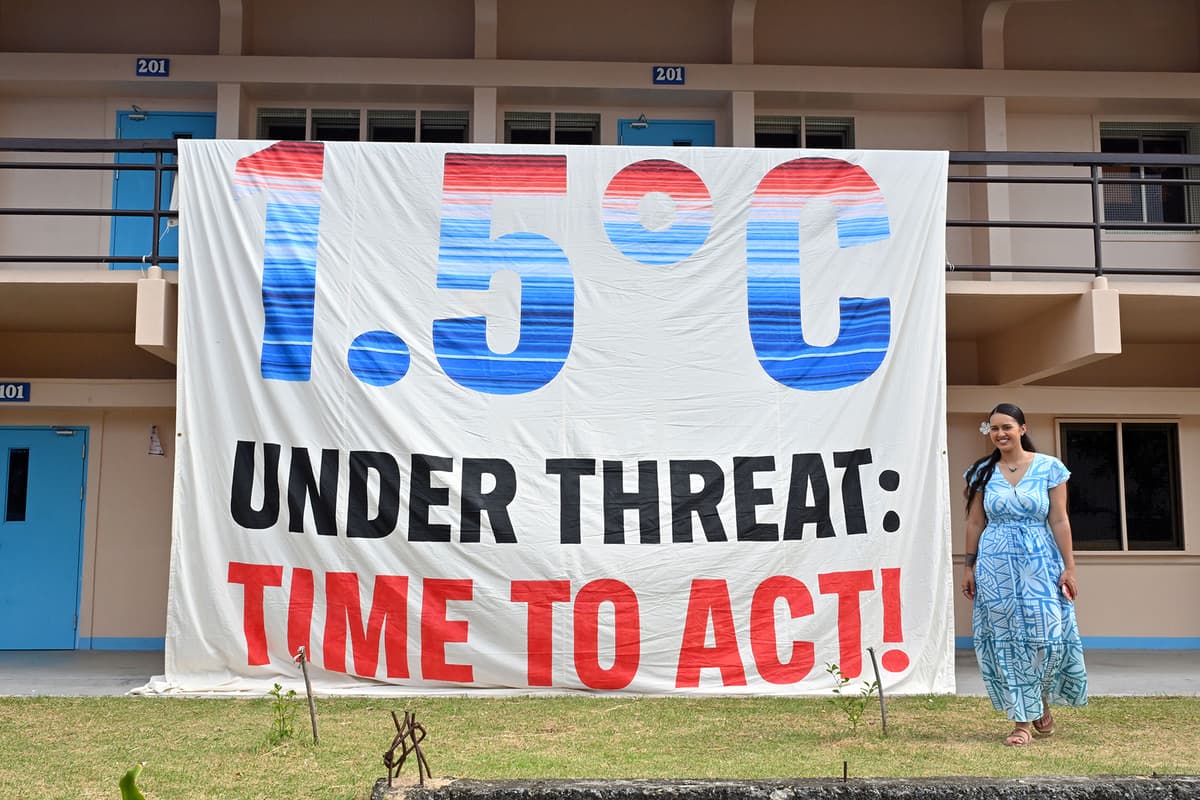
We will hear a lot about Australia’s relationship with the Pacific over the next few months. This week, our leaders have attended the Pacific Islands Forum in Palau. Then next month, we’re leading climate talks in Fiji – the warm-up event for the year’s main climate conference (COP31) in November, where Australia will be president of negotiations.
The government has promised to use its presidency to elevate the priorities of our Pacific neighbours. This is a serious test for our government because it has a history of claiming to support Pacific interests on climate but then undermining them when push comes to shove. We are the kind of neighbour who delivers fresh cookies to your door while throwing our rubbish into your back garden. There is an obvious reason for these double standards: Australia allows its climate priorities to be dictated by fossil fuel interests.
At the 2021 UN climate conference in Glasgow, Australia’s then-Energy Minister Angus Taylor stood alongside the CEO of oil and gas giant Santos to promote government investment in the unproven technology of carbon capture and storage. Pacific leaders, youth voices and civil society swiftly united to condemn this government-sponsored greenwashing. In doing so, they highlighted the central problem plaguing UN climate negotiations: fossil fuel interests are not only invited to attend; they are allowed to shape the talks from the inside.
Representatives from the world’s largest coal, gas and oil companies are free to wander both the green (public) zones and blue (official) zones, speaking to global leaders as they go. It is an absurd image.
Tobacco lobbyists are not invited to global health negotiations for an obvious reason: their product is antithetical to the purpose of the talks. Indeed, after the World Health Organisation banned the tobacco industry from conferences, countries were able to negotiate one of the most successful public health treaties in history: the Framework Convention on Tobacco Control. But the same principle does not apply to climate negotiations. The people profiting from the products causing the climate crisis are given priority access, making it no wonder climate COPs often fail to achieve results.
Research by Transparency International, based on interviews with COP insiders, shows high-polluting industries have hamstrung negotiations since the beginning. They have promoted consensus-based decision making, which allows just a single country to obstruct progress, and advocated for voluntary rather than binding commitments.
Industry-linked advisers even form part of official government delegations, and conflicts of interest are rife. The COP president in 2023 was the CEO of the Abu Dhabi National Oil Company. Predictably, the company used the conference to pursue USD$100 billion in fossil fuels deals.
These transparency and integrity failures have become worse since I attended my first climate conference (COP6) in 2000. All attendees – governments, media, NGOs – need formal badges to participate, but last year at COP30 in Brazil, over half of all delegates did not fully disclose who they were representing. Transparency International found one in every 25 participants was a fossil fuel lobbyist. These industry representatives outnumbered every country delegation except the Brazilian hosts. Unsurprisingly, countries were unable to even mention the words ‘fossil fuels’ in the final document.