Cost-of-living pressures, declining trust driving public anger
Earlier this week, researcher Alex Fein talked with Richard Denniss about why cost-of-living pressures, strained public services and declining trust are fuelling Australians’ anger.
Earlier this year, an Australia Institute freedom of information (FOI) request revealed that the Attorney-General’s Department had been holding back information from the public. Their apparent motive was to escape tricky questions at Senate Estimates, the rare opportunity that democratically elected representatives get to ask questions of government officials.

Wed 9 Sep 2026 10.59 AEST
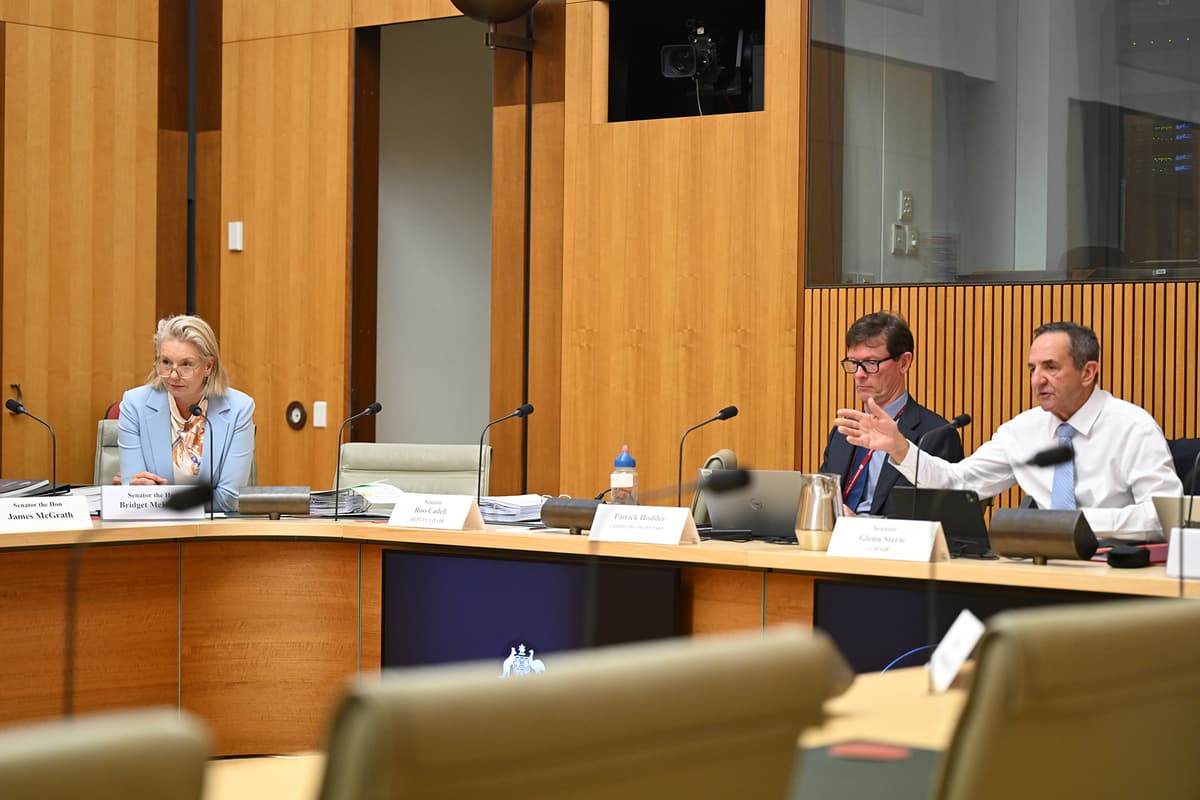
Photo: AAP Image/Lukas Coch
Earlier this week, researcher Alex Fein talked with Richard Denniss about why cost-of-living pressures, strained public services and declining trust are fuelling Australians’ anger.
Earlier this year, an Australia Institute freedom of information (FOI) request revealed that the Attorney-General’s Department had been withholding information from the public.
Their apparent motive was to escape tricky questions at Senate Estimates, the rare opportunity that democratically elected representatives get to ask questions of government officials.
Now, the secretaries who head government departments are suggesting footage from Senate Estimates should not even make it online.
In a parliamentary submission, the Secretaries Board (heads of government departments) have suggested either preventing the use of committee evidence on social media altogether or requiring committee evidence to be published without editing or captions.
They complain that public servants have been accused of “‘hiding’ things, ‘covering up’ for the government, or ‘being a liar’.”
The problem is that senior public servants do sometimes hide things and cover up for the government. Departments sometimes cover things up to serve their own interests as well. Anyone who followed the Robodebt scandal knows the Australian Public Service is capable of illegal and unethical behaviour at the highest levels. Departments spend time and money training public servants to dodge Estimates questions. And when they do so, ridicule (though never abuse) is an appropriate response.
Last year, then Australian Public Service Commissioner Gordon de Brouwer said public servants were writing their “genuine thoughts” on Post It notes so they could never become public knowledge. The Public Service Commissioner is supposed to be the “steward” of public service integrity, but it took senators to remind him that this was an illegal breach of the public service’s obligation to keep accurate records.
Public service delegations at Senate Estimates are generally fronted by deputy secretaries or secretaries. They are the elite 0.1% of the public service, in sought-after roles of significant power and influence. It is entirely appropriate that they are subjected to public scrutiny.
In other words, there is a power imbalance when a senator questions a secretary or deputy secretary – but perhaps not the way you think. It is the public servant answering the questions who likely wields much more power than the senator and is invariably paid more.
Quality research, analysis, explainers and factchecks from experts you can trust.
Among the secretaries’ complaints is that clips from Senate Estimates are used for “party-political purposes”. But in a democracy, it is through the political contest that governments are held to account. Harry Evans, the longest-serving clerk that the Australian Senate has ever had, articulated this in his 2006 National Press Club address:
It is often said that estimates hearings are largely devoted to party politics, with non-government senators attempting to put blame on ministers or particular officers and to win political points.
This should not be a matter for reproach, and nor does it invalidate the hearings as an accountability process.
Free states work through party politics. The ultimate safeguard against the misuse of power by a government is the ability of its opponents and rivals to find out about, and draw attention to, its mistakes and misdeeds.
At the time, the Liberal–National Coalition Government had a majority in the Senate. Evans describes how they used that total control to defy established Senate rules and procedures.
The Albanese Government is a long way from controlling the Senate, but that has not stopped its bureaucrats from inventing new rules. When it appeared before a committee investigating the management of Defence assets, the Department of Defence tried to deny senators consent to repost their evidence on social media or to otherwise use the likenesses of Defence staff. The unilateral bid at censorship was rightly rejected by the committee, only to be followed by this latest effort from the departmental heads.
If the government does try to reduce access to Estimates clips, it would be part of a worrying pattern of secrecy. Late last year, the Albanese Government made spurious claims about “AI bots” and foreign gangs to justify restricting Australians’ freedom of information rights. Fortunately, the Senate decisively rejected the changes, forcing Labor to withdraw them.
If the government wants to avoid ridicule on social media, it could start by doing three things: respect freedom of information laws, respect the Archives Act that requires them to keep records and stop wasting taxpayer money training staff on how to dodge questions.
Of course, parliamentary questioning is not always kind or constructive. There are politicians who could do better on social media.
But departmental secretaries are some of the highest paid and most powerful people in Australia – far more so than the backbenchers who occasionally get a chance to question them. Senate Estimates is a key accountability mechanism for government agencies and departments and the executive government more generally.
So long as public servants deliberately hide information, open questioning will remain a necessity so Australians can find out what is being done in their name.