As a general reader with no particular skills in literary criticism, I am going to chance my arm in this review. I’ll be making claims that I have probably no right to make apart from my long years of reading and thinking.
It might be claimed that at present, the richest, most moving, and most engaging novels are coming from Ireland. I am thinking of writers like Claire Keegan, Colm Tóibín and Niall Williams. Tóibín, though living in America, focuses some of his novels on the Irish town of Enniscorthy, where he grew up. In Brooklyn and Long Island, he writes of a young woman who escapes Enniscorthy which she finds insular, introspective and stifling. Williams creates a fictional village in the west of Ireland, Faha. Two of his novels, This Is Happiness and Time of the Child, explore, intensely, the lives of some of the villagers with warmth and love.
For me, though, Claire Keegan is the stand-out writer of the three. Her novel, Small Things Like These, is exquisite. It is a story that can horrify, terrify and uplift. Evil stalks its pages in a Magdalene laundry, but the goodness and kindness of the main character enrich the reader. It is a book to reread, and the movie of the book is equally excellent. Claire Keegan’s novels, in fact, novellas are short and beautifully controlled every word, every sentence counts.
In this, she reminds me of the American writer, Elizabeth Strout, who also writes short, gentle gems, several set in the same American village with the same cast of characters. Two of those characters, Lucy Barton and Olive Kitteridge, appear again and again, and the reader comes to know them well: their fears and anxieties, their loves and their happiness, their absorbing strength.
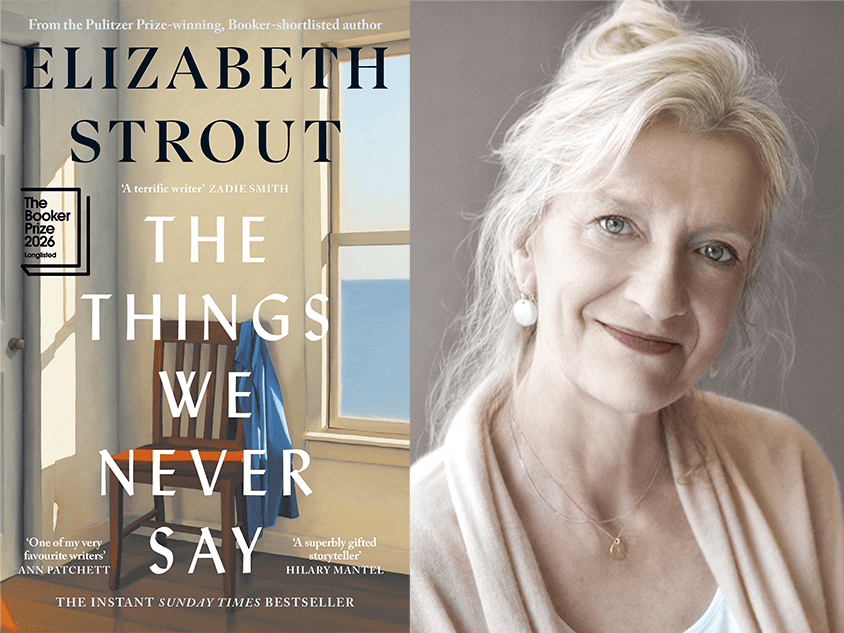
The Things We Never Say leaves this fictional world, though employing the same writerly mechanisms: brevity, intensity, sharp focus, concentration, and examination of the problems of being human. The main character, Artie Dam, married to Evie, with an adult son, Rob, is an honoured History teacher in an American public school. He takes out the prize as Massachusetts Teacher Of the Year and rightly so. He and Evie live in a town, unnamed, on a bay on the coast of Massachusetts. Artie has a sailboat there which he uses regularly except in winter.
Known to his students as Damn-Dam and addressed in class as such, Artie gives lessons in life as much as lessons in History. He is an innovative, inventive teacher, encouraging the use of primary sources by his students. Artie loves each crop of students who come into his classroom. He listens to them; he engages with them as they explore the past together. He helps them, most of them, to grow into decent human beings.
One of them, Danny Marino, is a troubled boy who pushes the boundaries. When Danny mocks a somewhat awkward student, Rhonda, Damn-Dam falls on him like a ton of bricks, humiliating Danny but teaching him a valuable lesson. When Danny makes a shocking blunder in the school that might have seen him in deep trouble, Artie Dam steps in to help him, gaining Danny’s affection and respect.
While readers will enjoy and admire Artie in the classroom, the novel’s focus is elsewhere. Artie is lonely in his marriage to Evie, though they have been married for nearly thirty years, and he is depressed. He dreams of taking his own life but can’t see the way to do it. But then he is thrown a curve-ball when, in a boating mishap – he is a keen and experienced sailor – he very nearly dies. He learns that, most certainly, he does not want to die.