

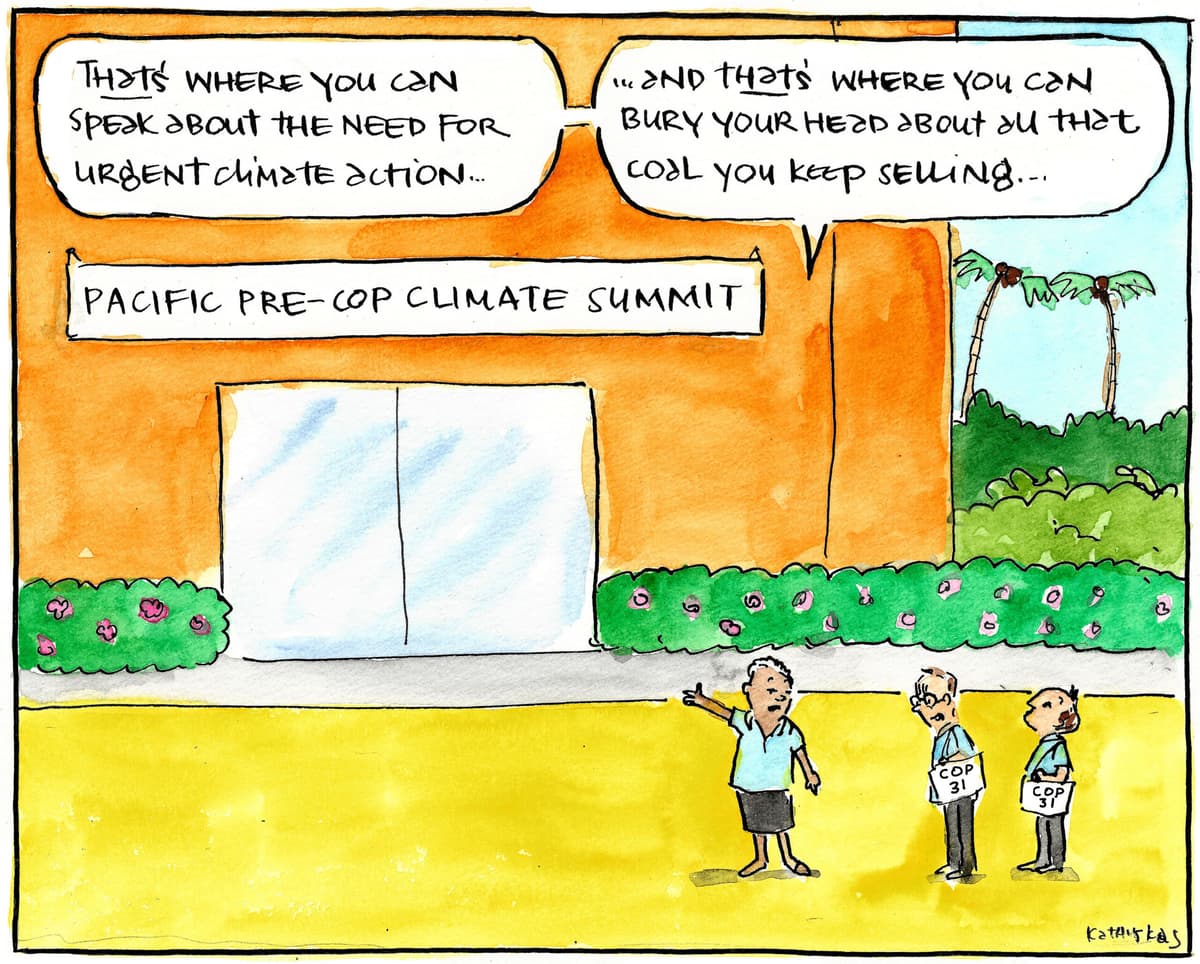
This week, the Pacific showed world leaders firsthand what climate change looks like. Back home, the Coalition and One Nation saw something else. They saw an opportunity to dog whistle and punch down on our Pacific nations.

Fri 9 Oct 2026 14.07 AEDT
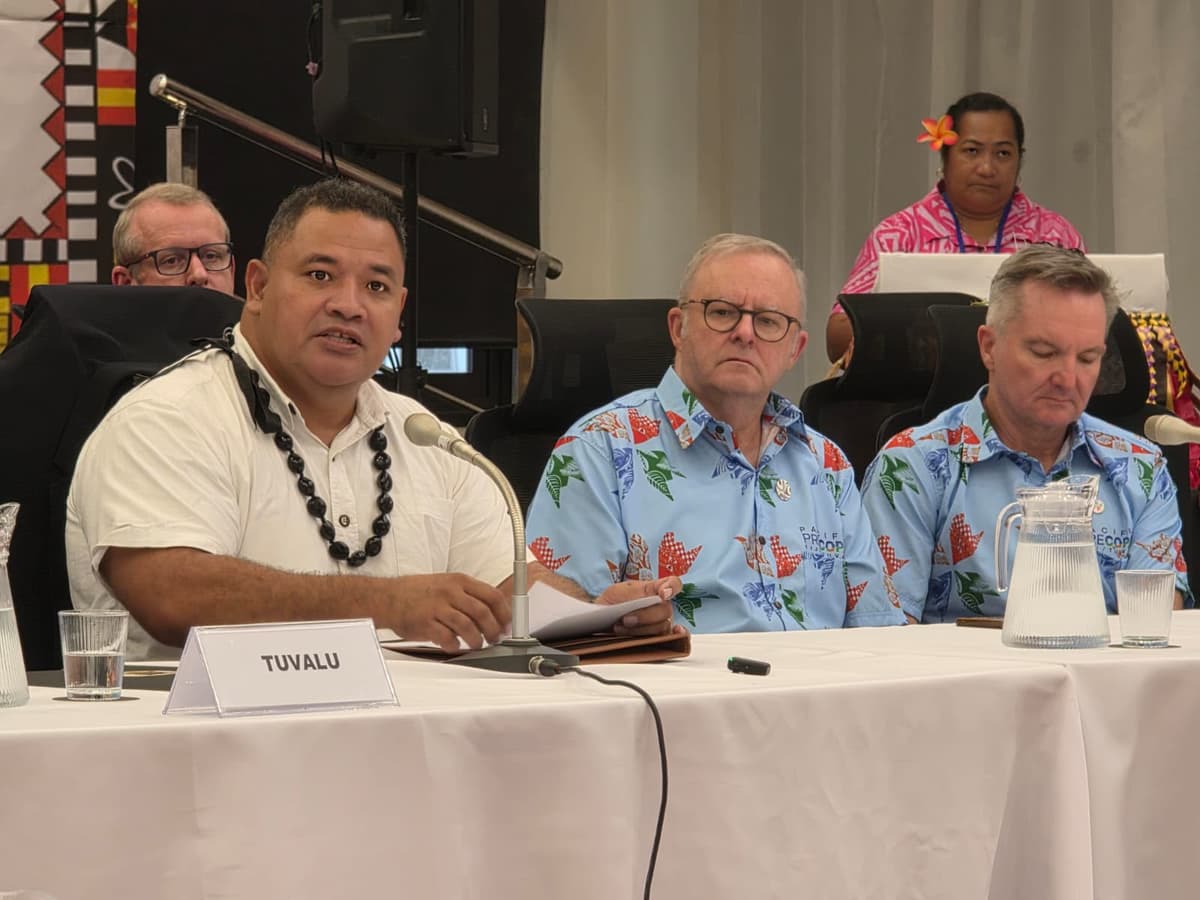
Photo: Supplied
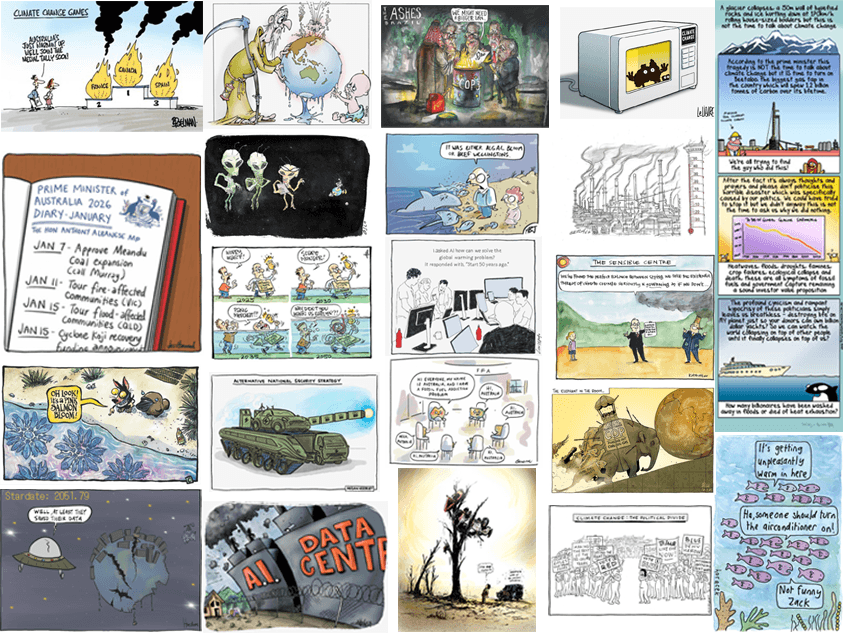
The annual Stanley Awards, Australia’s premier awards for cartoonists, has announced its long list for best climate cartoon honours. Born out of a boycott of fossil fuel sponsorship, from this year the prize is named in honour of Jon Kudelka, whose principled stand in 2023 inspired fellow cartoonists to withdraw from the Walkley Awards.
This week, the Pacific showed world leaders firsthand what climate change looks like. A marine heatwave in 2024 killed an estimated 99.9 per cent of the coral that built Tuvalu’s islands. Coastal villages in Fiji are waiting to move to higher ground. Pacific leaders came to Nadi and again made the case for rich, high-polluting nations to do their bit to keep global warming under 1.5 C, so that Pacific nations survive.
Back home, the Coalition and One Nation saw something else. They saw an opportunity to dog whistle and punch down on our Pacific nations.
Angus Taylor labelled it a “pre-COP flop”. Dan Tehan told Australians they didn’t need an “overseas talkfest” and called the climate summit a vanity project. Michaelia Cash pointed to resorts and event planners and said struggling Australians would be furious. Barnaby Joyce, now with One Nation, called it “a complete waste of money”.
Notice the language. Junket. Talkfest. Resort. Overseas. None of it is an argument. It’s a signal. It tells Australians that money for climate action, and especially the Pacific, is money taken from them, and that our Pacific neighbours’ existential crisis is a them problem, not an us problem. That’s a dog whistle, and it’s cheap.
On ABC’s 7.30, Chris Bowen said the triumvirate of no climate action had spent the week insulting the Pacific, and called it effectively a climate denial operation. He also reminded viewers how far we’ve come. Under Scott Morrison, Fiji’s Prime Minister said Australia should be expelled from the Pacific Islands Forum. Now Australia has new treaties and partnerships with PNG, Vanuatu, Tuvalu and Nauru. However, those nations have had some things to say about the sufficiency of those agreements, and the strings attached.
Here’s what the event cost. Bowen said the $20 million estimate was in the ballpark. It comes from a $147.8 million, three-year budget measure called Standing with our partners in the Pacific, which also pays for Pacific delegate travel and a pavilion at COP31. The ABC’s analysis noted that $20 million would fund the NDIS for about three hours.
Australia is President of Negotiations at COP31. When you hold that job, you show up for the people most affected, and you pay your fair share. Bowen says 53 ministers, prime ministers and presidents attended, including climate ministers from fellow big emitters like India and the UAE, and that a delegation flew on to Tuvalu.
The point was to let Tuvalu demonstrate in person the existential impacts of burning fossil fuels and the resulting global warming and sea level rise. Tuvalu is the least visited country in the world, and there is a great deal to learn from the people on the frontline who know what climate red lines mean.
Closing the Tuvalu leaders’ event on 6 October, Hon. Maina Vakafua Talia told the delegates:
The COP process remains vital for multilateral action. However, we must think outside the box. We cannot be constrained by the blocking actions of a few. This is why Tuvalu strongly supports the Santa Marta Process. It forms a “coalition of doers” willing to move beyond the lowest common denominator and focus on practical solutions. Santa Marta does not abandon UN consensus. Instead, it preserves multilateralism while enabling those ready to move faster to act, guided by science. Excellencies, we must urgently phase out fossil fuels.
That is not talkfest language. It’s a plan.
Quality research, analysis, explainers and factchecks from experts you can trust.
There’s also a number the critics never mention. Bowen stated only 0.2 per cent of existing global climate finance goes to adaptation in small island developing states. Countries like Tuvalu, which need it most, get it least. That’s the problem Pacific ministers came to Nadi to fix.
So, let’s take the Coalition’s concern for taxpayers seriously. If public money going to the wrong places keeps them up at night, I have a list of ways to let them sleep better.
Start with fossil fuel subsidies. The Australia Institute found that governments handed $16.3 billion to fossil fuel producers and major users in 2025-26. That’s more than $31,000 a minute, and it’s growing faster than the NDIS. Most of it is the Fuel Tax Credits Scheme. We don’t hear the Coalition bemoaning that.
Then there’s AUKUS. Australia has committed to spend up to $368 billion over three decades, and payments to Washington have already started. The US Congressional Research Service has warned of cost blowouts and delays. Where is Barnaby’s outrage about that money, and about the talkfests and junkets that brought it into being?
Even closer to home, the government has promised Papua New Guinea $600 million over ten years to get a team into the NRL, with part of it going to grassroots programs. I’m not against sport, or sport as diplomacy. But if $20 million for climate solutions and climate diplomacy is scandalous, then this deserves the same scrutiny.
Here’s the part that should embarrass all of us. The Australia Institute’s Gas Giveaway revenue tracker shows that a 25 per cent tax on gas exports would raise about $17 billion a year.
That’s roughly $49.8 million every day. At that rate, pre-COP’s $20 million is covered in under ten hours. The entire $147.8 million Pacific package is covered in under three days. Since July 2022, we’ve forgone $77.8 billion and counting by not having that tax. Foreign-owned gas exporters are making a killing.
And this is where responsibility lies with us. Australia is one of the world’s biggest exporters of coal and gas. We dig it up, burn it, ship it and subsidise it, and the corporations profit.
The communities in Tuvalu and Fiji did not cause that, but they’re paying for it with their homes, their coastlines and their futures. Helping them adapt is not charity. It’s the least a big polluter owes: paying our fair share for the damage caused.
The Coalition and One Nation can keep sneering about resorts and talkfests. It’s easy and cheap; it offers no solutions, and it’s the language of political spin with no plan. It plays well on talkback radio. But it’s also politics at its meanest, aimed at the people with the least power and the most to lose. That’s punching down, and Australians are better than this, and deserve better from our political class.
Louise Morris is Head of Fossil Fuel Transition at the Australia Institute, with 20 years’ experience encompassing climate, energy, forest protection, and law reform in the not-for-profit sector, and federal politics.


