

A review of Alice's Dreaming
This is a a review from Dr Michael McKernan of Alice's Dreaming by Tom Griffiths.

Renters across Victoria are being evicted in retaliation for attempting to assert their rights by landlords who are hiding behind reasons such as selling a property, renovating, or having a family member move in. But stating a valid reason isn’t the same as proving it, and right now, there is no accountability for retaliating against a tenant.

Mon 12 Oct 2026 14.39 AEDT
Photo: AAP Image/Christopher Hopkins
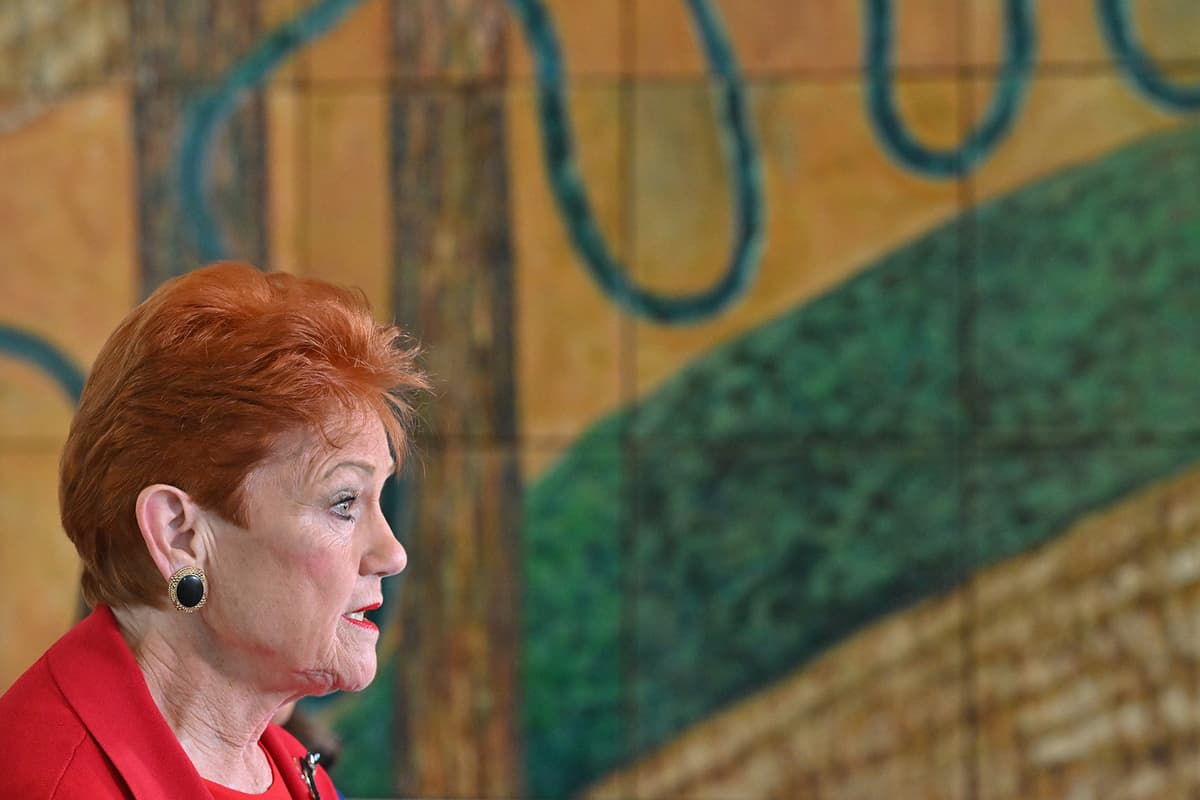
In recent years, the far Right One Nation party has transitioned from the political margins to the electoral mainstream. One notable explanation for their growing popularity seems to be a perception that they represent the concerns of less affluent Australians adversely affected by cost-of-living pressures.
This is a a review from Dr Michael McKernan of Alice's Dreaming by Tom Griffiths.
We’re hearing a great many troubling claims at this week’s public hearings of the parliamentary inquiry into AI, and no doubt there are plenty more to come. As we follow the proceedings, it’s vital that we stop humanising AI like Big Tech does.

Australia’s health system is exhibiting some of the worst traits of its American counterpart. We spend heavily once people are sick. Over the longer term, spending on hospitals has grown faster than spending on primary care and prevention.

Steven spent a year asking his landlord to fix the leaky ceiling and black mould in his rental home. When his landlord refused, the Victorian Civil and Administrative Tribunal, or VCAT, ordered them to complete the repairs. Later that day, Steven was sent a Notice to Vacate. He was being evicted in retaliation for attempting to uphold his rights.
In November 2025, the Victorian government banned no-grounds evictions. This means that landlords can now only evict a tenant for a handful of reasons. The reason given to Steven was that the landlord wanted to sell the property. Two months later, the property hadn’t been sold. Instead, it had been rented to a different tenant at an extra $100 per week.
This wasn’t a one-off. Almost a year on, renters across Victoria are being evicted in retaliation for attempting to assert their rights by landlords who are hiding behind reasons such as selling a property, renovating, or having a family member move in. But stating a valid reason isn’t the same as proving it, and right now, there is no accountability for retaliating against a tenant.
This problem is widespread. Last week, Anika Legal published Evicted, a report drawing on a year of our casework and a survey of renters facing eviction and found that 57% of the Notices to Vacate we assessed were invalid because the landlord couldn’t prove they had grounds. Landlords are using made-up grounds to evict their tenants, in retaliation for renters trying to exercise their rights, and to get out of completing the repairs that will make a property safe to live in. Of the renters who asked for repairs, 85% were still waiting when they were forced out.
Quality research, analysis, explainers and factchecks from experts you can trust.
This happens so often because consequences are rare. A penalty in the law applies when a landlord says they’ll demolish or sell the home, then re-lets it within six months. Likewise, when they say that a family member is moving in. But this penalty relies on the evicted renter monitoring their old address, searching to see if it appears in real estate listings, and reporting it. By that point, in the best-case scenario, they’ve moved into another property, and in the worst-case, they’re homeless. A penalty only matters if it’s enforced, and enforcement here falls to the very person the system has already failed.
Even if a renter has proof that their eviction was retaliatory, VCAT has next to no power to do anything about it. Jane, a renter in Melbourne’s northern suburbs, applied to VCAT to challenge a Notice to Vacate on the grounds that it was retaliatory. At VCAT, the Member told her that while the notice was clearly retaliatory, VCAT had no power to do anything about it. In NSW, Queensland, WA and SA, the Tribunal could have taken action. In Victoria, it had no such power.
The Evicted report points to a clear gap in Victoria’s rental laws. Renters should be able to challenge an eviction at VCAT where there is evidence it was issued in retaliation for exercising their rights, and the Tribunal should have the power to determine whether that has occurred. Without these changes, Victoria’s ban on no-grounds evictions risks being undermined by landlords who simply provide grounds they cannot substantiate. Victorians shouldn’t have to live in fear that asking for a leaking roof to be fixed may cost them the roof over their head.
Dale Clough is the Chief Executive Officer of Anika Legal, a community legal centre providing free tenancy legal services to Victorian renters, which last week published ‘Evicted: How retaliation undermines renters’ rights in Victoria’.


