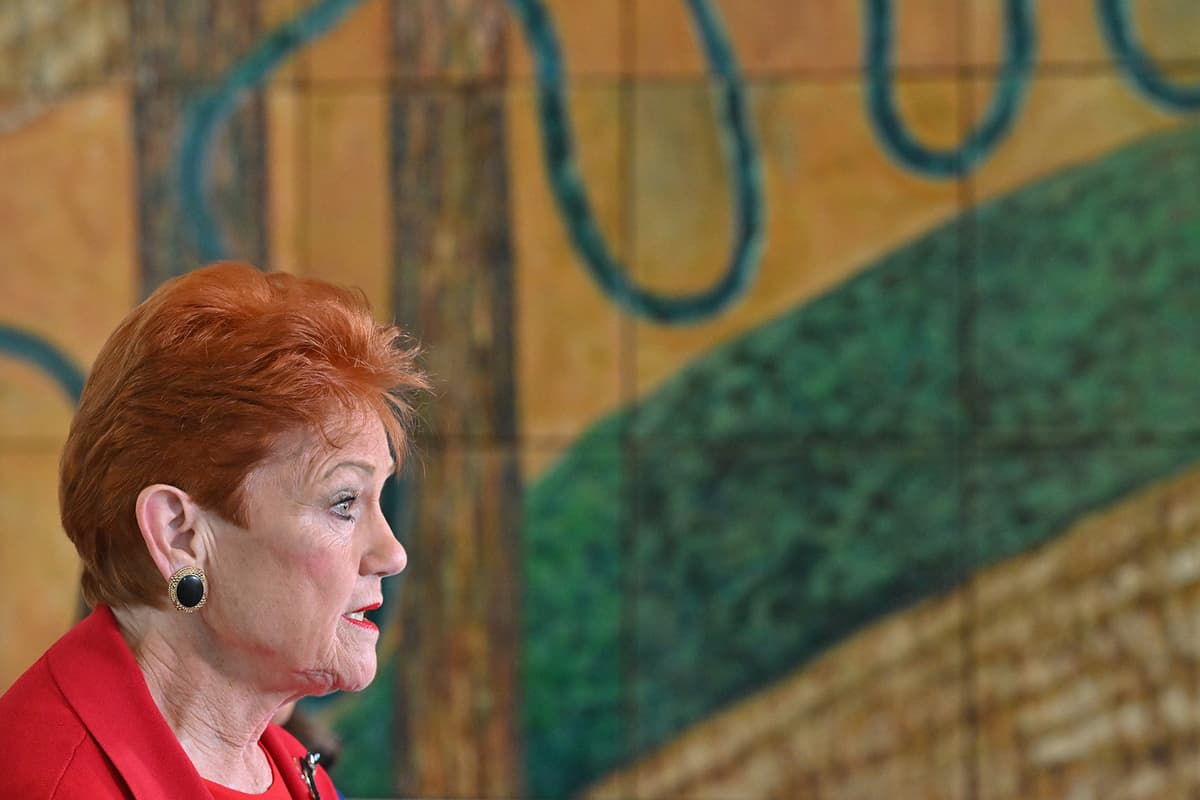
In recent years, the far right One Nation party has transitioned from the political margins to the electoral mainstream. One notable explanation for their growing popularity seems to be a perception that they represent the concerns of less affluent Australians adversely affected by cost-of-living pressures.
Indeed, an August 2026 address to the National Press Club by Pauline Hanson implied genuine compassion for low-income renters experiencing housing stress, and other Australians reliant on forms of emergency relief from charities such as the Salvation Army. Yet to date, there has been little critical examination of the Party’s views on the welfare state, and particularly their attitude to disadvantaged groups such as people who are unemployed or living with a disability or sole parents who are reliant on social security payments.
Internationally, commensurate ultra-right parties in Europe and other Global North jurisdictions have increasingly adopted what is called a ‘welfare chauvinist’ approach.
Unlike neoliberal free market advocates, welfare chauvinists are not opposed to the welfare state per se, and in some cases propose generous assistance for those disadvantaged citizens they term ‘deserving’. However, they actively exclude new immigrants and refugees from this ‘deserving’ category on the grounds of religion, race or ethnicity. They may also exclude Indigenous populations who are presented as inferior to the majority culture or national group.
The only empirical study of One Nation’s views on social welfare was completed in 2019 by myself and colleagues at the Monash University Department of Social Work. Based on a content analysis of 80 public statements from 1997-2019, our study reported that One Nation shared the assumptions of welfare chauvinism that new immigrants and refugees should not be entitled to social welfare assistance. They particularly disparaged Muslim Australians as undeserving, alleging that they were disproportionate claimants of social security, and deceitfully exploited the Australian welfare system, including defrauding the NDIS. Additionally, they stigmatised First Nations Australians whom they labelled as intergenerational users of social welfare programs that unjustly received benefits on the basis of race rather than genuine need.
However, in contrast to the welfare chauvinists, One Nation demeaned most low-income Australians as undeserving of greater help and reserved their benevolence for a small set of favoured deserving groups such as aged pensioners and occasionally recipients of the Disability Support Pension.
Get our newsletter
Quality research, analysis, explainers and factchecks from experts you can trust.